 kiduverse
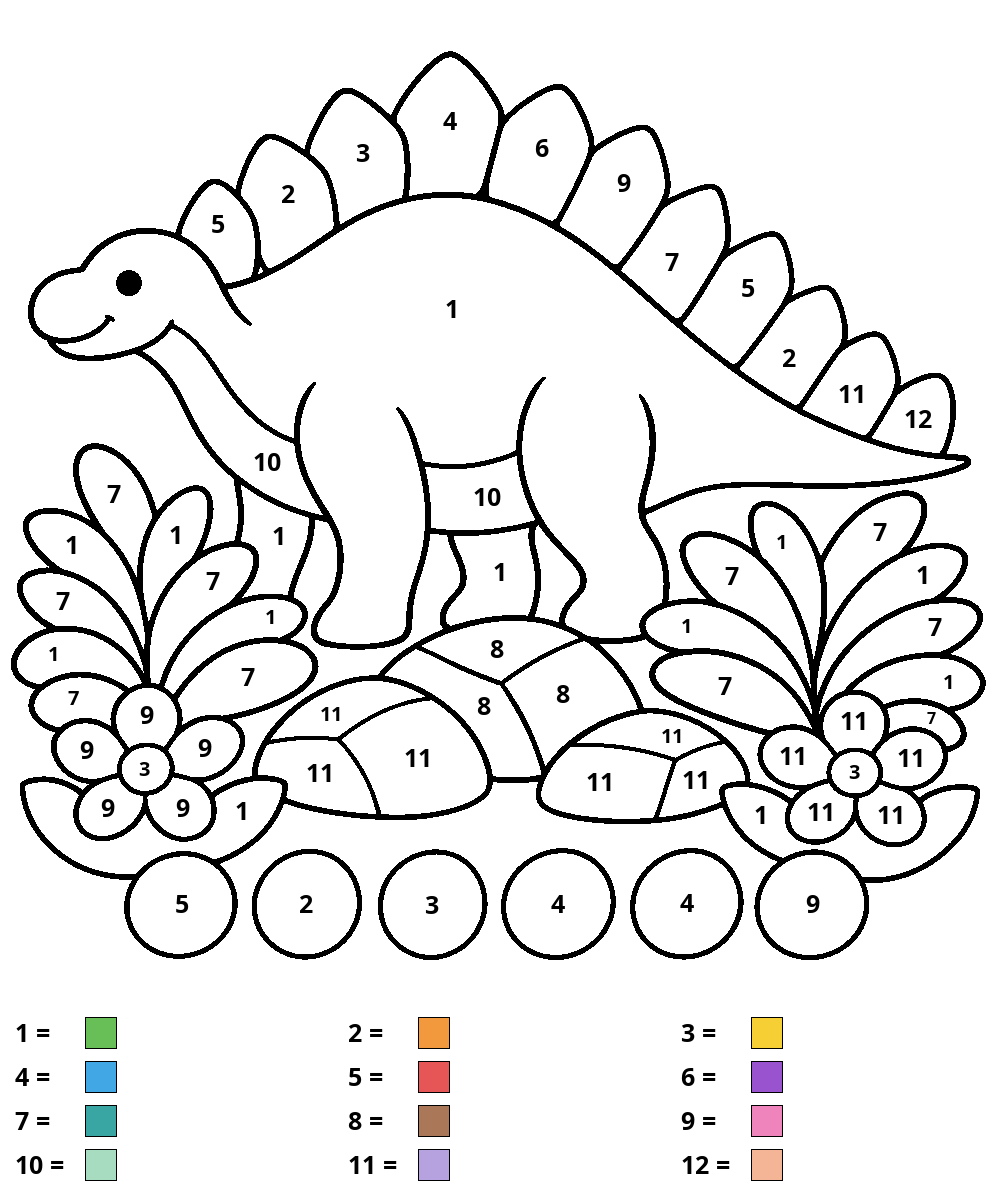
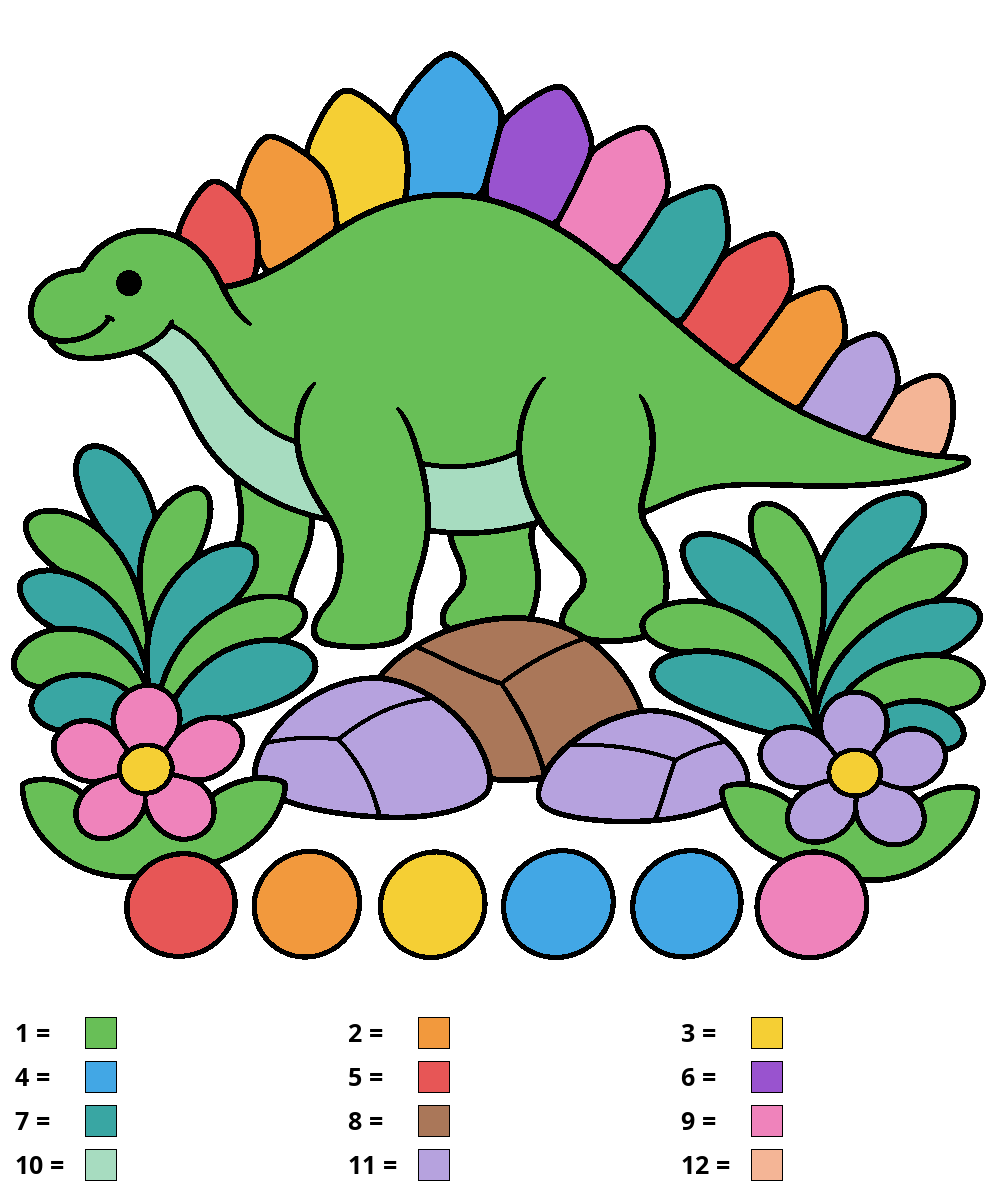
Stegosaurus in a fern garden
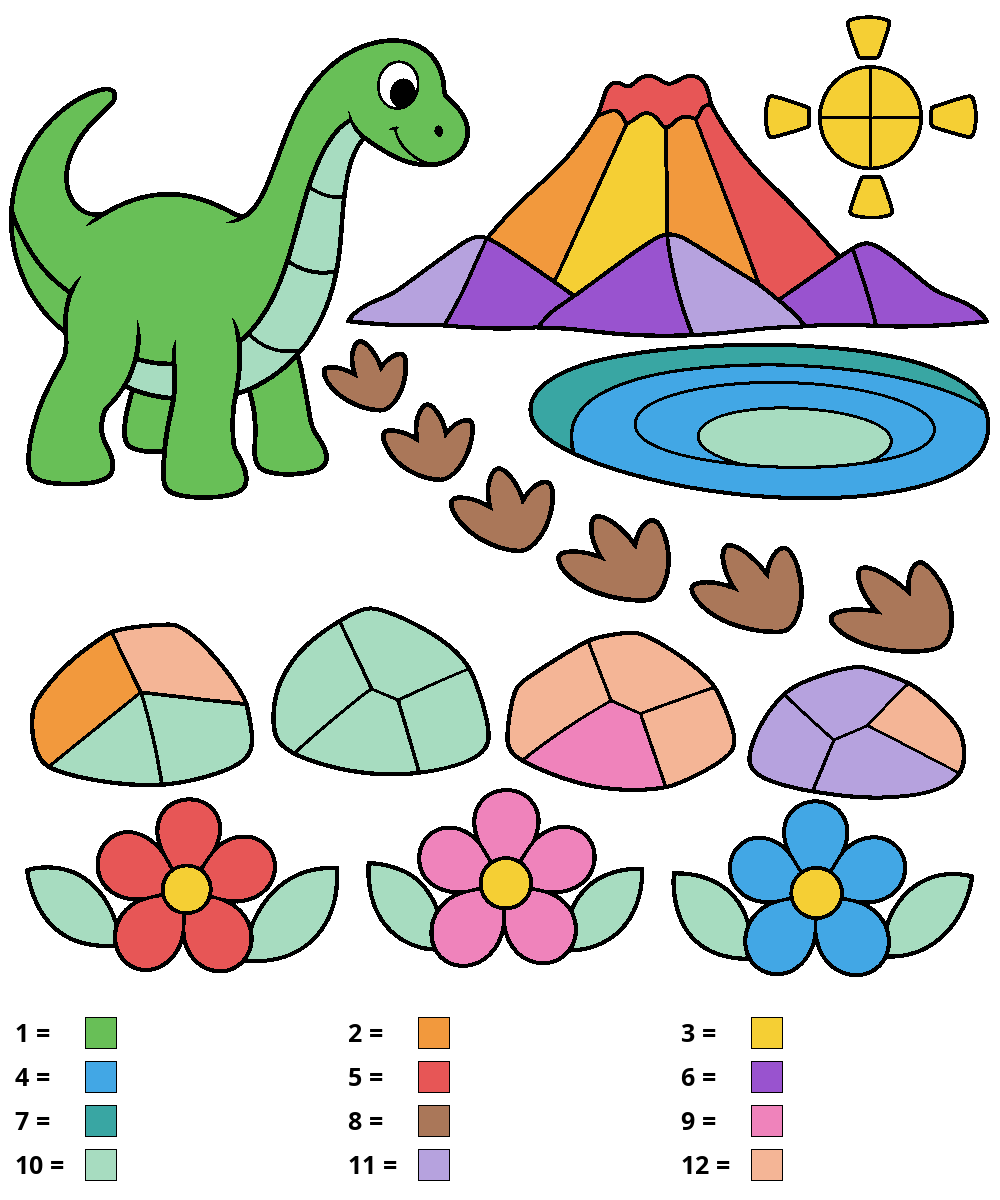
Detailed · 12 colors · 63 spaces
Color key
- 1 · Green
- 2 · Orange
- 3 · Yellow
- 4 · Blue
- 5 · Red
- 6 · Purple
- 7 · Teal
- 8 · Brown
- 9 · Pink
- 10 · Mint
- 11 · Lavender
- 12 · Peach
Show the colored answer
15 dinosaur color-by-number worksheets in four levels. Free two-page A4 PDFs with color keys and matching answers, without registration.
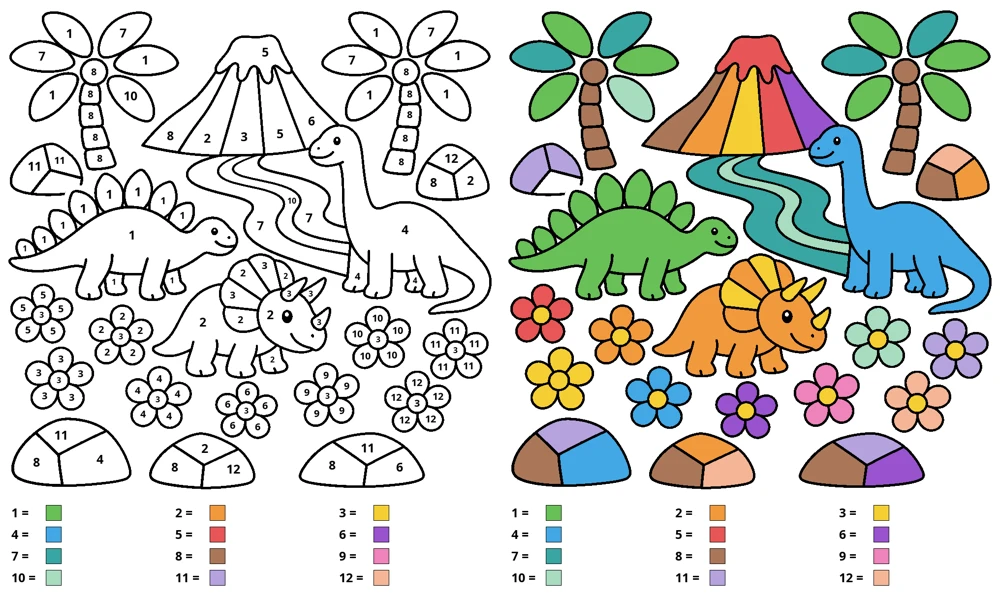
You need plain paper and pencils or markers. Leave the background and white eye highlights white.
Detailed · 12 colors · 63 spaces
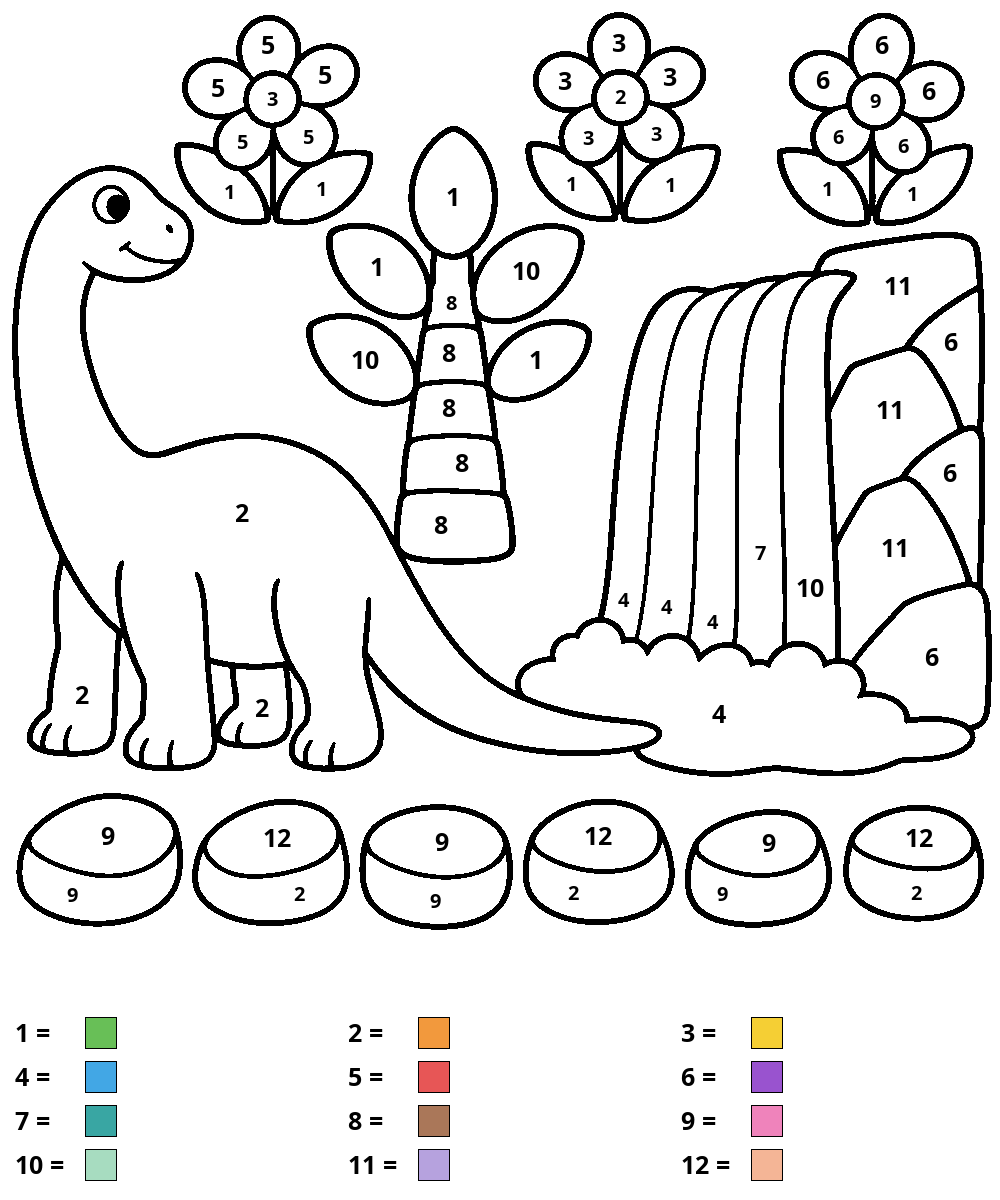
Detailed · 12 colors · 61 spaces
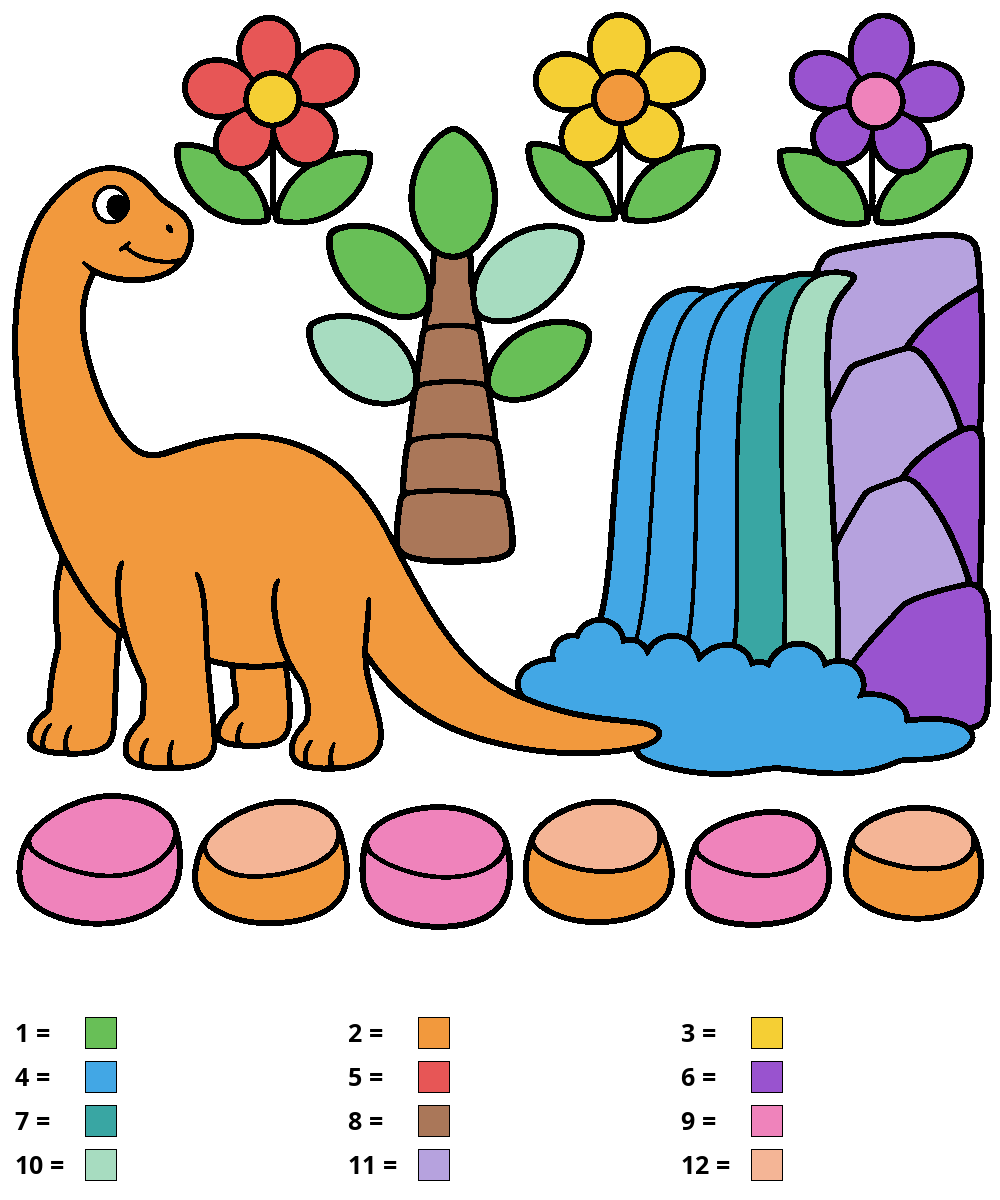
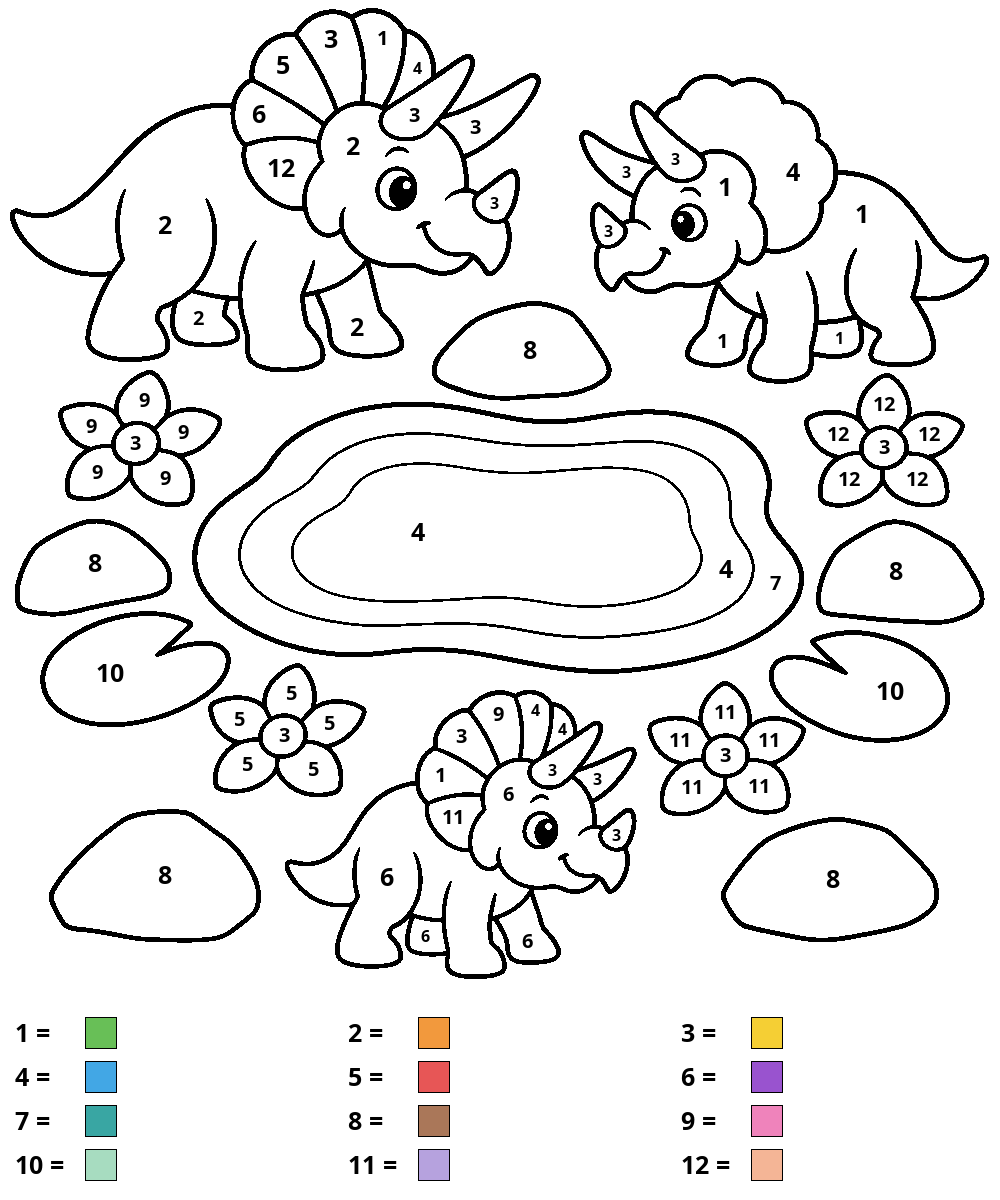
Detailed · 12 colors · 68 spaces
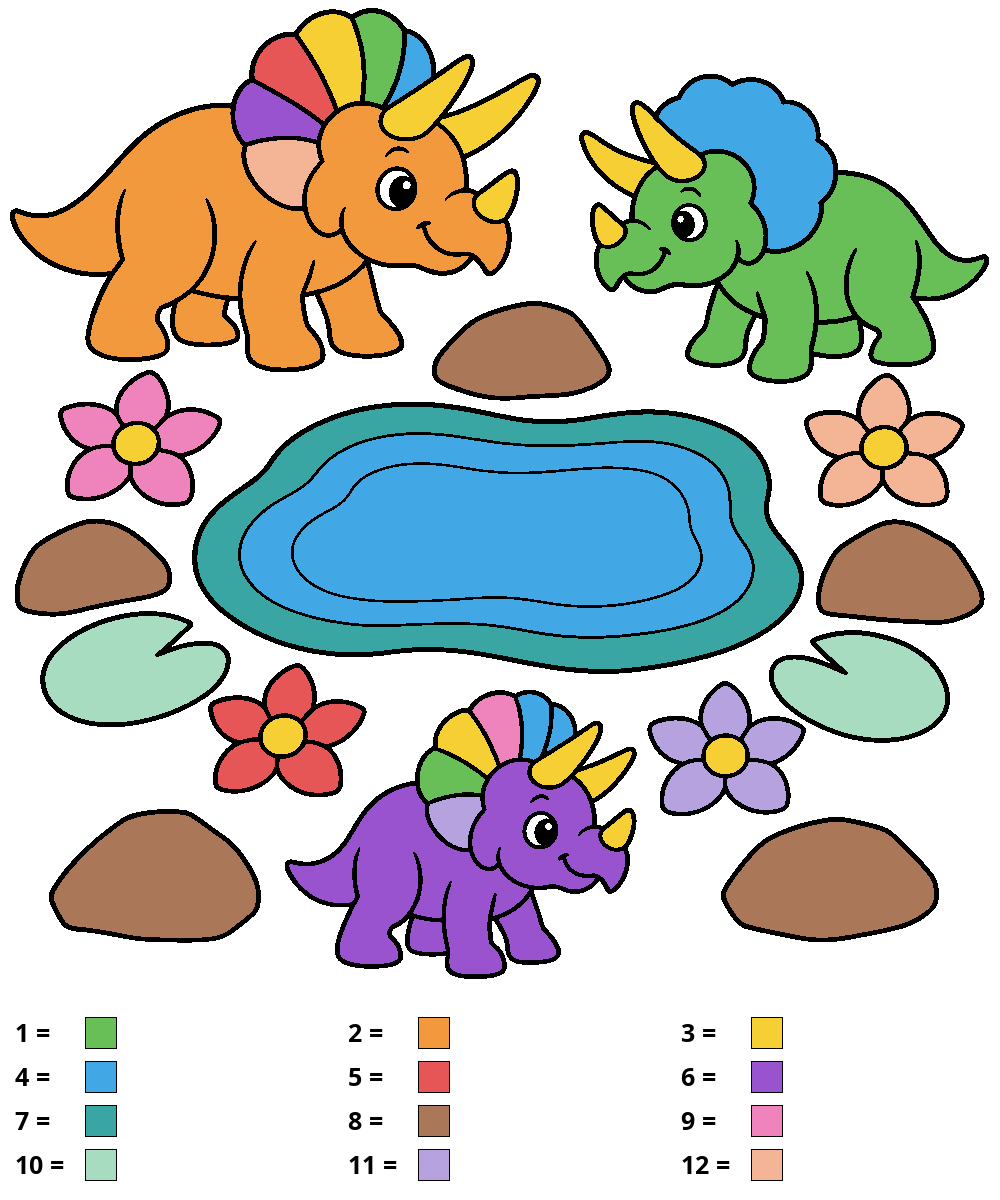
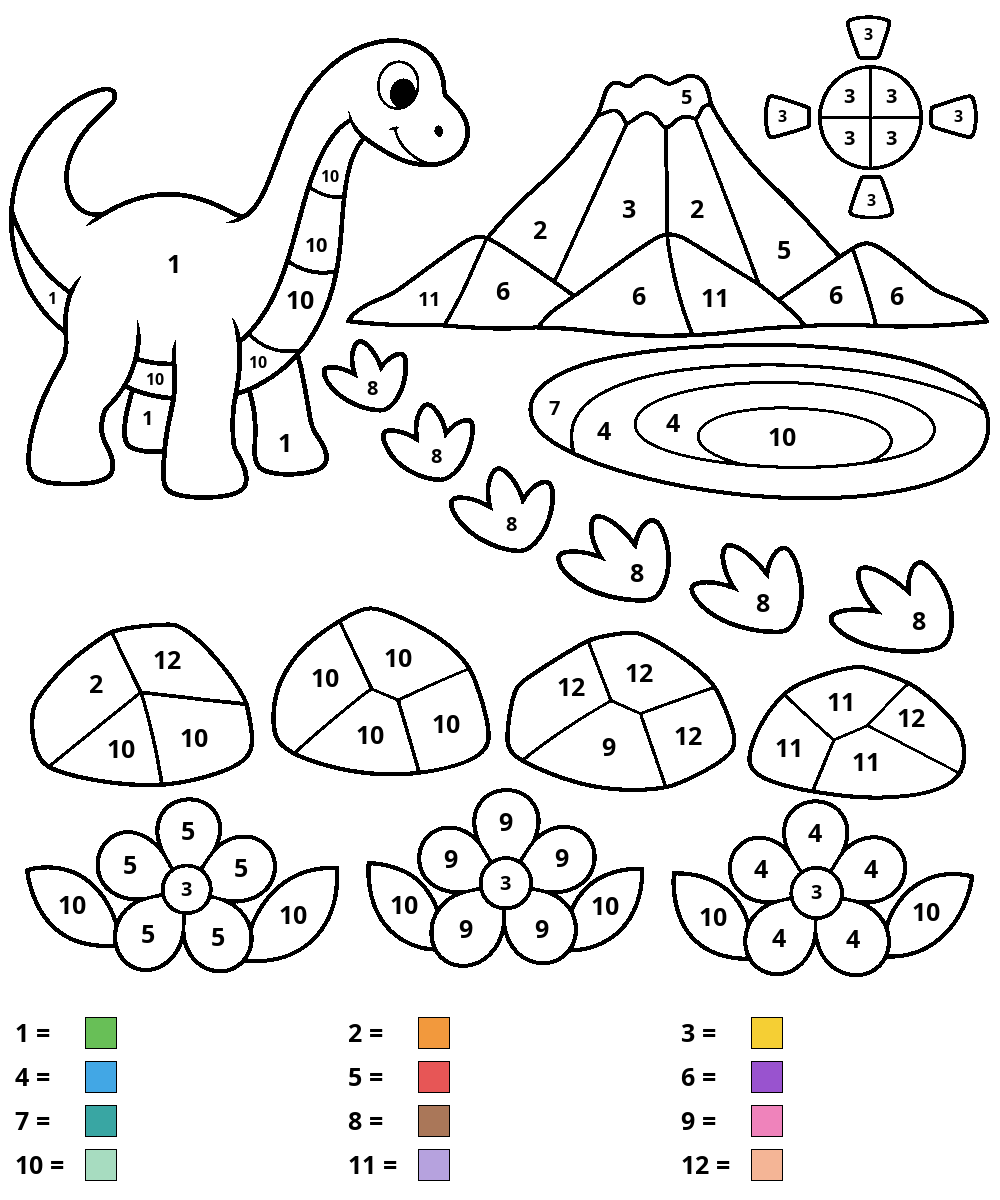
Detailed · 12 colors · 78 spaces
Begin with the baby stegosaurus if you want four colors and a short search through broad spaces. The triceratops with a leaf uses five colors. The long-neck dinosaur with the sun and the baby hatching from an egg use six. Open a preview and look at the size of the spaces before choosing. A large picture with fewer numbers can be more comfortable than a smaller drawing with many narrow compartments. There is no need to finish a page in one sitting.
The four medium pictures introduce eight to ten colors: a T-rex with a fern, an armored ankylosaurus, a parasaurolophus at a pond and two dinosaurs sharing fruit. Detailed pages use twelve colors and add a fern garden, waterfall, family at a lake and a trail of footprints. The three expert pictures contain at least one hundred numbered spaces. Their valley, botanical wreath and river island give you more objects to search. Each card shows the actual space count alongside the color count.
Every download is a two-page A4 PDF. Page one contains the numbered worksheet and its color key; page two contains the matching colored answer. Print only the first page for the activity. Keep the second on screen until you want to check a space. Use portrait orientation and actual size, or 100 percent, on 210 by 297 mm paper. Check that your printer leaves the footer and all edges visible before making several copies.
The key includes both numbered swatches and written color names in your chosen language. A black-and-white print still has the names. Put your pencils beside the key and make test marks on scrap paper to match them. Pencils are convenient for the expert spaces. If you use markers, test whether the ink shows through your paper. The worksheet and answer PNG downloads also contain the numbered color swatches, so the key stays with the saved image.
Pick a number in the key, say its color, and point to one matching space before coloring. Then search the entire picture for that number. The same color can occur on a dinosaur, a rock and a flower. Follow the printed numbers rather than assuming that a neighboring area has the same color. Check the key again when you move to a different worksheet: each picture has its own palette.
Leave the outside background and white eye highlights white. If you lose your place, return to a large numbered space and work outward from it. Enlarge the preview to inspect a number before marking the paper. When checking the answer, compare one object at a time. If you chose the wrong pencil, set the correct one beside its swatch before continuing. These cheerful illustrations are imaginative dinosaur scenes, not scientific color reconstructions.
Print a second copy and choose a different color for each number. Write your replacements beside the key and use the same replacement whenever that number appears. Try warm dinosaurs against cool plants, or a purple dinosaur with orange plates. Compare the two versions and name which objects stand out. Your new picture will differ from the supplied answer, so check consistency against your own written key. For a shorter activity, finish only one dinosaur today and return to its surroundings later.
Yes. All fifteen worksheets and matching answers are free to download without an account or email.
Page two of each PDF is the matching colored answer. You can also reveal the answer on the page or download its PNG.
This collection uses A4, 210 × 297 mm. Print page one at actual size and check the margins.
Yes. The PDF color key contains names and numbers as well as swatches. Match your pencils to the written names.
Choose a four-, five- or six-color page, or write consistent substitute colors beside the key.