 kiduverse
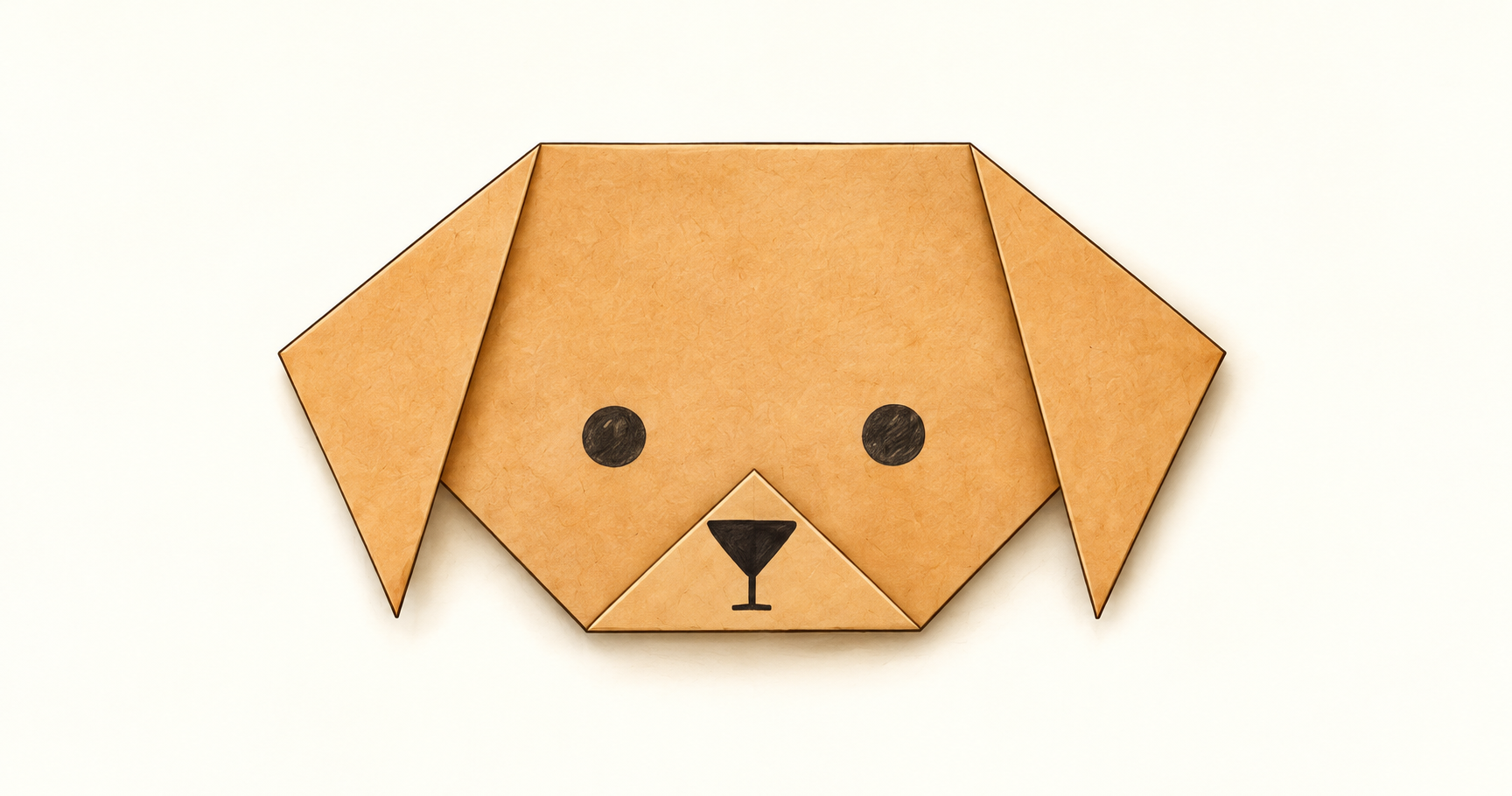
Origami dog face
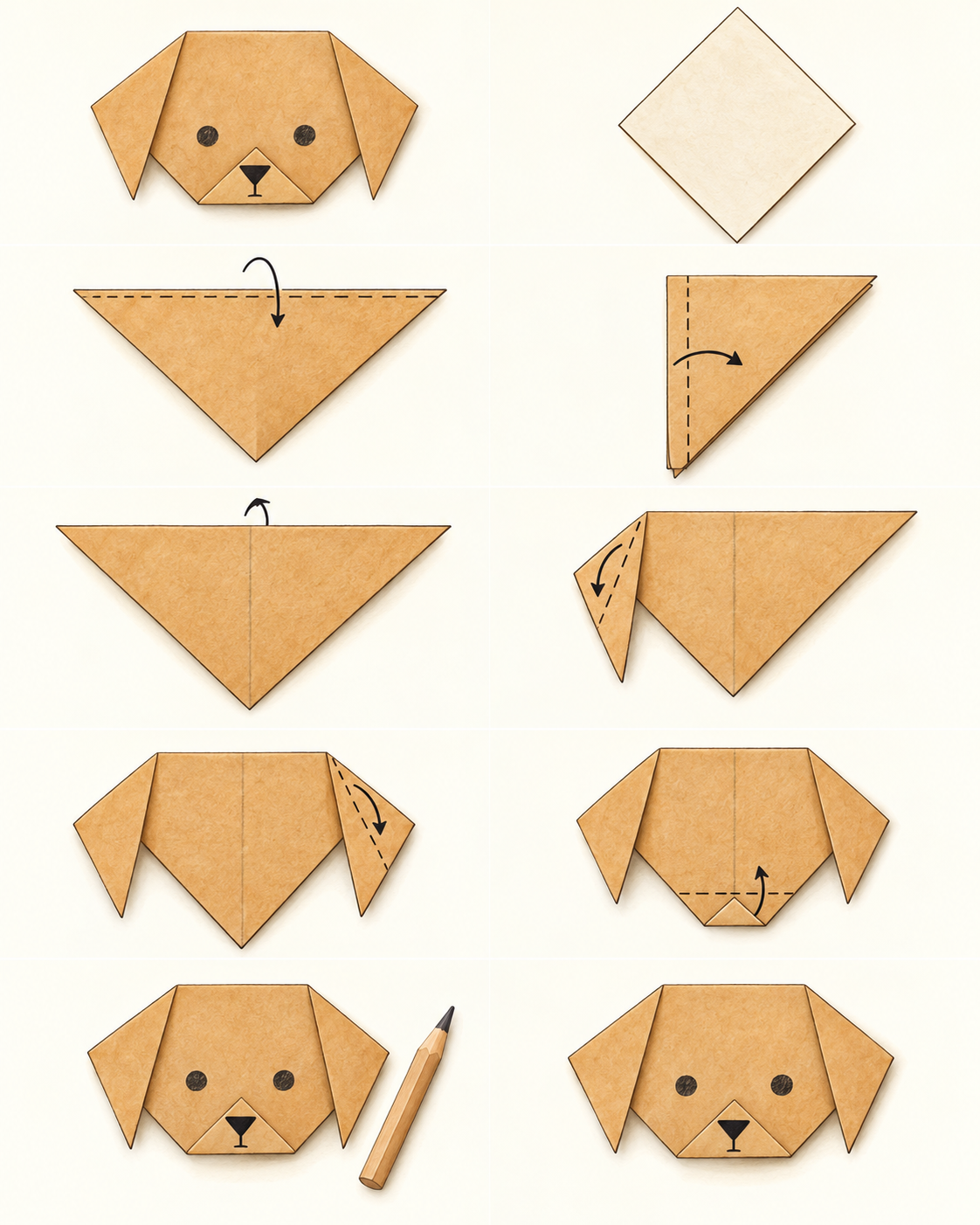
Fold a paper dog face with hanging ears from one square. Nine illustrated steps, paper advice, checks, fixes and printable A4 instructions for beginners.
One sheet. A few folds. Your first paper story. Start with a dog, try a cat, then fold a boat, a fish or a unicorn bookmark.
Dog: a triangle and two hanging ears.
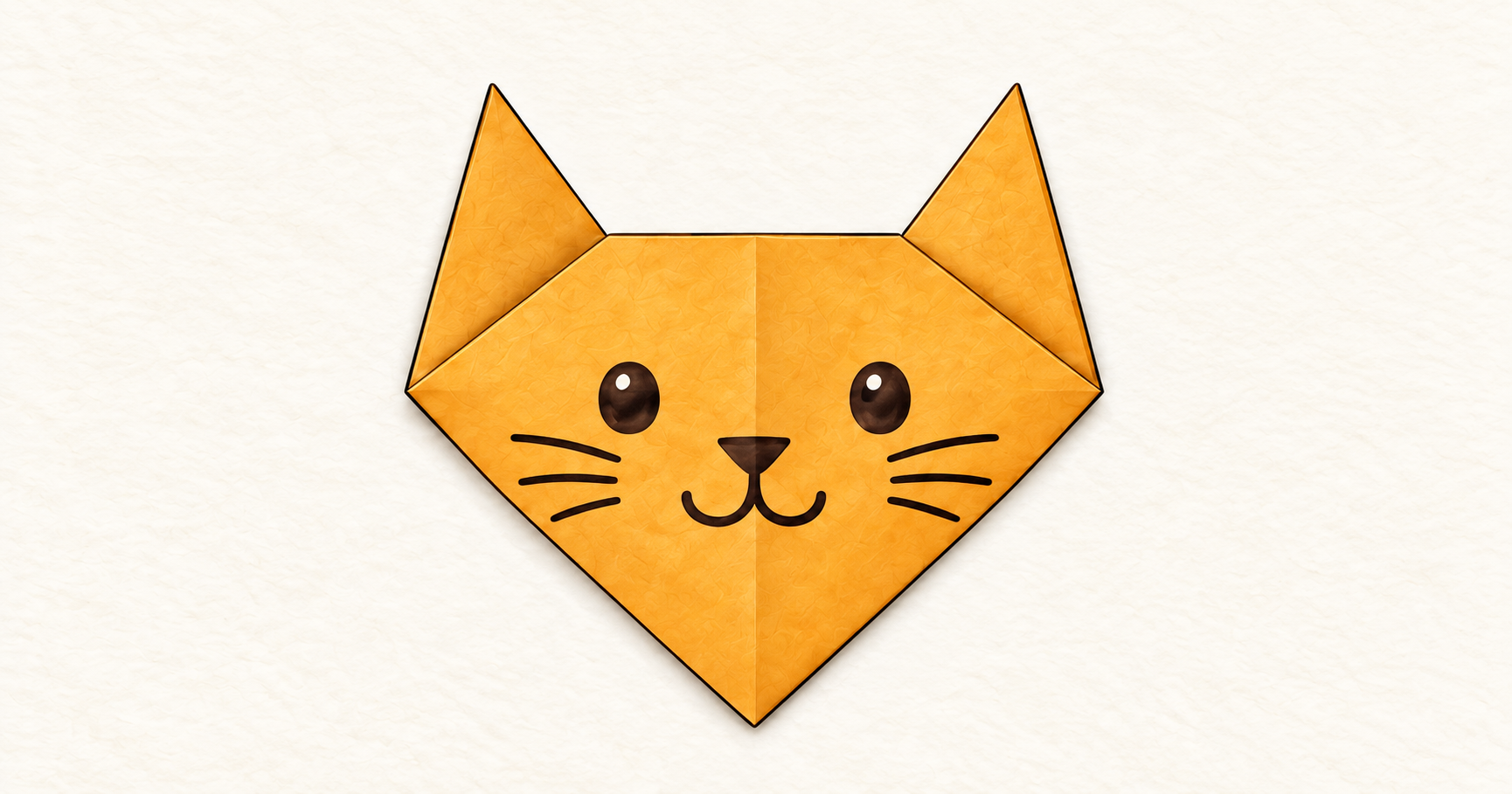
Cat: upright ears and turning a model over.
Cup: from a flat sheet to an open pocket.
Boat: a rectangle, two pockets and an open hull.
Fish: a layered triangle and two separate tail flaps.
Choose by the folds you already know. Times are rough guides; take as long as you need.
Fold a paper dog face with hanging ears from one square. Nine illustrated steps, paper advice, checks, fixes and printable A4 instructions for beginners.
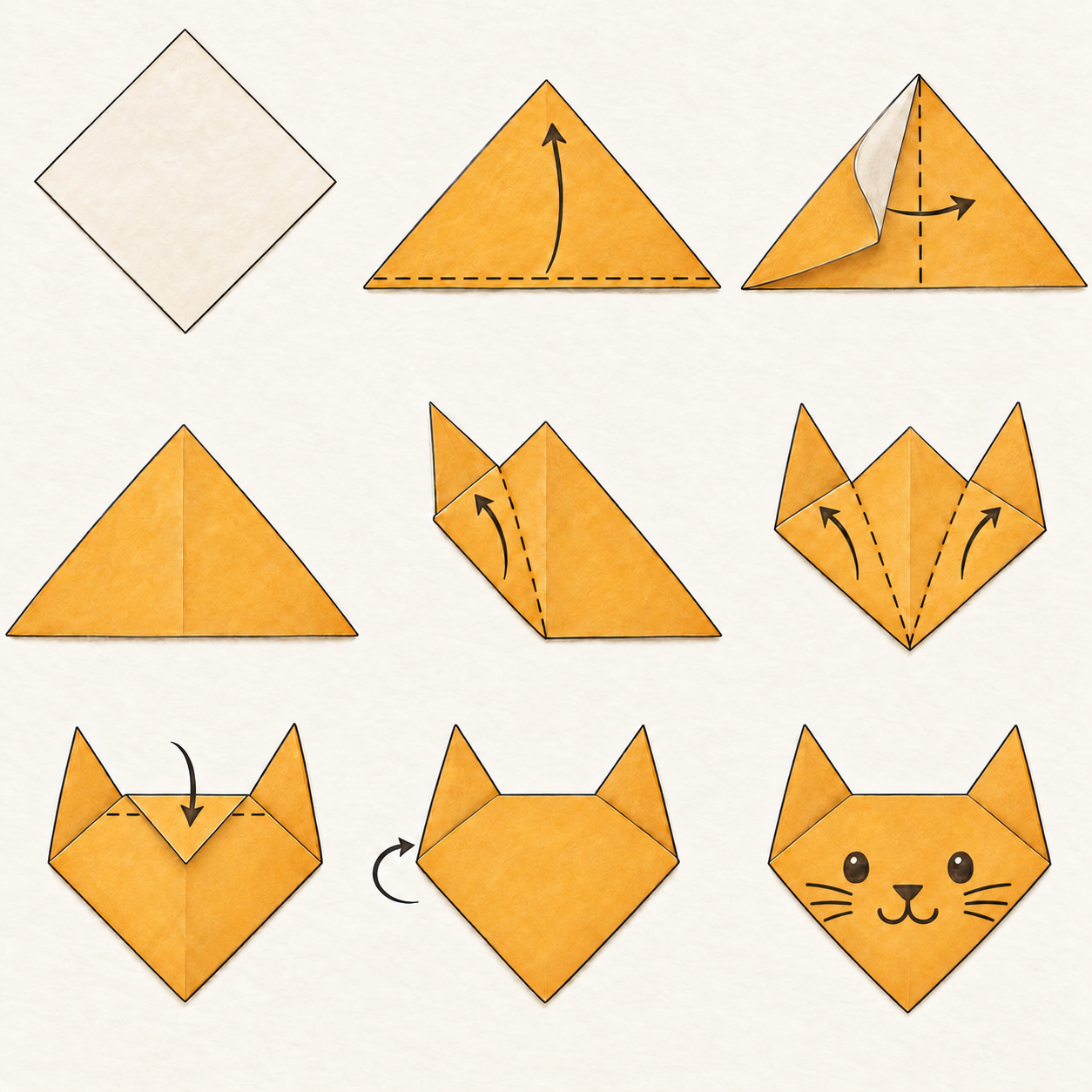
Fold a paper cat face from one square with nine illustrated steps, upright ear folds, checkpoints, fixes and printable A4 overview and detailed PDF instructions.
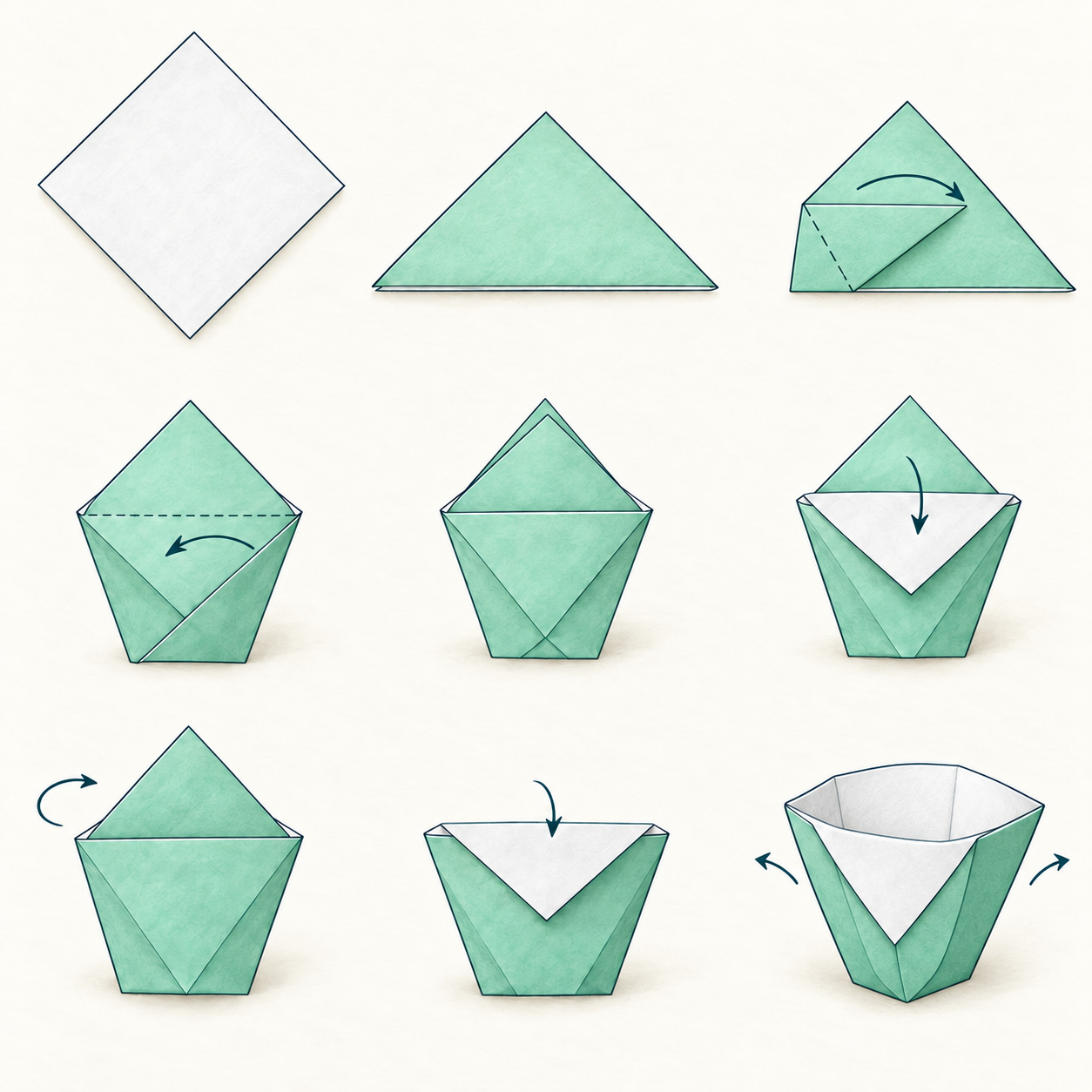
Fold one 15 × 15 cm square into a tapered paper cup in nine clear steps. Practice crossing corners with a level edge, moving one layer at a time and opening a pocket, without glue or scissors.
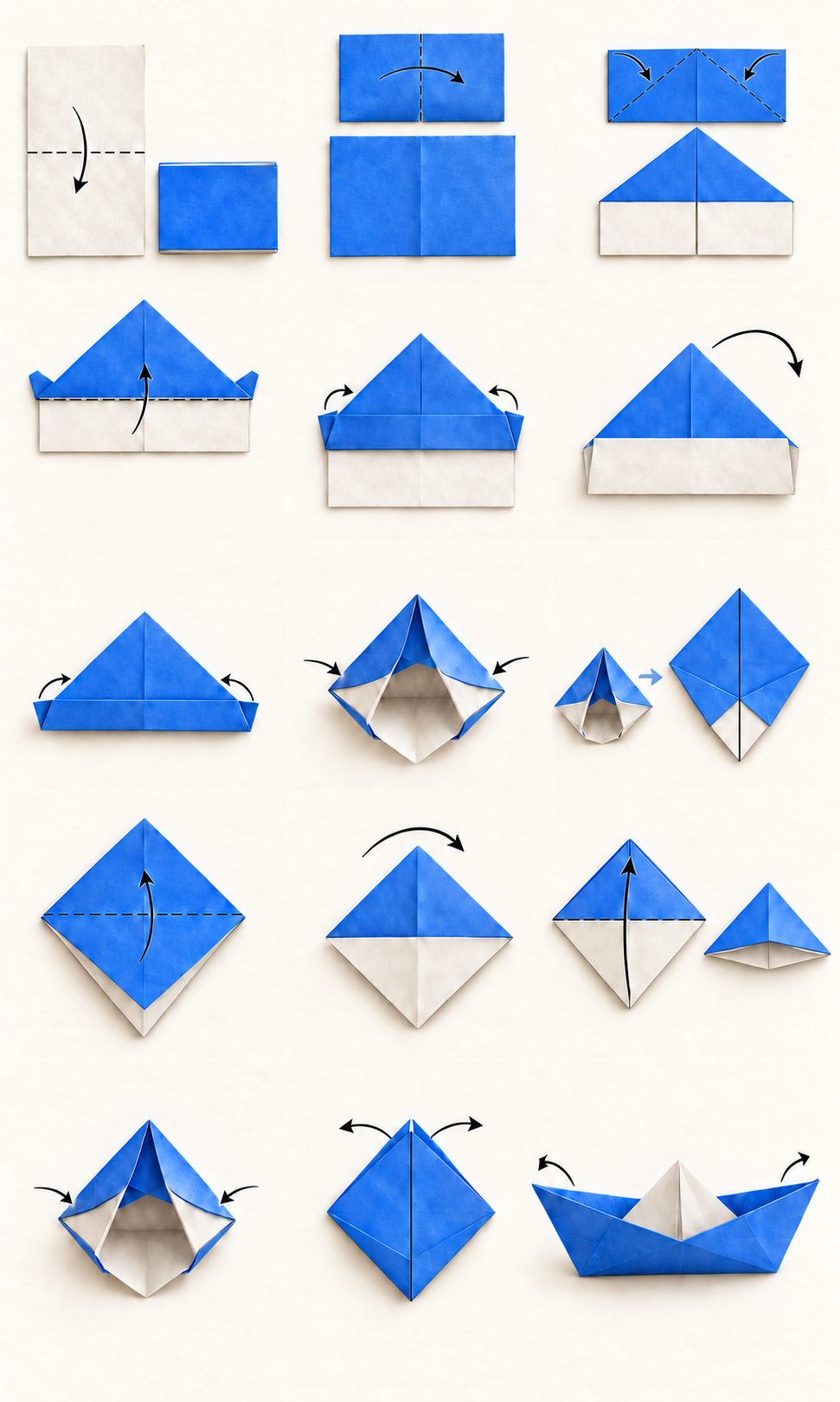
Fold a classic origami paper boat from an A4 rectangle: 15 illustrated actions, pocket-opening technique, checks, repairs and printable PDF instructions.
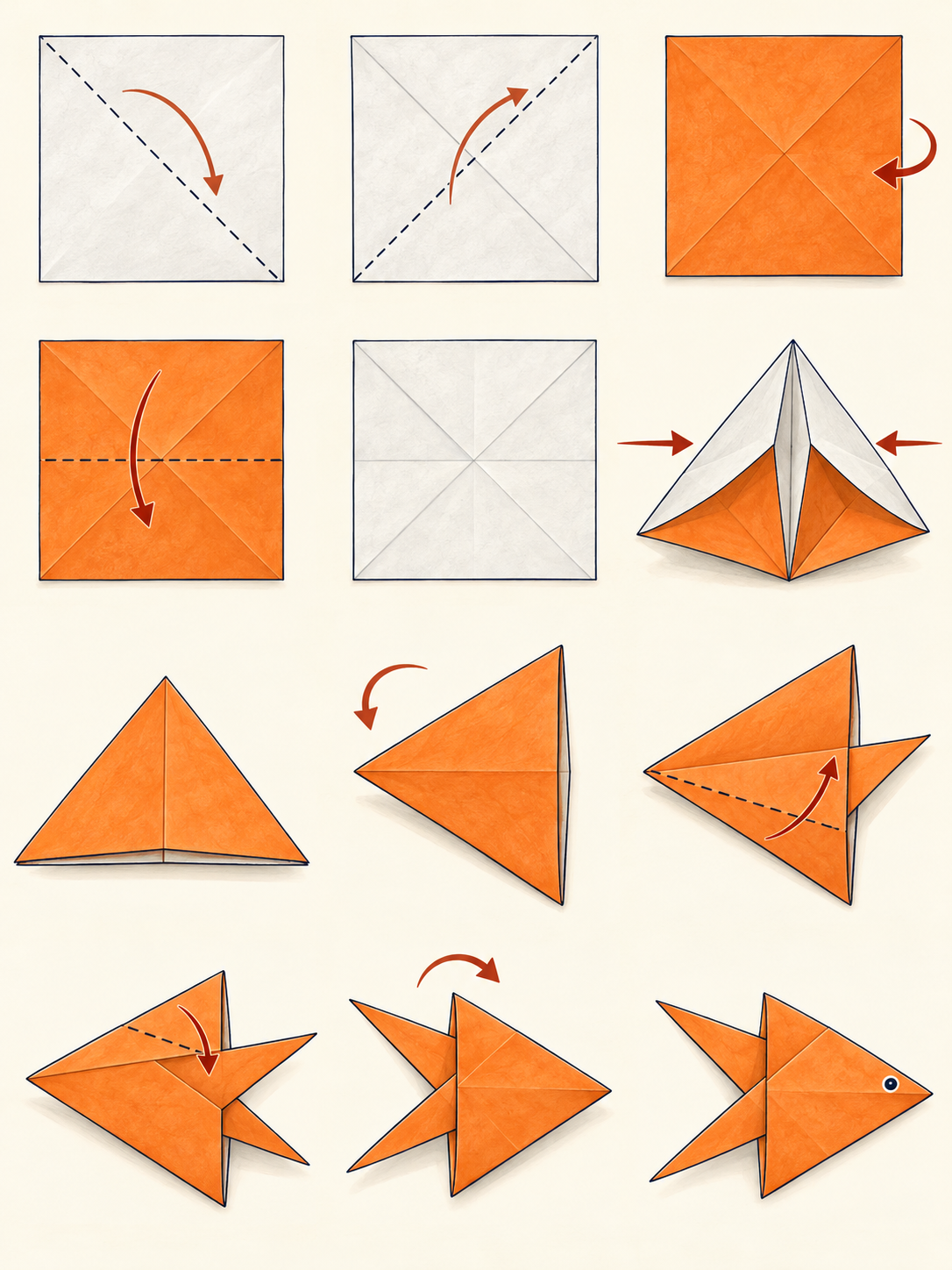
Fold a square into a triangular fish with a crossed tail. Practice collapsing prepared creases and moving one front flap at a time.
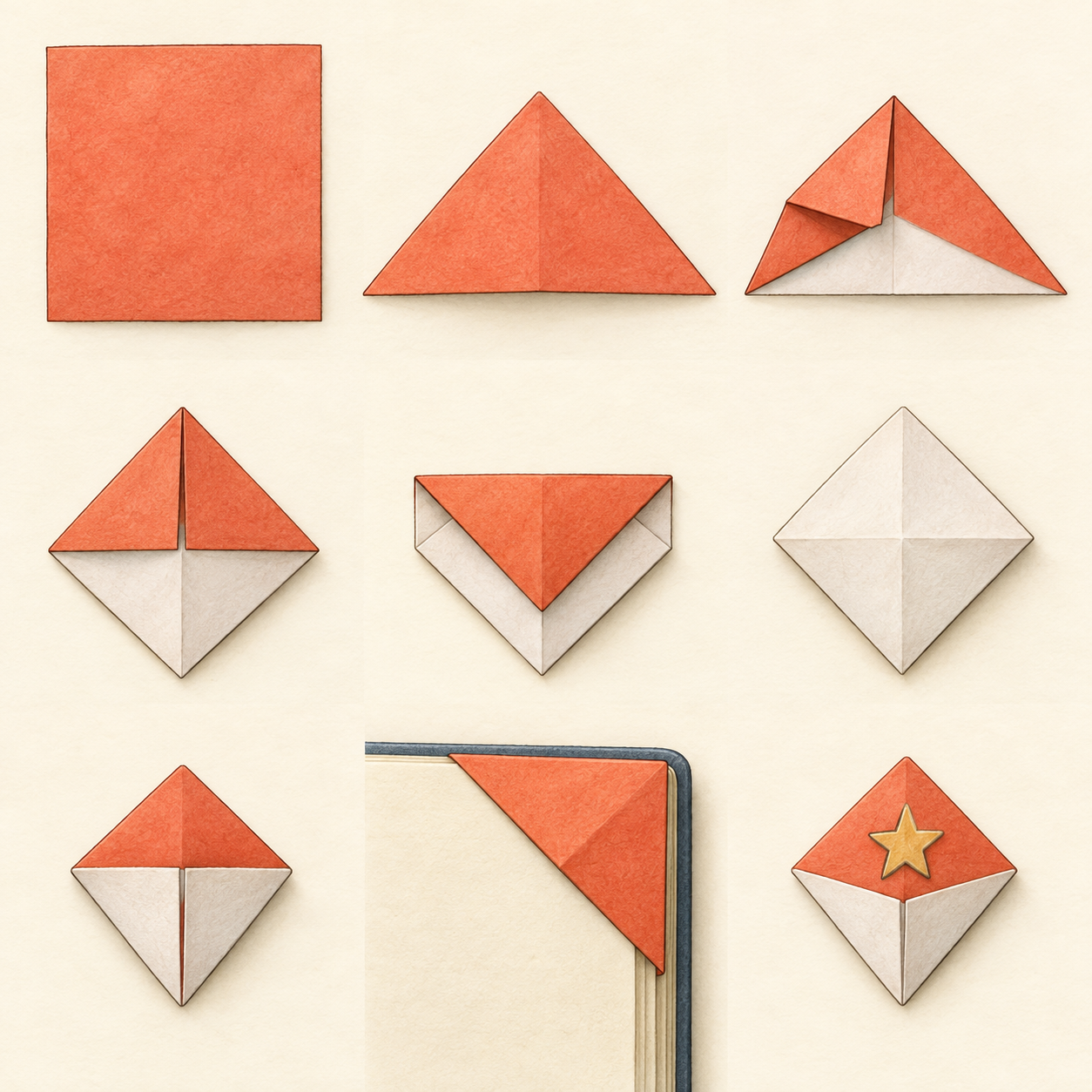
Fold a useful paper corner bookmark from one square with a pocket tuck, nine illustrated steps and printable A4 instructions.
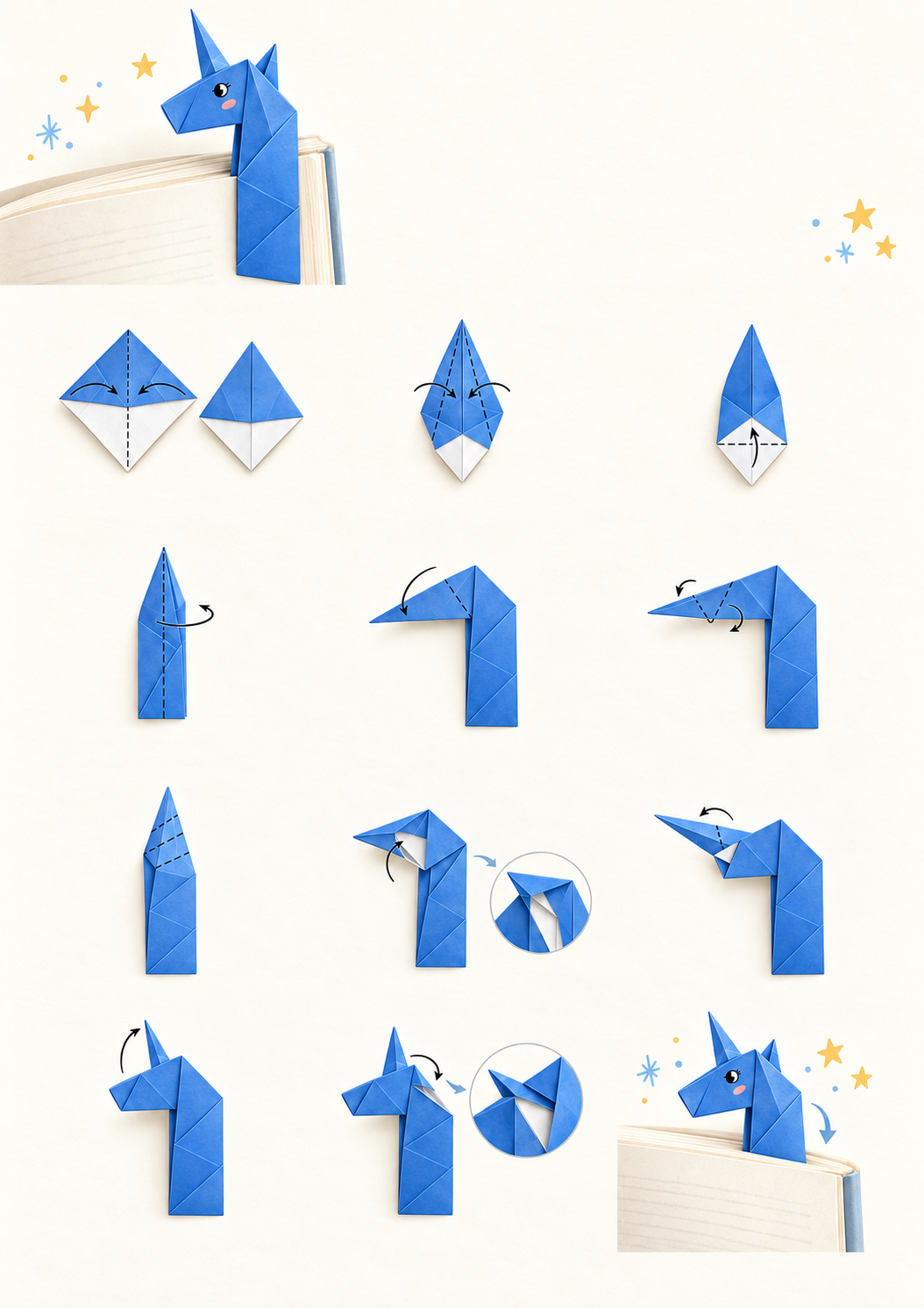
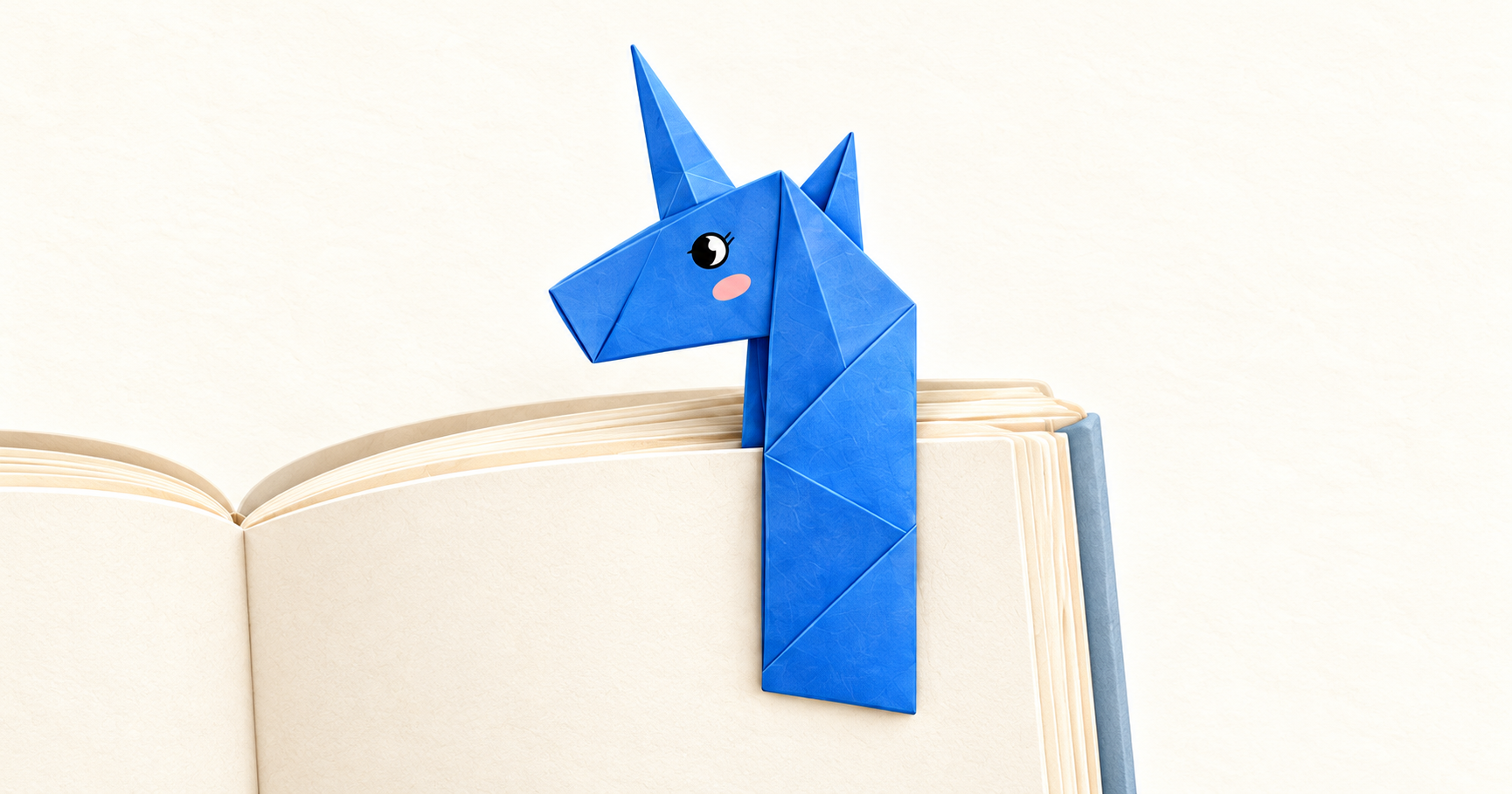
Fold a unicorn bookmark from one square: illustrated steps, paper preparation, inside reverse folds, troubleshooting and A4 PDFs.
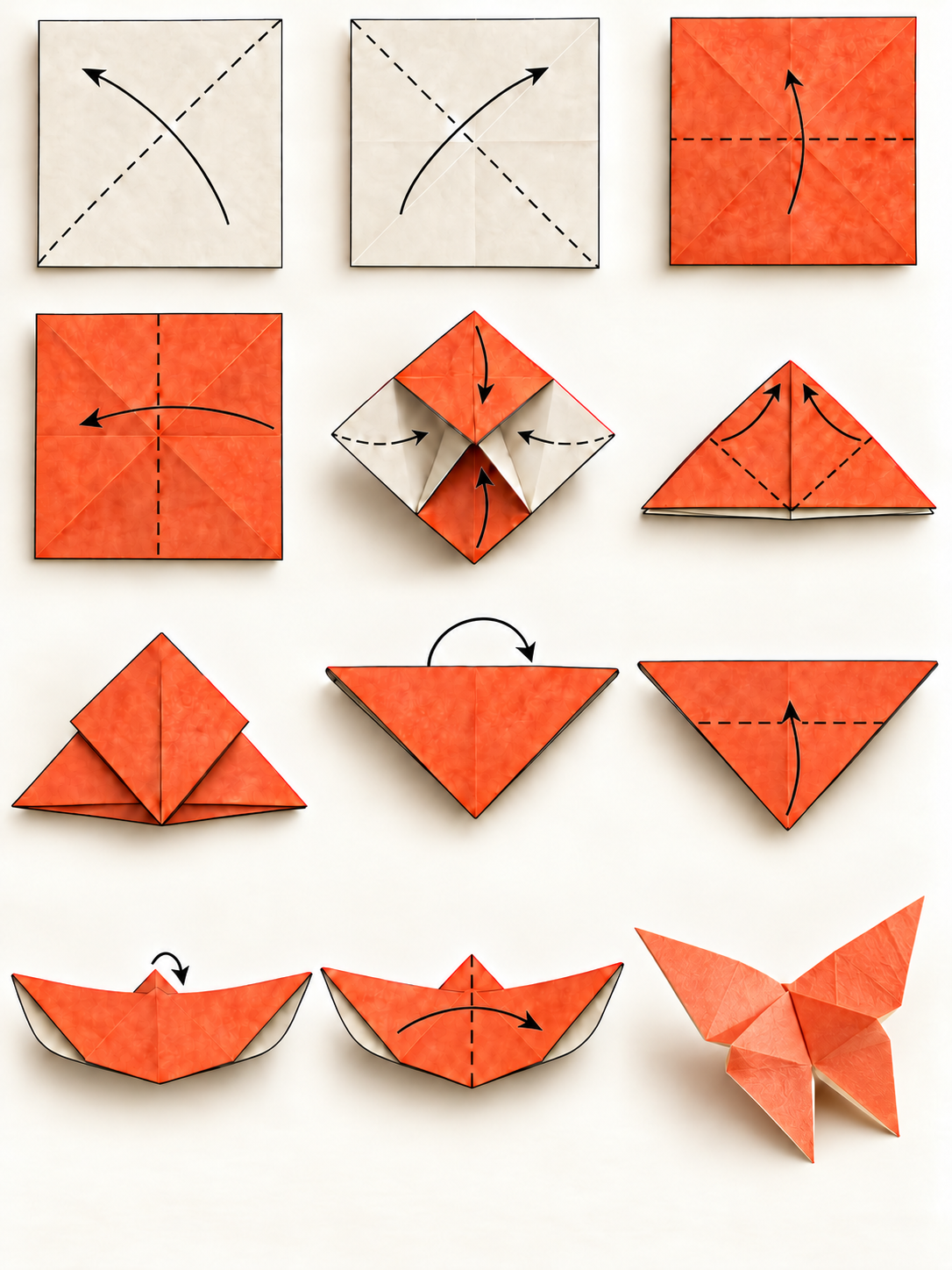
Fold a paper butterfly from one square: learn a triangular base, follow 12 illustrated steps, fix uneven wings and download the A4 instructions.
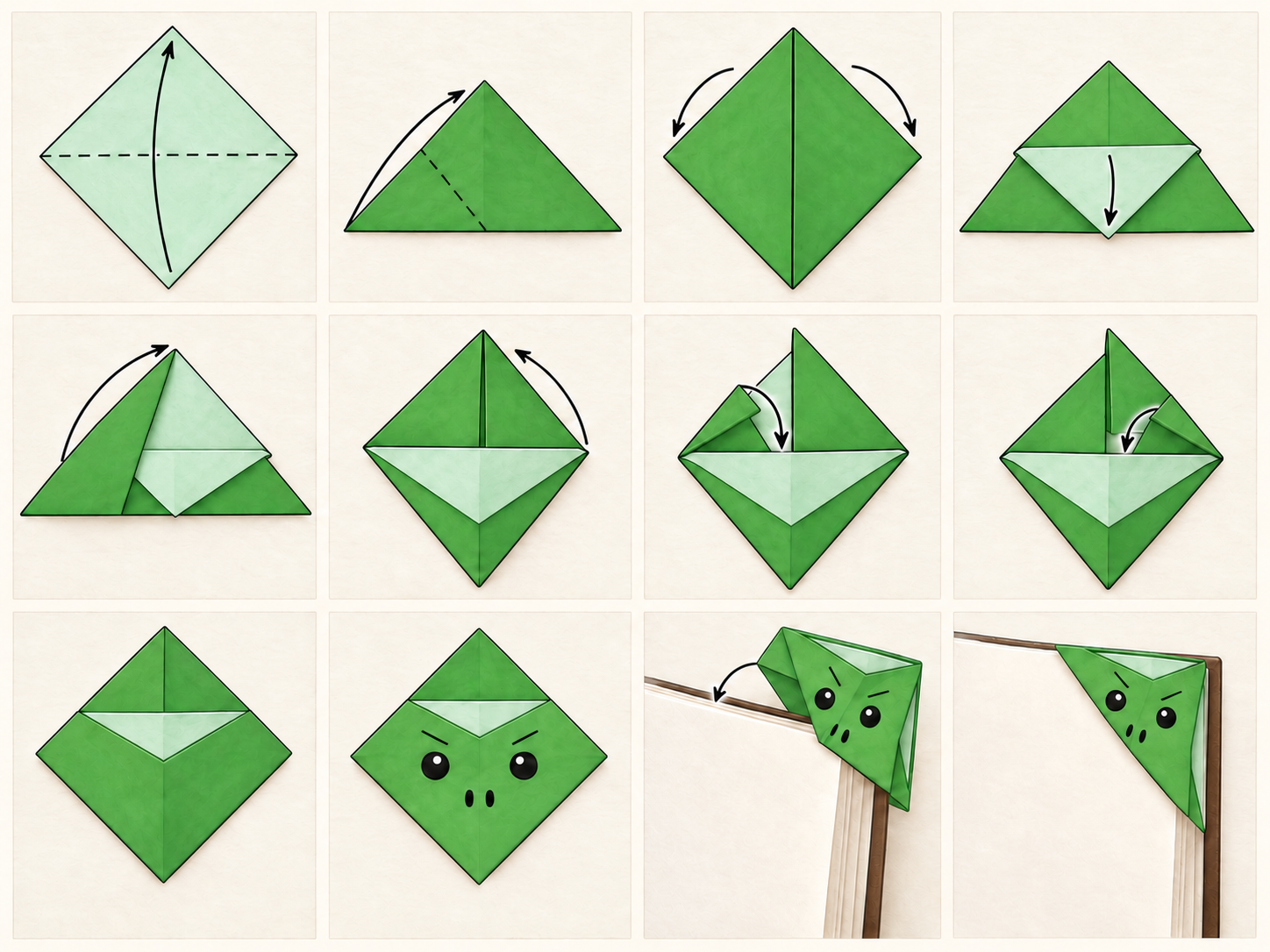
Fold a dinosaur corner bookmark from one paper square. Twelve illustrated steps explain the pocket, two tucks, face decoration and printable A4 instructions.
For the dog, cat, cup and fish, use a ready-cut square about 15 × 15 cm; for the unicorn bookmark, choose 20 × 20 cm, made from thin paper. Ordinary printer paper trimmed to a square works too. Card is harder to fold.
The boat uses an A4 or Letter rectangle.
Use a flat table. Two different side colors make turns easier to see. A pencil is only for optional face decoration; the folding needs no glue or scissors.
Hold the matching corners with one hand. With the other, press the crease from the middle toward the edges. If an edge slips, reopen and align it before pressing hard.
Paper and your first folds ↗Dashed line — a new crease, or a center reference if the step asks you to unfold again.
Arrow — where to move the corner. Turning the whole model over is always a separate written step.
Before → after — the action is on the left, the result on the right. Shades distinguish visible paper sections; read the text for the number of layers.
Open the last fold. Match and hold the tips first, then smooth the crease. Check the starting sheet: the boat uses a rectangle; the other models use a square.
Place the fold on the table and press from the middle outward. Thick paper makes multiple layers hard to flatten; try a thinner sheet.
Compare with the previous result on the right. Find the two separate tips. In the cup, the top tips fold one at a time onto opposite sides; folding both together closes the opening.
Try the dog: one large diagonal and two ears. If matching corners is difficult, start with the beginner exercise.
No. Use a thin 15 × 15 cm square for the dog, cat, cup and fish, a 20 × 20 cm square for the unicorn bookmark, or an A4 or Letter rectangle for the boat. Very small sheets are harder to hold.
Yes. Each lesson has a print layout containing every step and diagram. Open a lesson and use its print button or your browser’s print command.