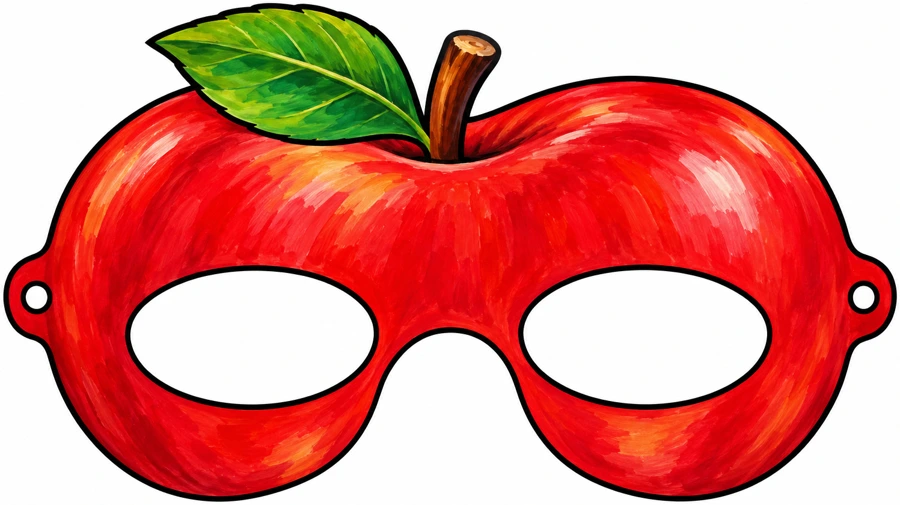
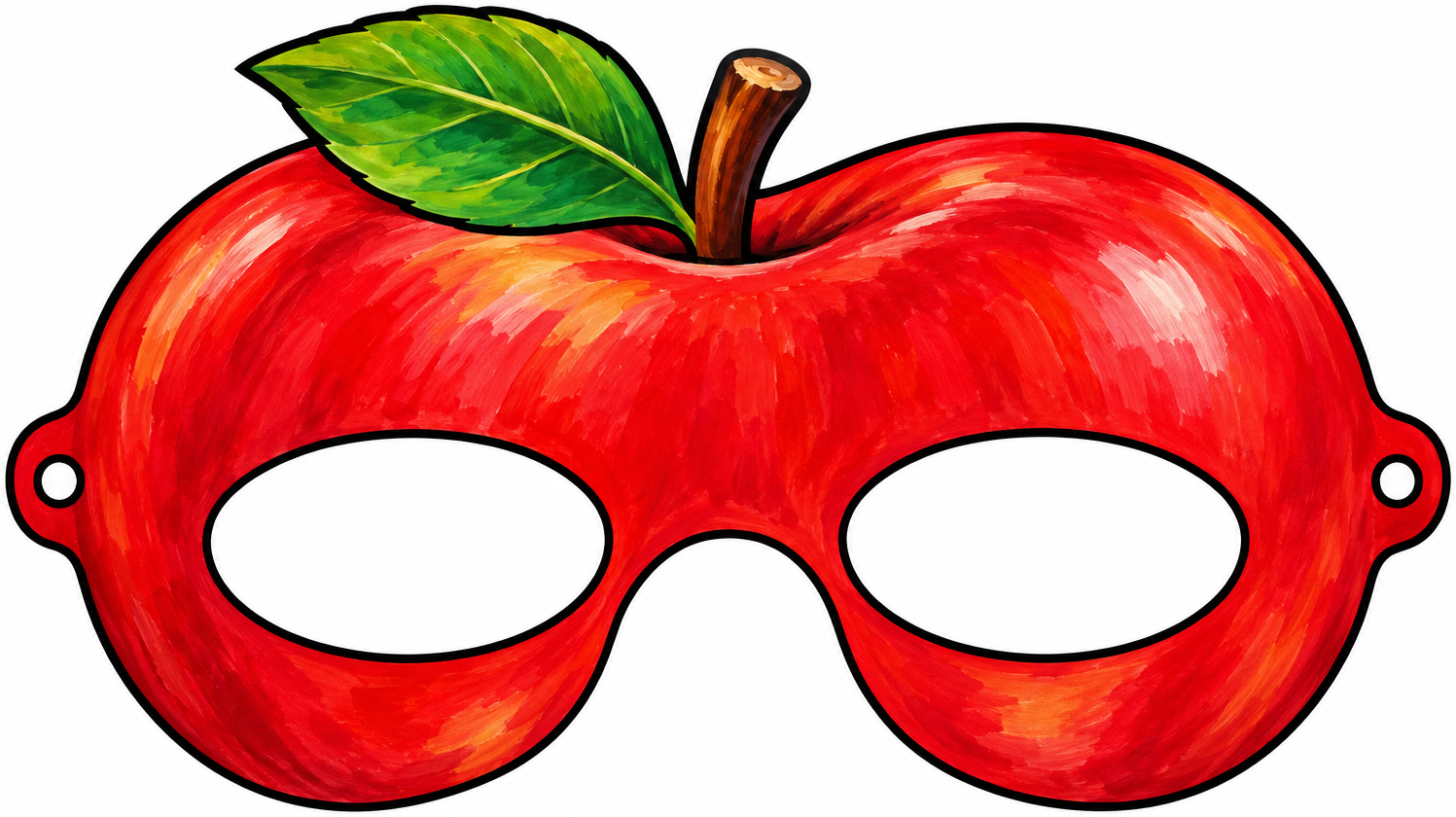
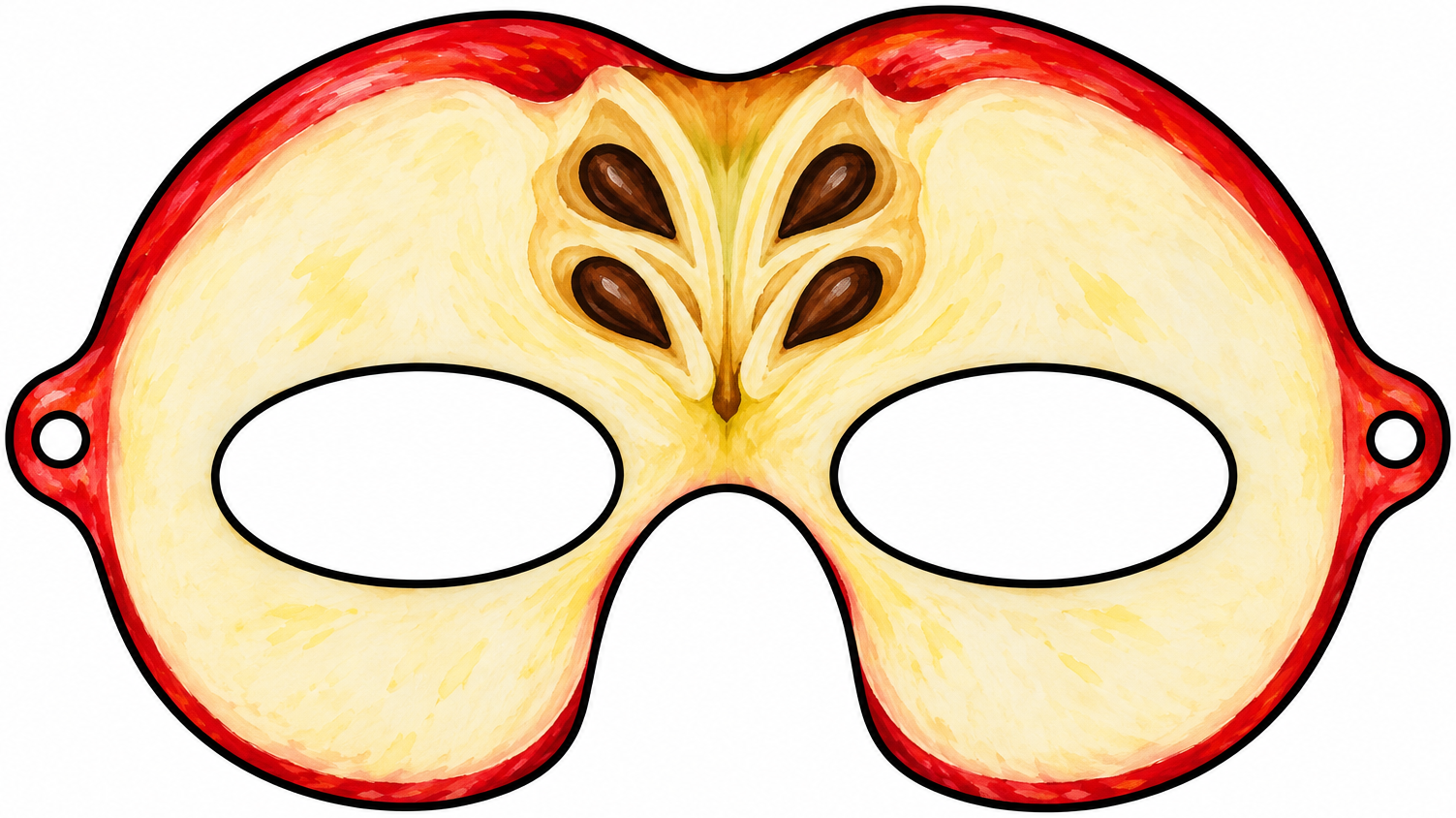
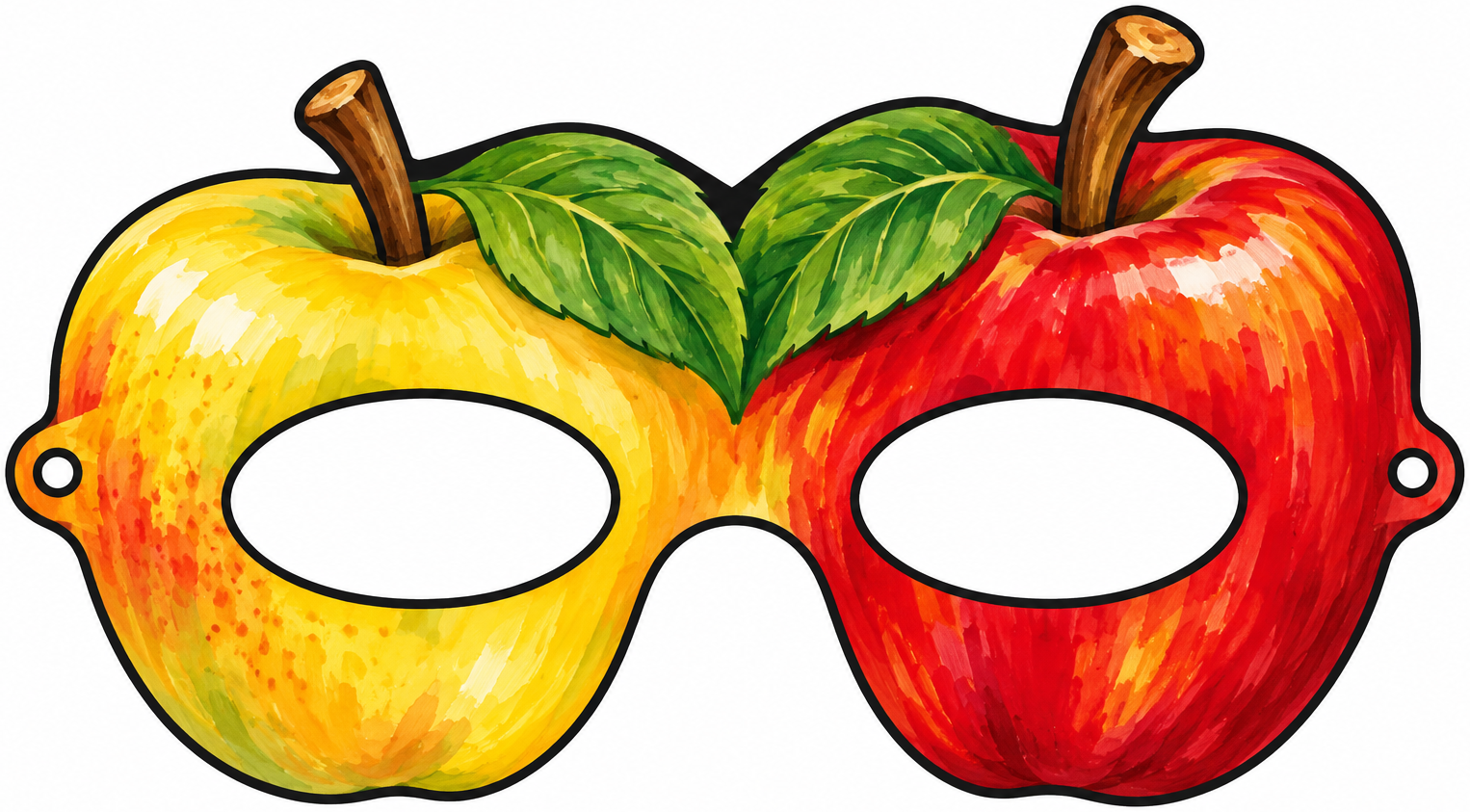
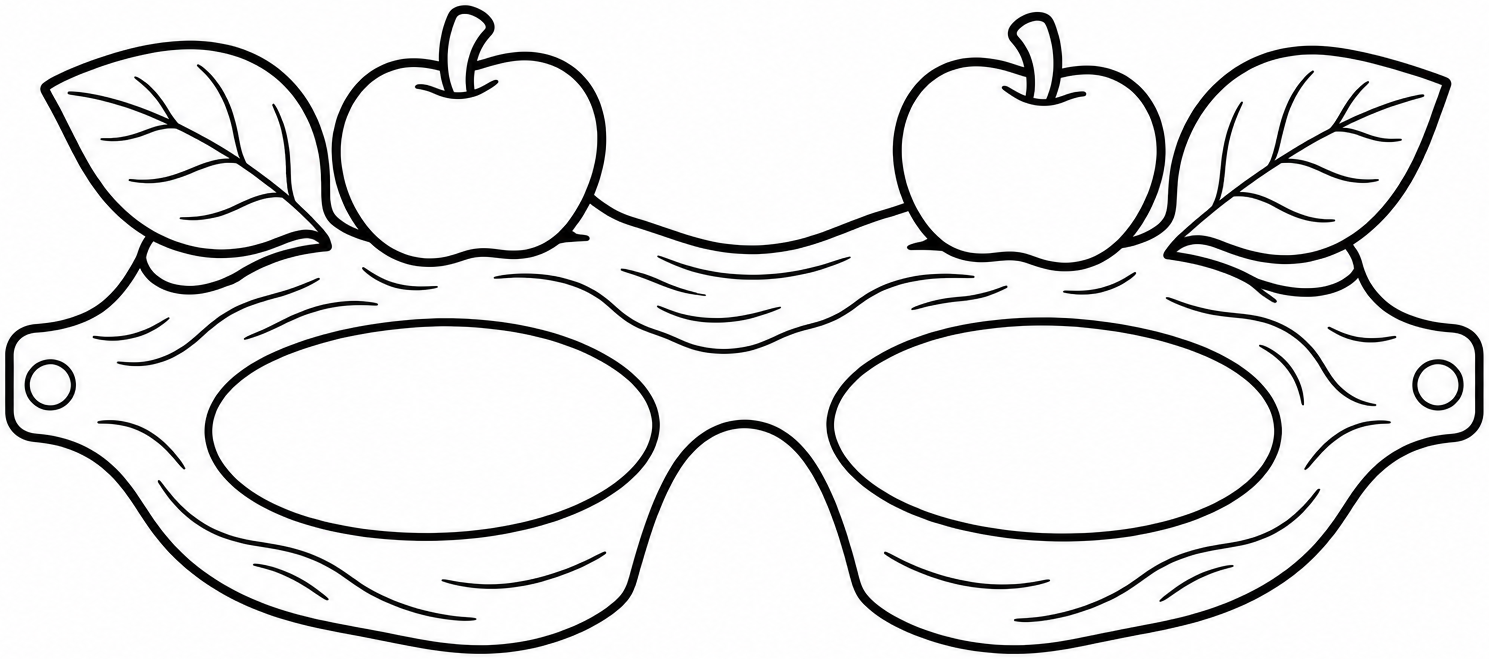
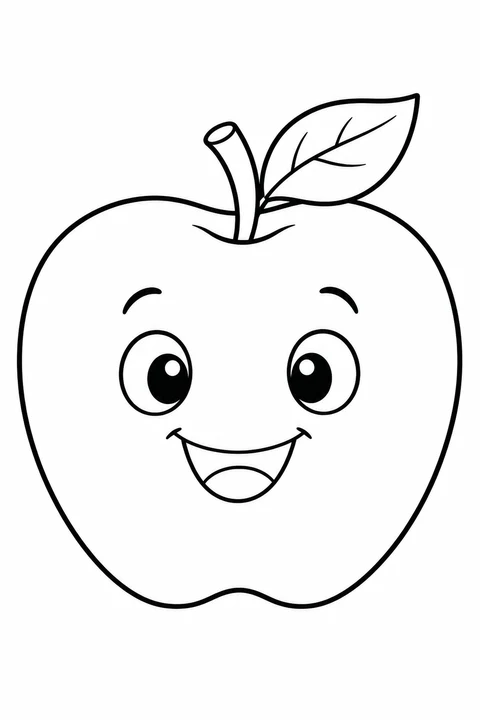
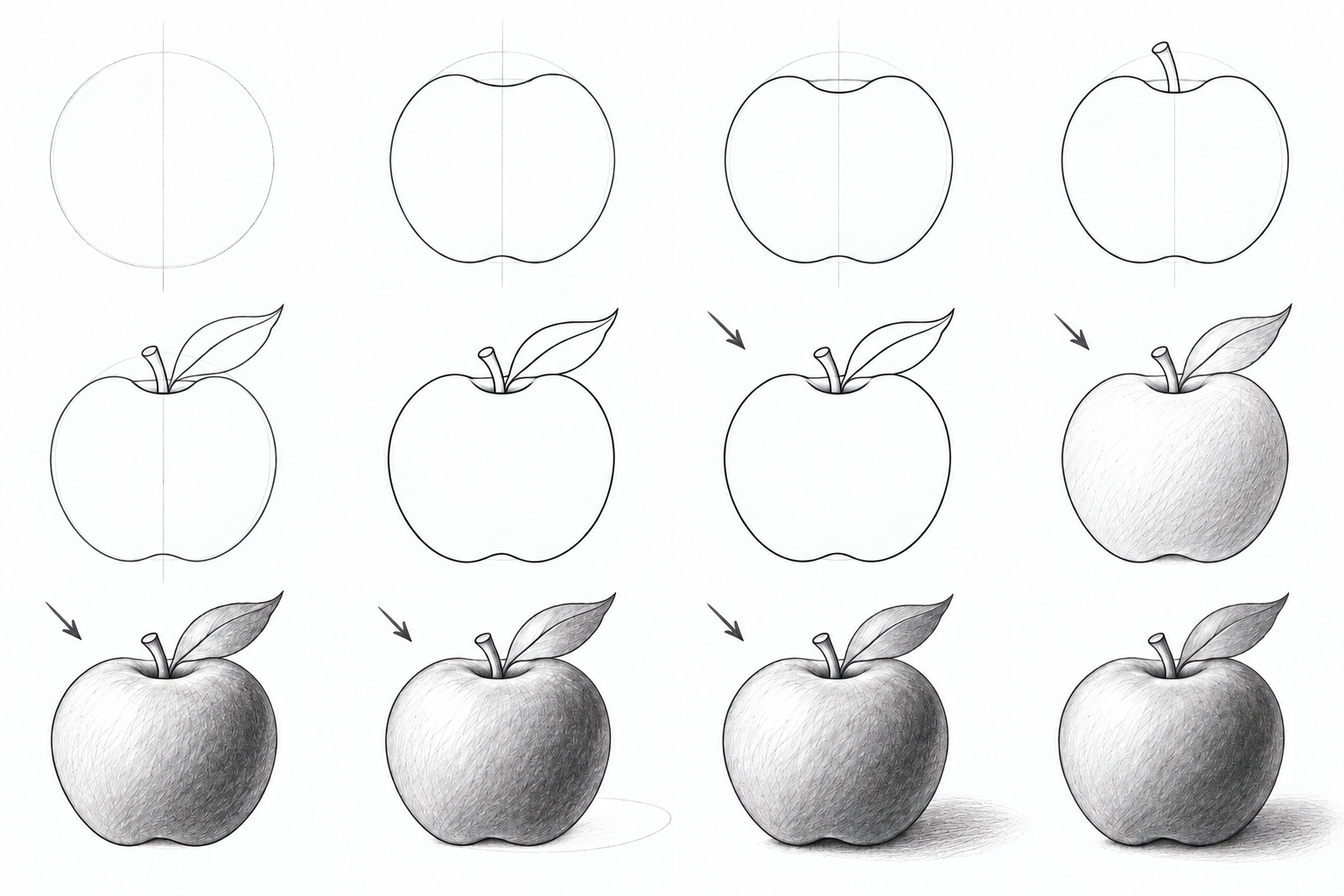
Choose an apple for a harvest celebration or a small home theatre: a whole fruit, a seed-filled cross-section, a basket or an apple blossom. Twelve different half-masks include six color and six color-in designs. Each has two eye openings, an open nose notch and side fastening marks. Download every template as an A4 PDF.
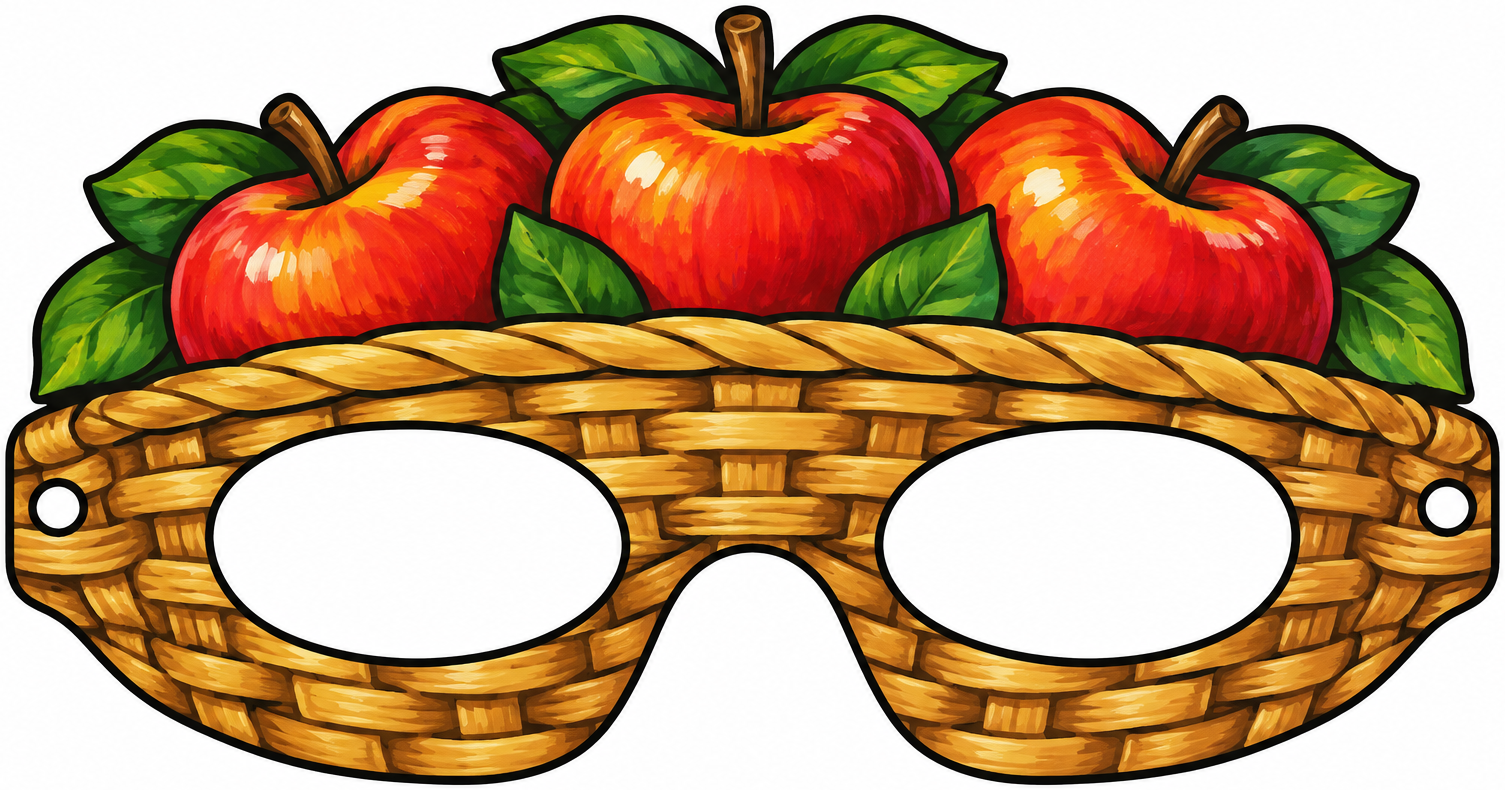
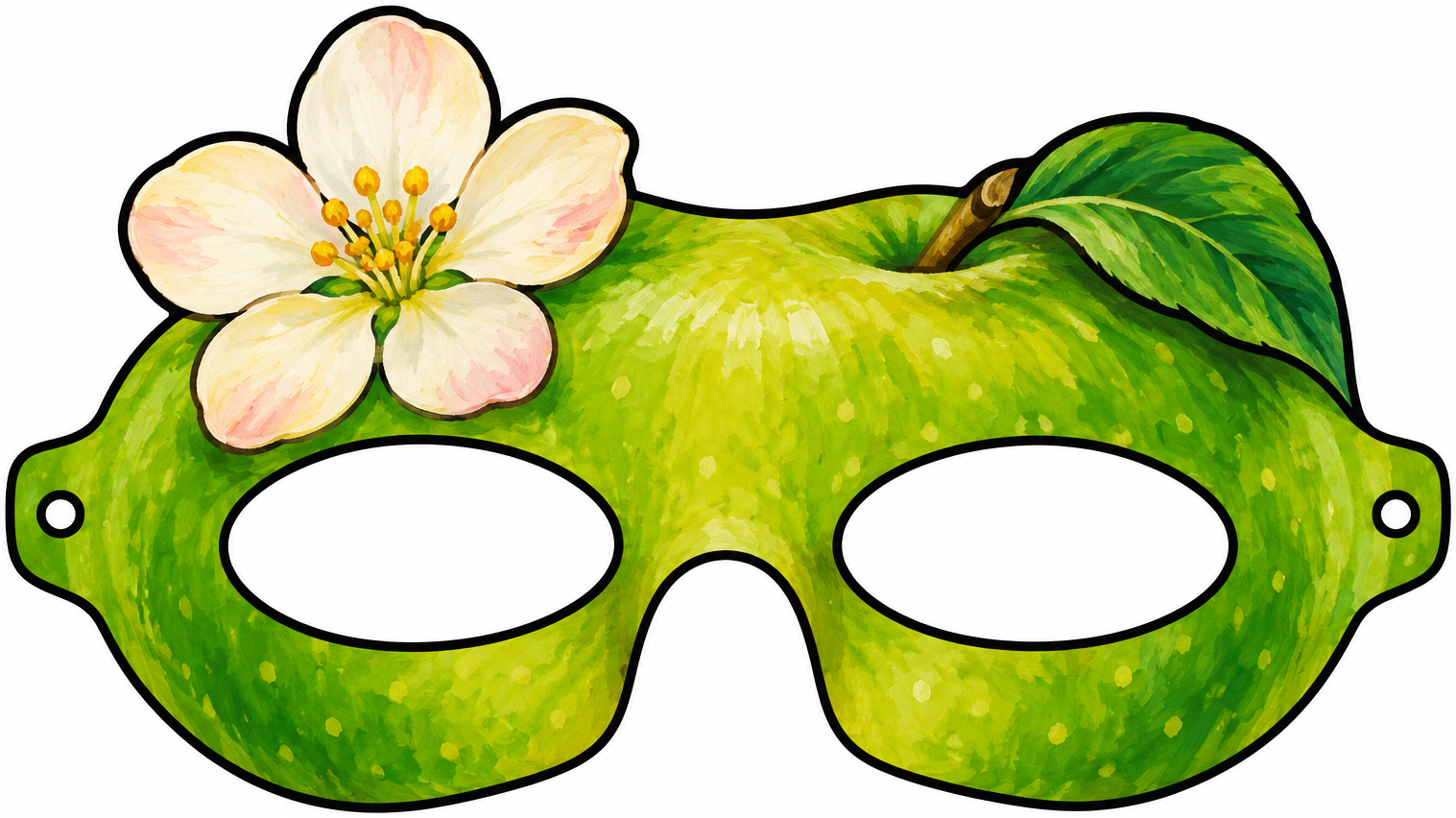
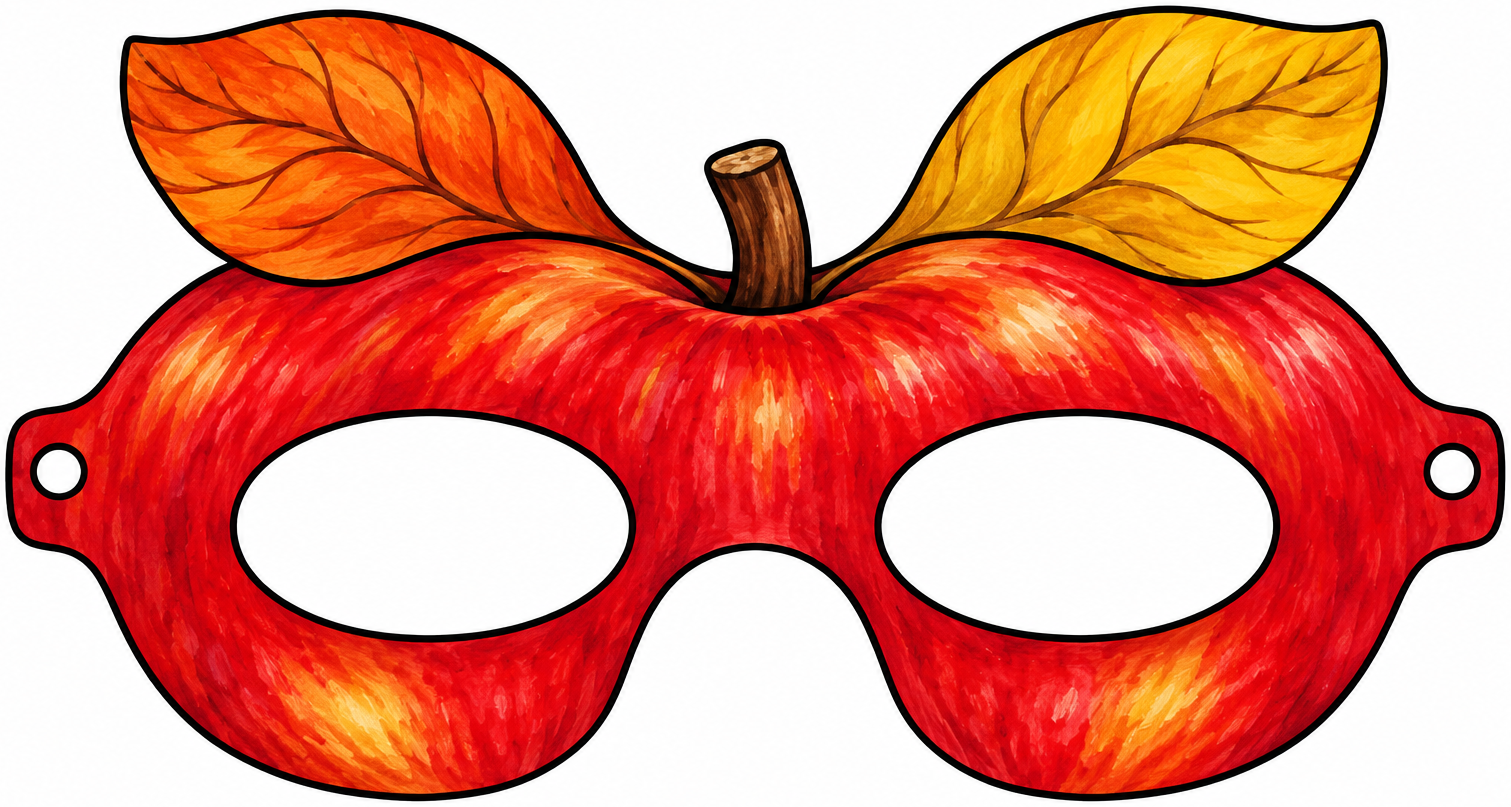
The six color designs offer different constructions: Orchard apple has a single leaf, Apple cross-section shows seeds, Twin apples joins two fruits, Apple basket has a woven band, Apple blossom adds a broad flower and Harvest apple carries autumn leaves. These are different silhouettes, not six recolors of one template. For an easier outline, start with the smooth cross-section; the basket crown needs more changes of direction. All upper decorations stay connected to the brow.
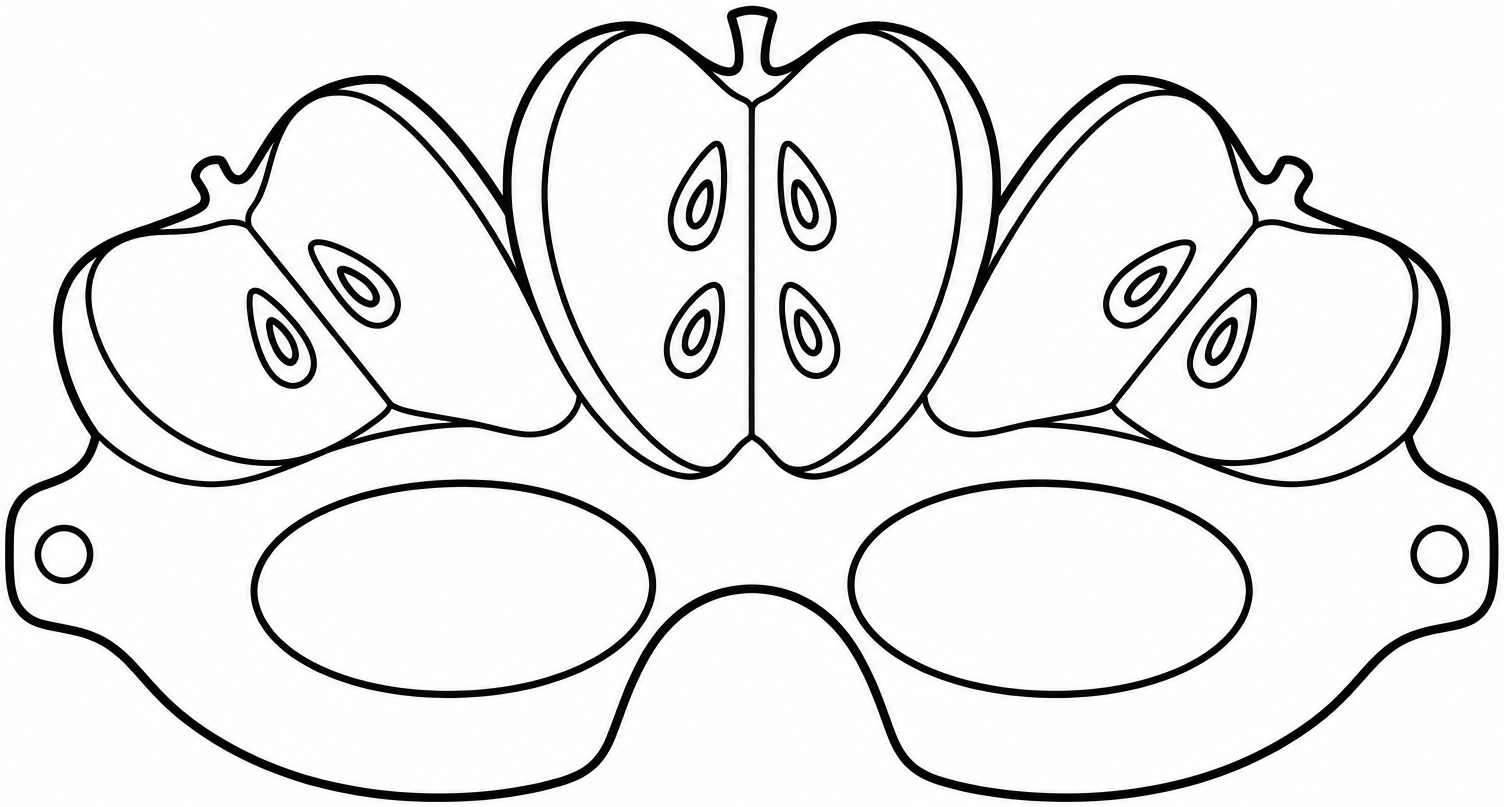
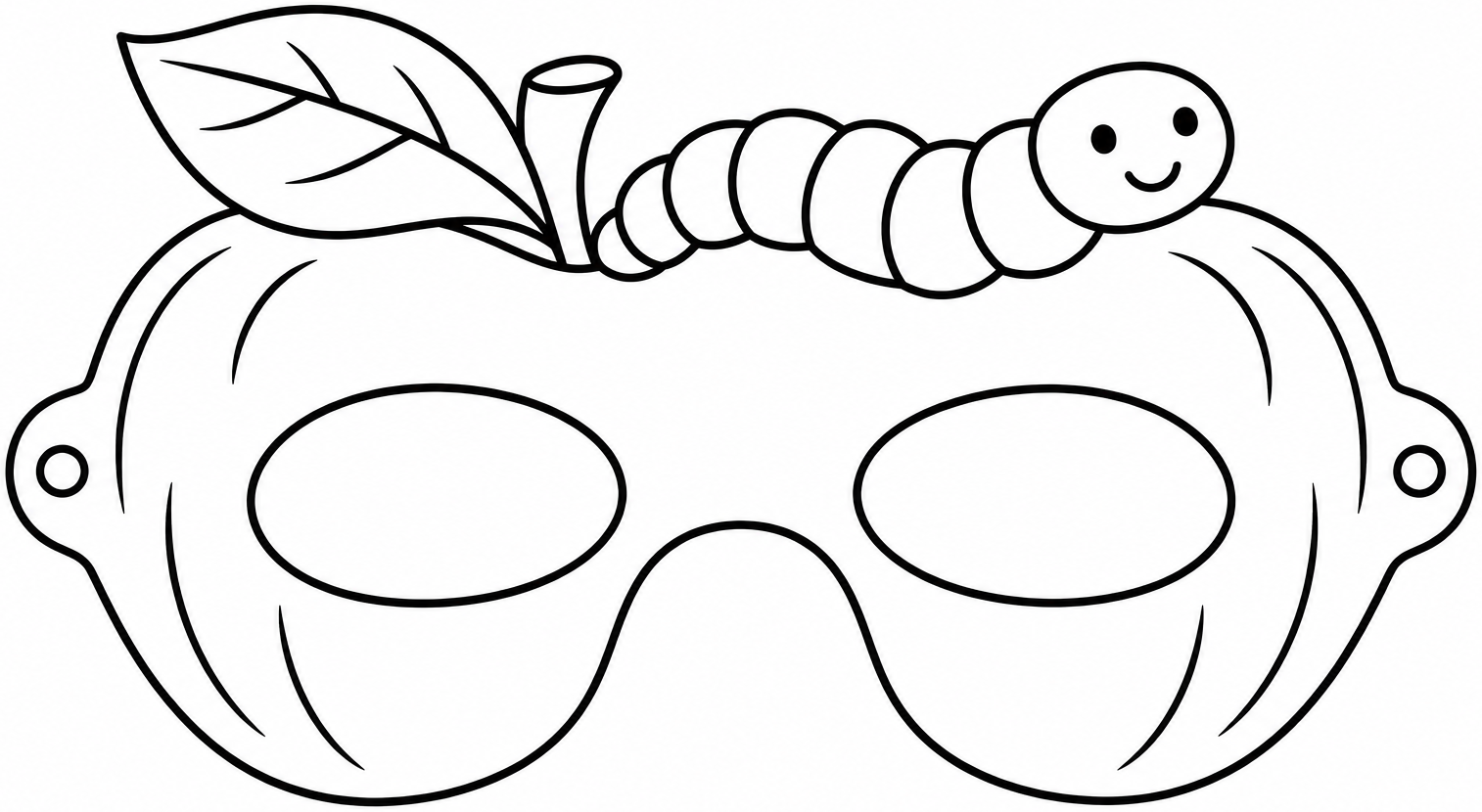
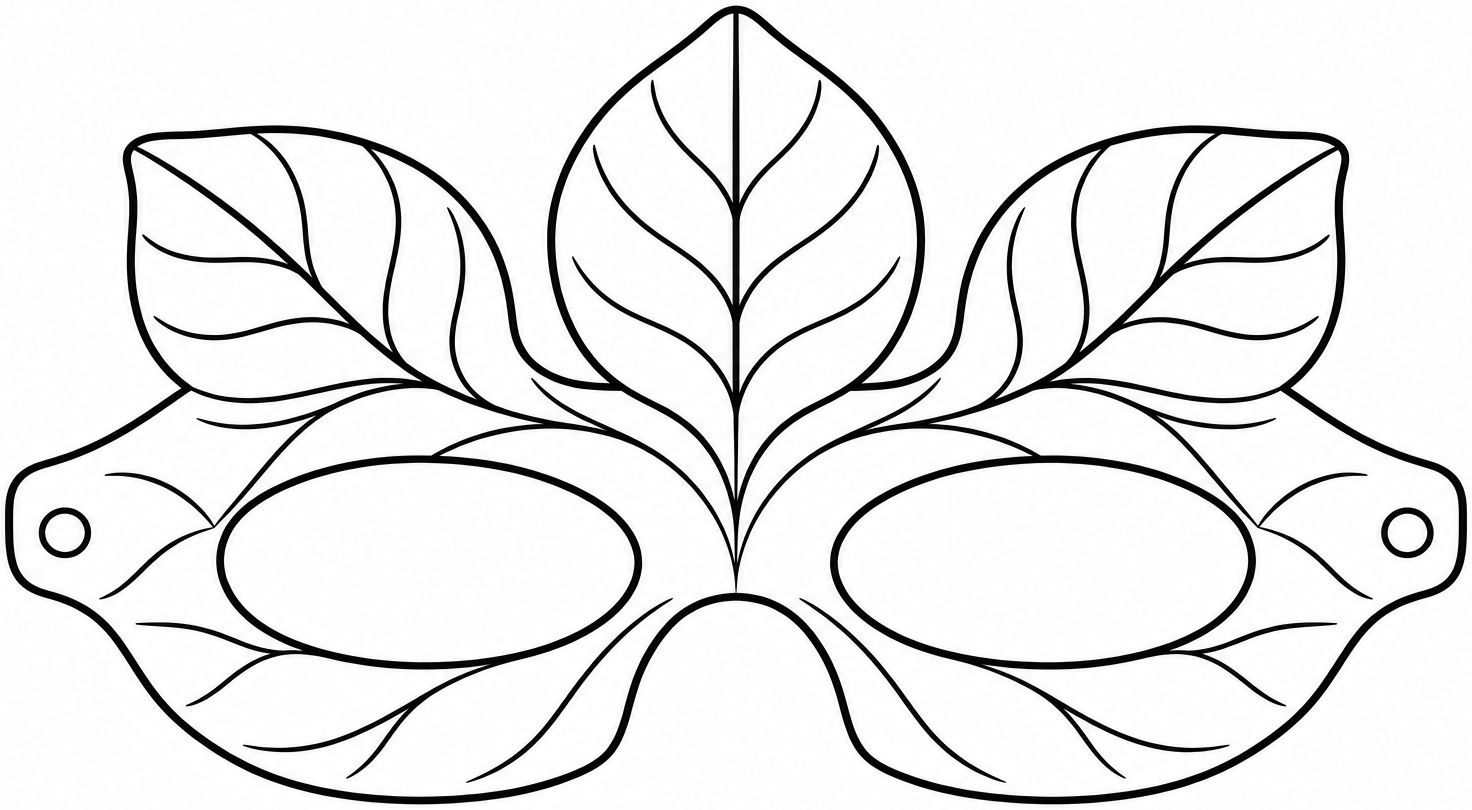
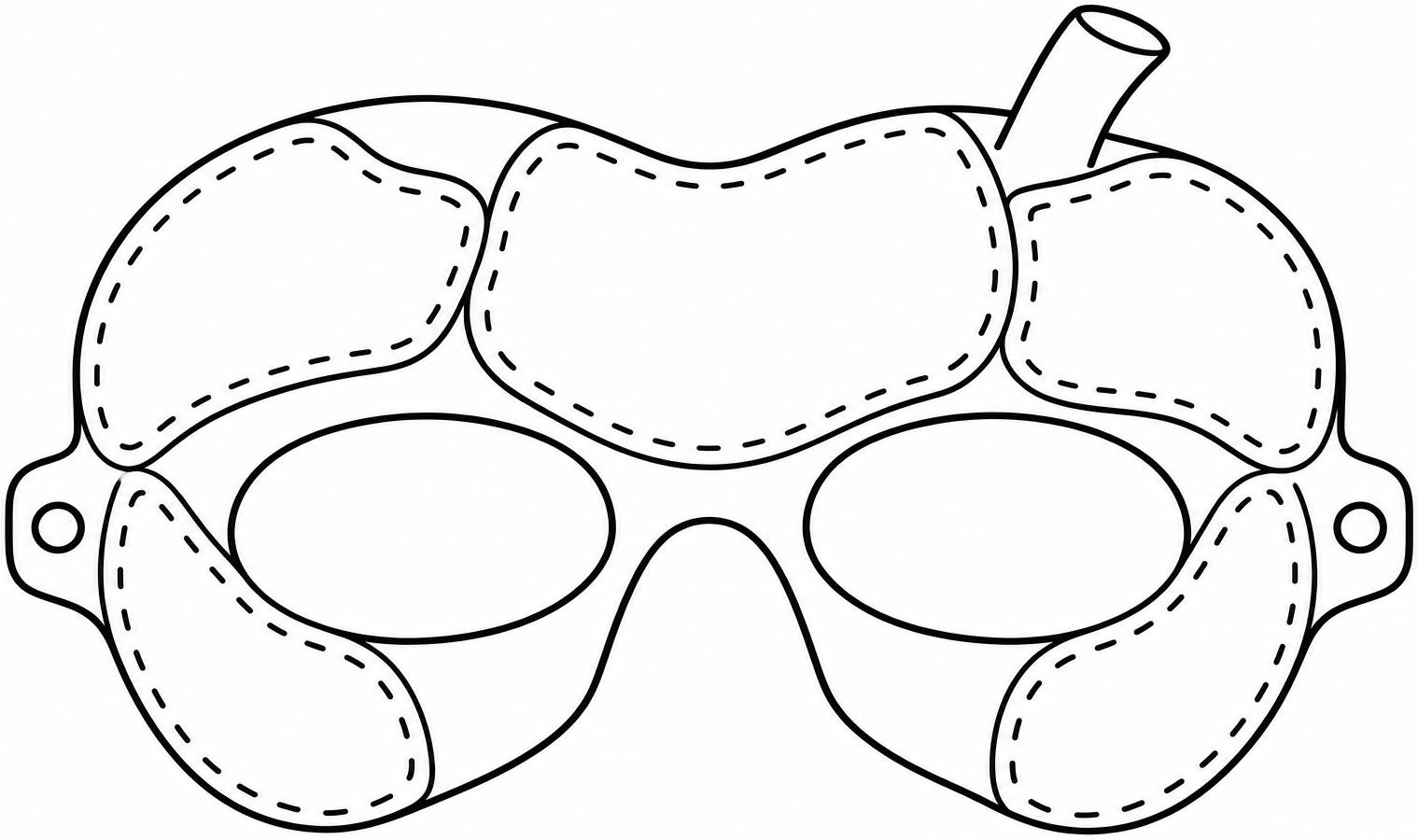
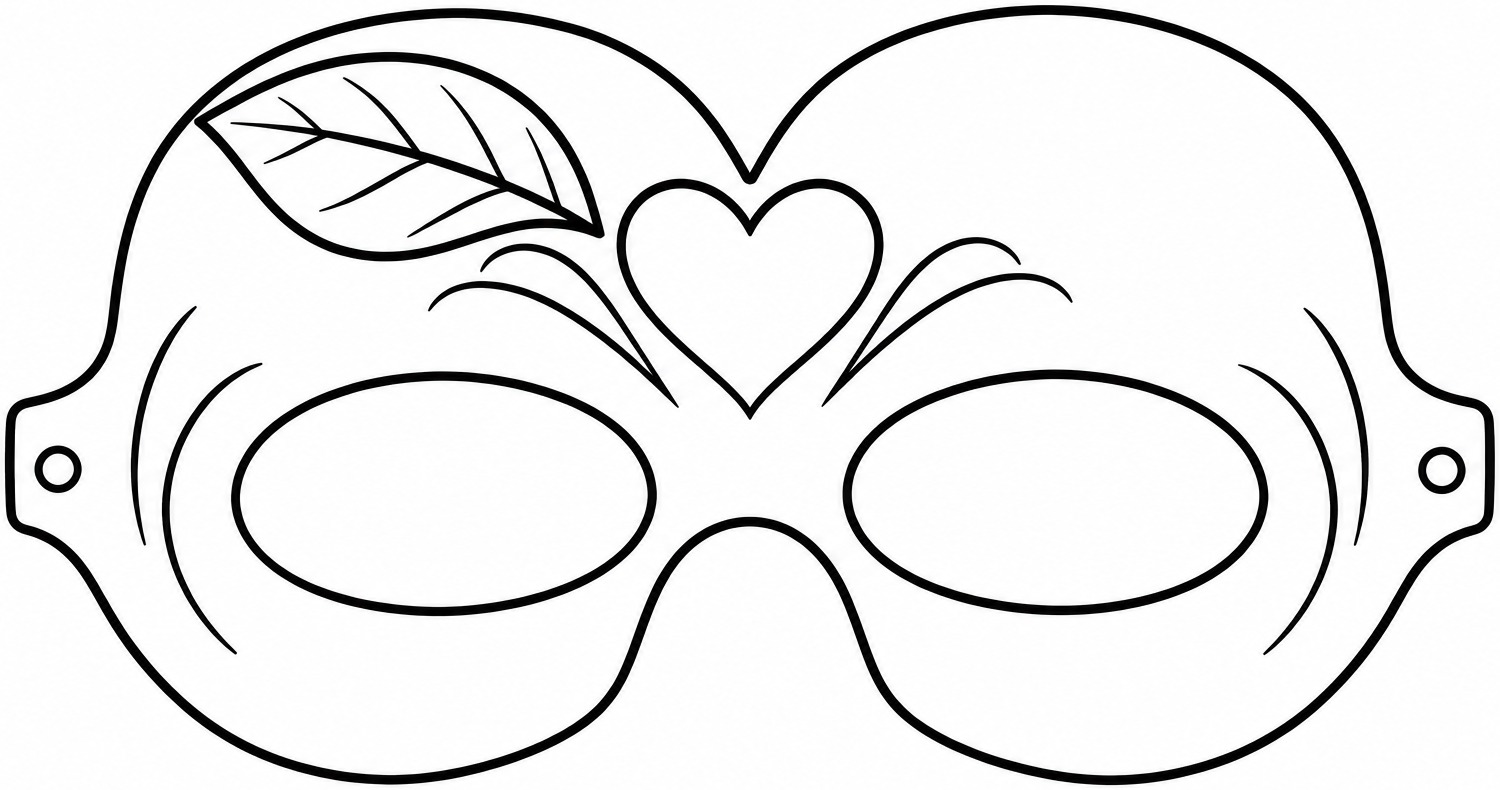
The six outline masks introduce a fan of apple wedges, a caterpillar, a leaf crown, patchwork panels, a heart and a fruit-bearing branch. Color while the sheet is whole so it is easy to hold. Choose two or three colors and fill the broad zones first. Keep the large white eye openings empty. On Patchwork apple, the short stitch marks are decoration: do not cut along them. Small side circles are fastening marks, not additional eye openings.
Size, PDF and a trial print
The selector above the cards changes every apple download together. The child version measures 160 mm across the visible outer contour; the adult version measures 185 mm. The eye-opening centre distance appears in the card and on the sheet. These are two trial-fitting options, not universal face sizes. An adult may prefer the smaller one, while neither may fit a particular child. Judge the actual fit rather than the label.
Use A4 paper and print the PDF at 100%, with “Fit to page” disabled. Measure the control line: it must be exactly 50 mm. If it is shorter, check the paper setting and scaling before repeating one sheet. PNG is useful for viewing, but browser printing can change dimensions, so use the PDF for a measured fitting. This new collection has one paper format; the size selector changes the physical mask width, not the paper.
Make your apple mask
Prepare paper, thin card, glue, scissors, paper tape and soft elastic or a broad paper handle. Check the printer instructions before using heavy paper. Color a black-and-white mask before cutting. If the shape feels floppy, glue it to thin card and let it dry completely. A damp sheet bends and tears more easily.
Cut the outer contour, turning the paper to keep the scissors comfortable. Leave internal pattern lines intact. If a lobe tears, reinforce the back with paper tape. An adult cuts the eye openings and side fastening holes; children do not need to pierce the sheet with scissors. Hold the mask to the face without fastening it first and check that the eyes look through the middle of the openings.
The lower notch leaves room for the nose. Keep the nose and mouth open; edges must not touch the eyes or press on the bridge of the nose. Check forward and sideways vision. If the openings do not line up, remove the mask and try the other size. Tightening elastic does not correct eye spacing: it only presses the paper closer to the face.
Elastic, a handle and the final check
Reinforce the side fastening marks on the back, then ask an adult to fit elastic without tension. The mask should come away in one movement. Alternatively, glue a broad paper handle to one side so you can hold it in front of the face and move it away quickly. Check while seated before starting a scene. If it slips, take it off and adjust the fastening, rather than holding it near the eyes.
An orchard theatre and your own design
Invent a short harvest story with three roles: an apple on a branch, a basket waiting below and a caterpillar looking for a leaf. Each character says one sentence before passing the turn to a neighbour. Swap roles and try the same scene with a different voice. Next make an original pattern on an outline mask: use two colors and repeat large dots or broad stripes inside the printed zones. Keep eye openings clear and leave the fastening tabs strong. Which design can you recognize by its outline alone? Use masks as handheld puppets for moving scenes; do not run while wearing one.
Apple mask questions
How many different masks are there?
Exactly 12: 6 color and 6 color-in designs. Child and adult PDFs are size options for the same project, not extra drawings.
How do I download an adult mask?
Choose “Adult · 185 mm” above the cards and press “Show”. Download PDF then gives the adult A4 file. The child trial width is 160 mm.
How many pages does a PDF have?
One A4 page with the mask, instructions, a 50 mm control line and a Kiduverse link. There are 48 PDFs: twelve designs, two languages and two physical widths.
Which internal lines should I cut?
Only the two eye openings and small side fastening holes, with an adult doing the cutting. Leave internal pattern lines intact.
Why do the eye openings not line up?
Check scaling with the 50 mm control line and try the other size. Enlarging changes the eye spacing too. Do not use a mask if edges touch the eyes or obstruct vision.
Can I make it without elastic?
Yes. Attach a broad paper handle to one side and hold the mask in front of the face. Check that the handle is secure and the mask moves away easily.
 kiduverse