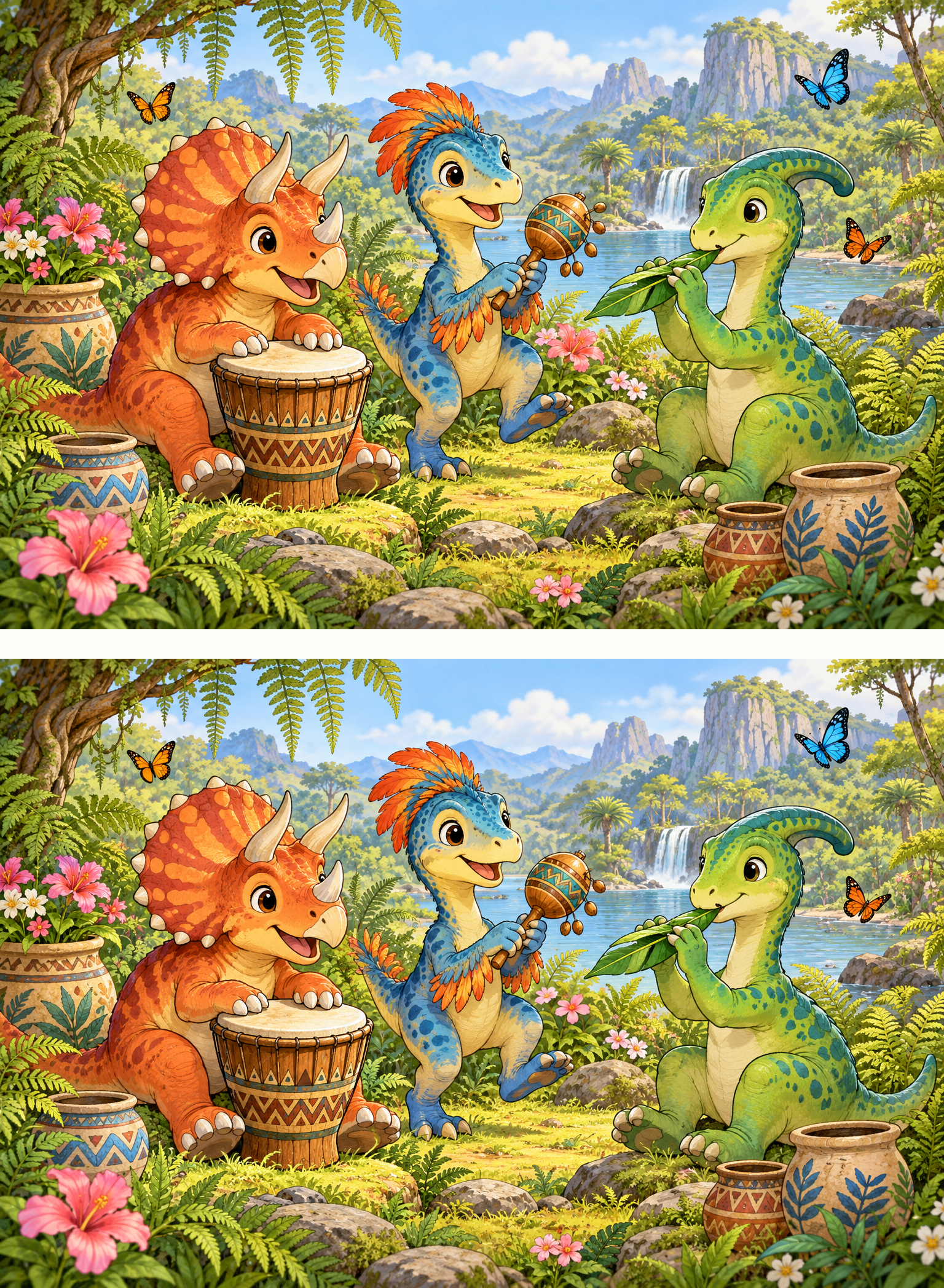
Small meaningful changes among repeated patterns: a missing petal, changed stripe or altered object feature. Challenging for adults, with every answer clearly visible once found.
Start at level 1: an adult should find the large changes easily. Move up as your child is ready. Level 5 challenges adults through smaller meaningful features in repeated patterns; every answer is visible at a comfortable viewing size. Difficulty is separate from the number of differences.
15 dinosaur picture pairs
Start in the triceratops garden, visit a stegosaurus picnic and work toward the prehistoric market and lantern festival. Every pair has exactly five differences. The level changes the size of the features and the richness of the scene, rather than the answer count.
Showing: 3 / 15
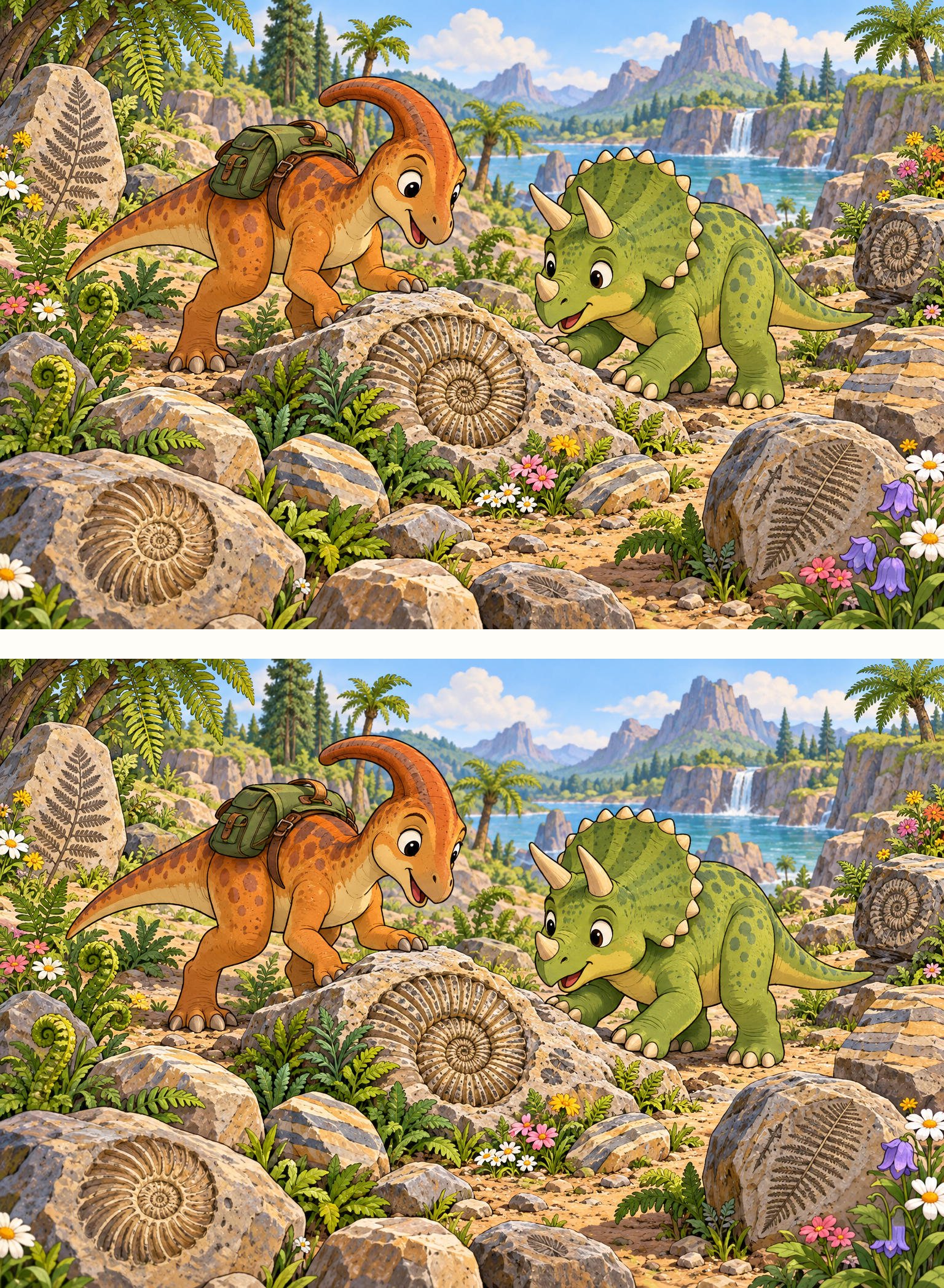
Fossil explorers
Level 3 / 5
Find 5 differences · color puzzle
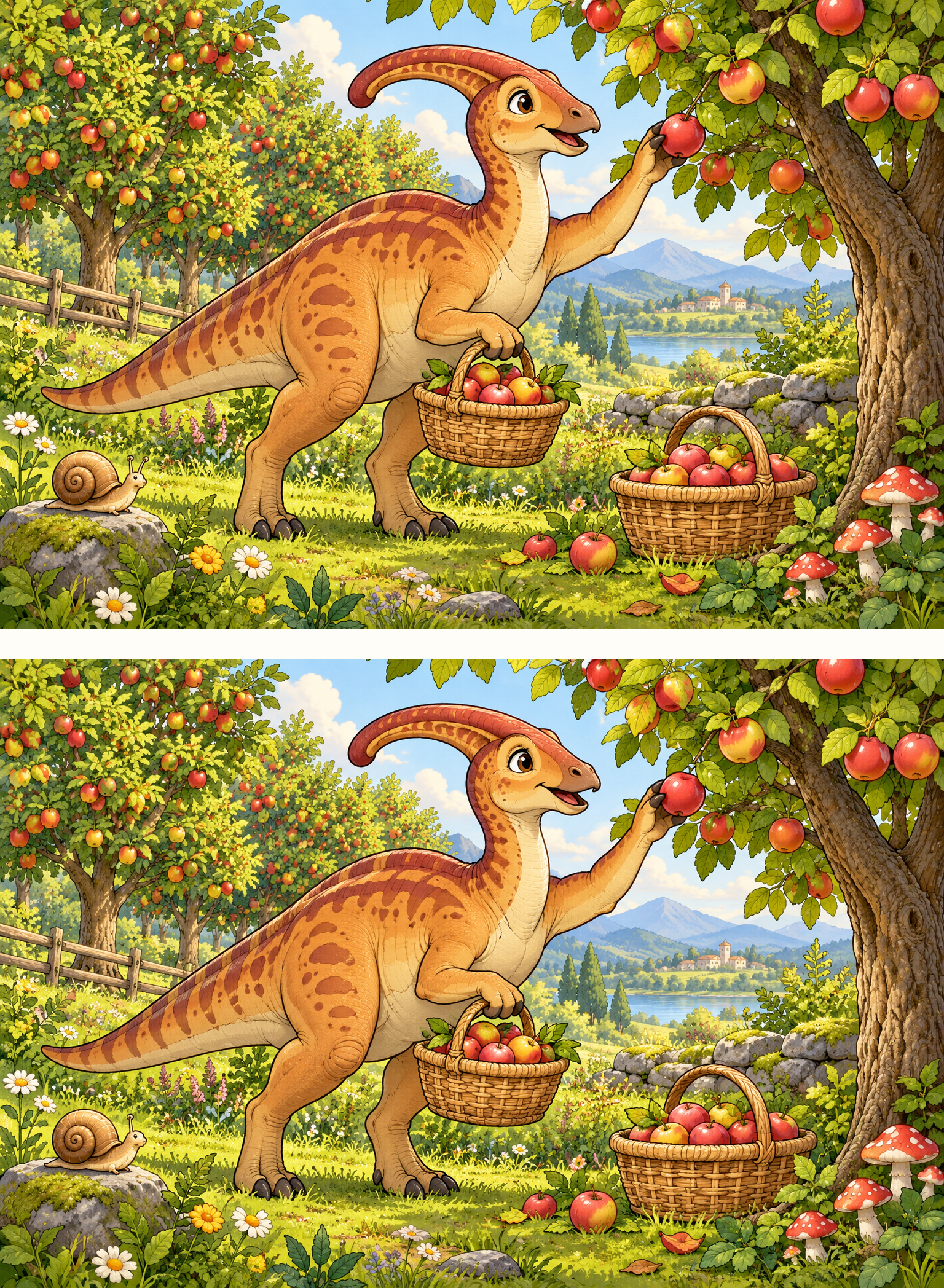
Check smaller accessories, flowers and plant features in fossil, orchard and music scenes.
Start with Triceratops garden, Stegosaurus picnic or Long-neck at the lake. Compare the upper and lower pictures in the same order: begin on the left, check the dinosaur, then move through nearby objects. Look at the color of a whole object before checking its shape. Say which object changed and where it is. The scenes are imaginative rather than diagrams of prehistoric life.
Compare one feature at a time
Rex gardener and the other level-two scenes ask you to compare clear features and patterns. At level three, look more closely at accessories, flowers and plants. Later scenes contain repeated leaves, pottery and decorative shapes. Follow one pot, basket or plant through both pictures before choosing the next. Keep the viewing size the same when moving between levels.
Help without giving away an answer
If a player gets stuck, suggest a broad area such as the garden floor or the objects beside the dinosaur. Let them choose the changed feature. Take turns describing discoveries with a nearby landmark: above a basket, beside a fern or below a lantern. You can use a pencil to circle findings on the lower printed picture. On screen, point or describe them aloud.
Check your discoveries at the end
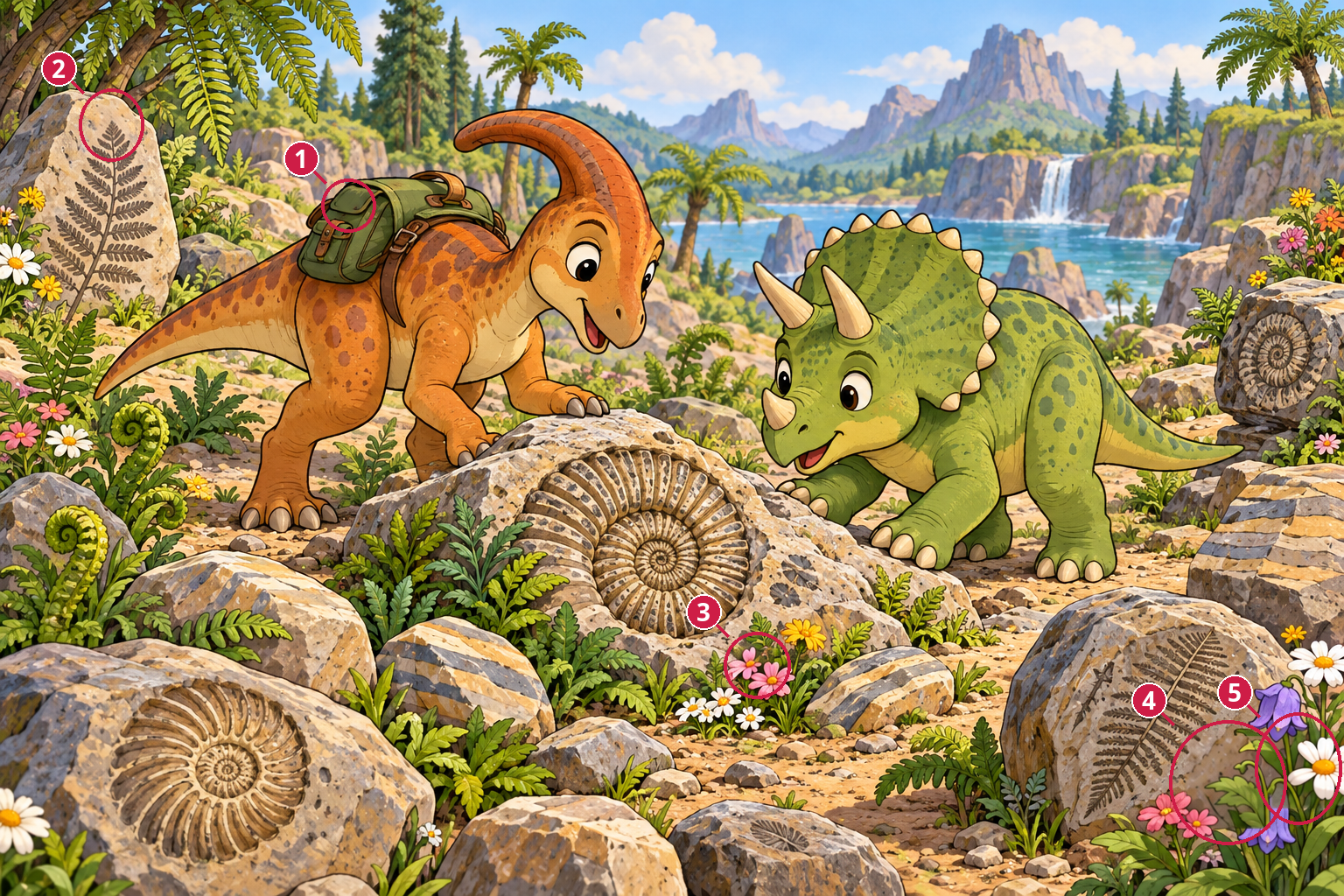
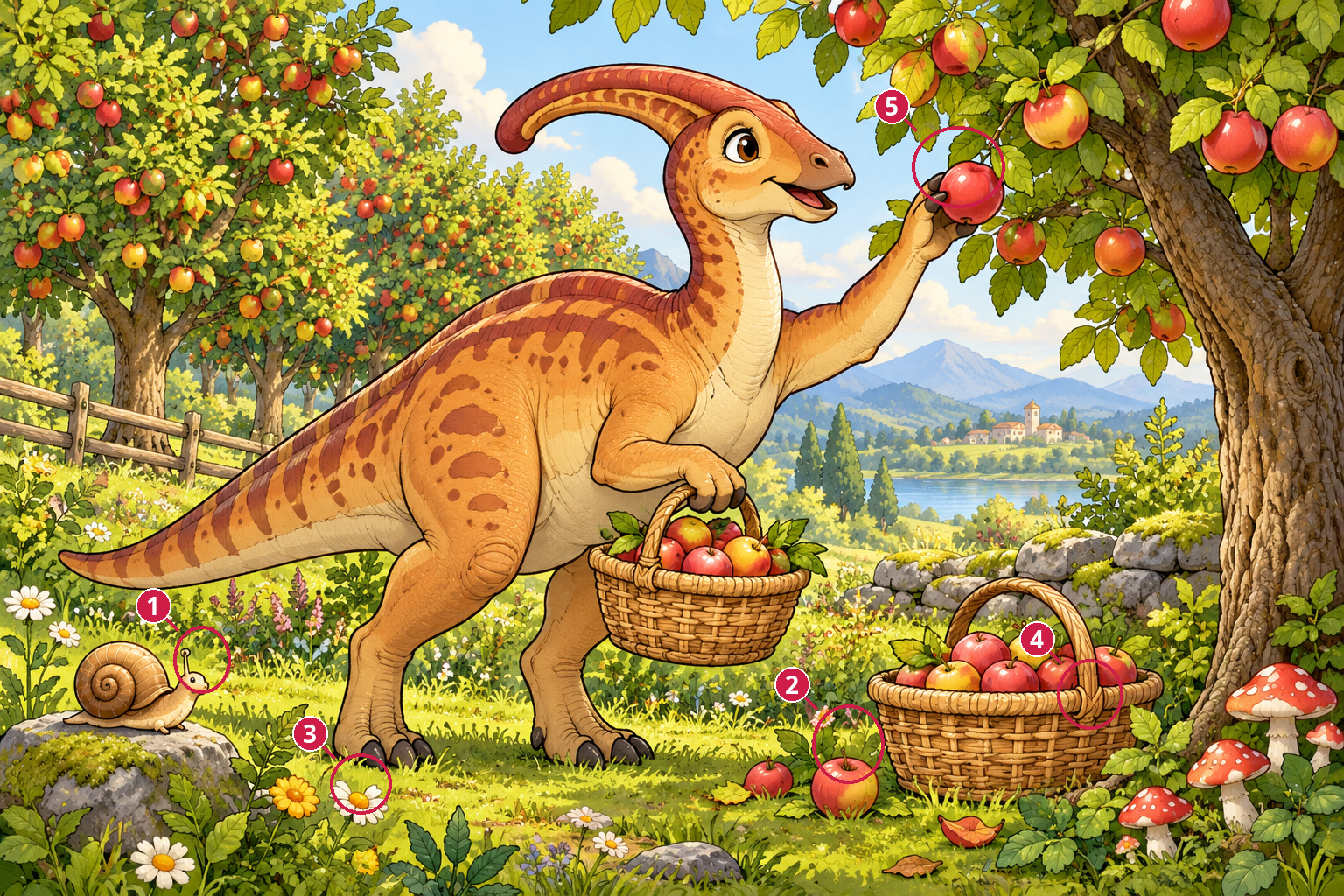
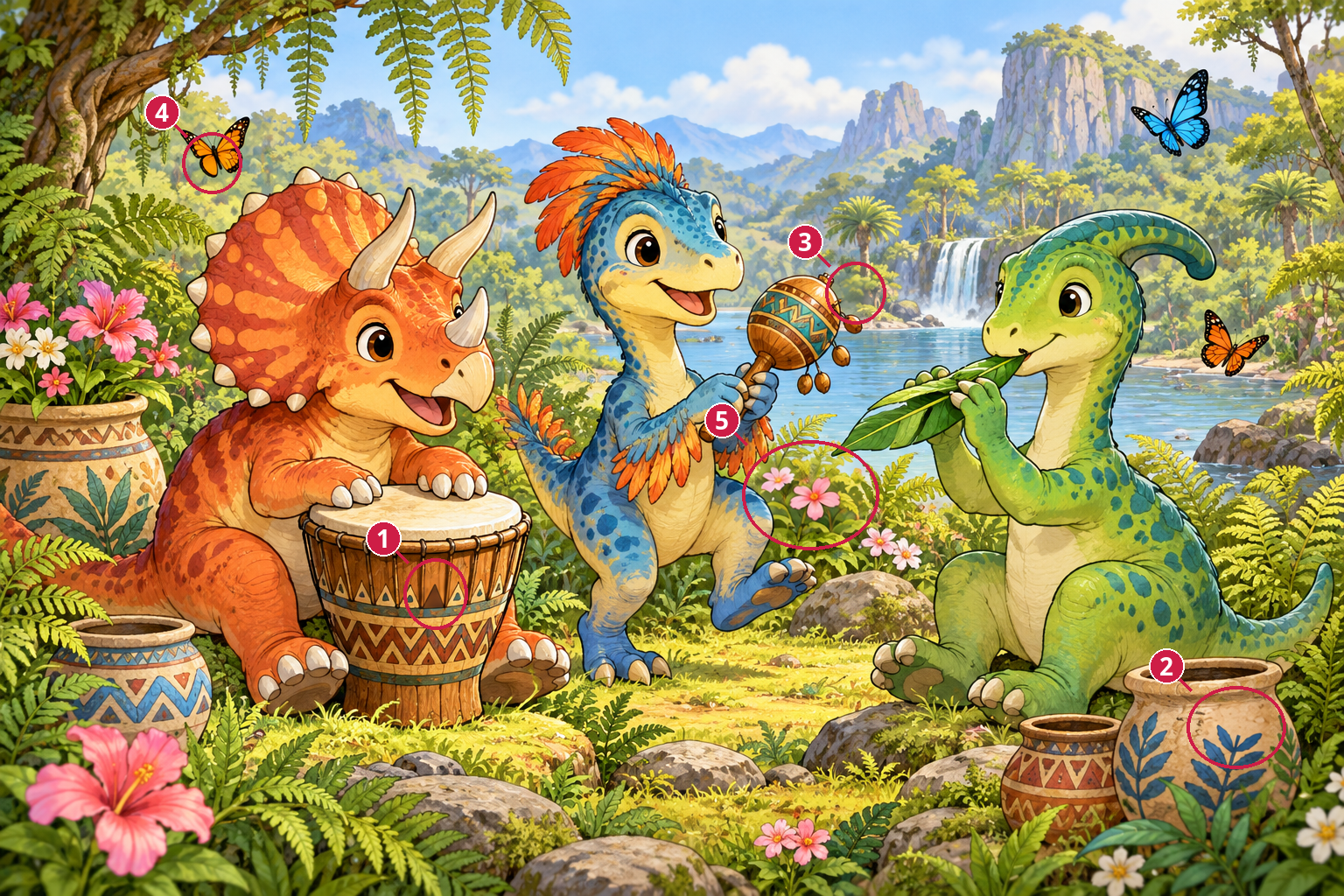
Count as you go. If you have found four changes, revisit the parts you checked quickly before opening the answer. Each numbered answer shows the changed feature and gives a short description. Compare that feature in both pictures to confirm it matches your discovery. Try another scene at the same level before moving higher. Pause if searching becomes tiring; expert scenes are designed for patient comparison among many similar details.
Print on A4, with answers kept aside
Every individual download is a two-page A4 PDF: the puzzle is first and its answer is second. Print in color at high quality because some deliberate differences use color. Give the player the first page and keep the answer aside. Check your printer preview for margins; use a full sheet for each puzzle so small details stay readable. You only need a pencil, and no account or payment is required.
The complete collection has 30 pages. Pages 1–15 contain the puzzles, followed by the matching answers on pages 16–30. Print a few selected puzzles before making the full book. On a phone, open the full PNG to enlarge a feature, then compare the same area in both pictures at equal size. The small gallery preview helps you choose a scene; use the enlarged picture or PDF for detailed searching.
Yes. Enlarge a pair, compare both pictures and reveal the answer when ready. Clicking objects does not score discoveries automatically.
Why do all levels have five differences?
The level describes how hard the changes are to find. Large isolated changes are easier; small features among similar objects require closer comparison.
What counts as one difference?
One intentional change to an object or its feature. A changed color, missing petal or altered pattern each has one number in the answer.
Where do the collection answers begin?
On page 16, after all 15 puzzles. Individual PDFs put the answer on page two; website answers remain hidden until you reveal them.
Do I need an account or payment?
No. All 15 pairs, answers, individual PDFs and complete collections are free to open and download without signing up.
 kiduverse