Small meaningful changes among repeated patterns: a missing petal, changed stripe or altered object feature. Challenging for adults, with every answer clearly visible once found.
Start at level 1: an adult should find the large changes easily. Move up as your child is ready. Level 5 challenges adults through smaller meaningful features in repeated patterns; every answer is visible at a comfortable viewing size. Difficulty is separate from the number of differences.
15 dog picture pairs
Meet a puppy in a toy corner, a corgi riding in a bicycle basket and dogs exploring gardens, shops and creative workshops. Every pair has five differences. Choose one of five difficulty levels, enlarge the two pictures or download a color puzzle with its separate answer page.
Showing: 3 / 15
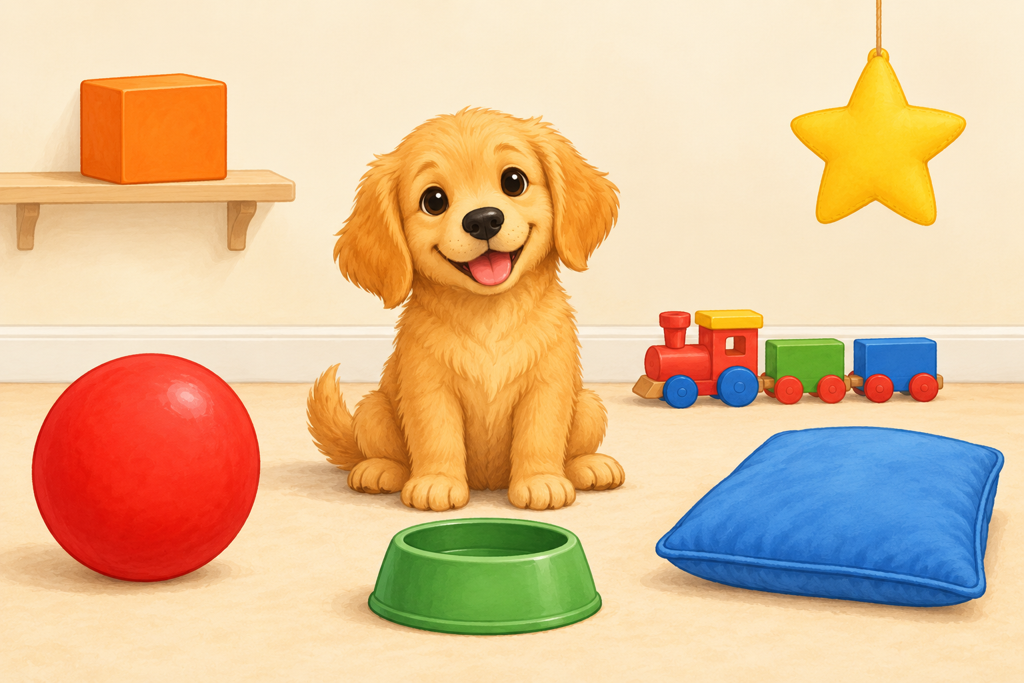
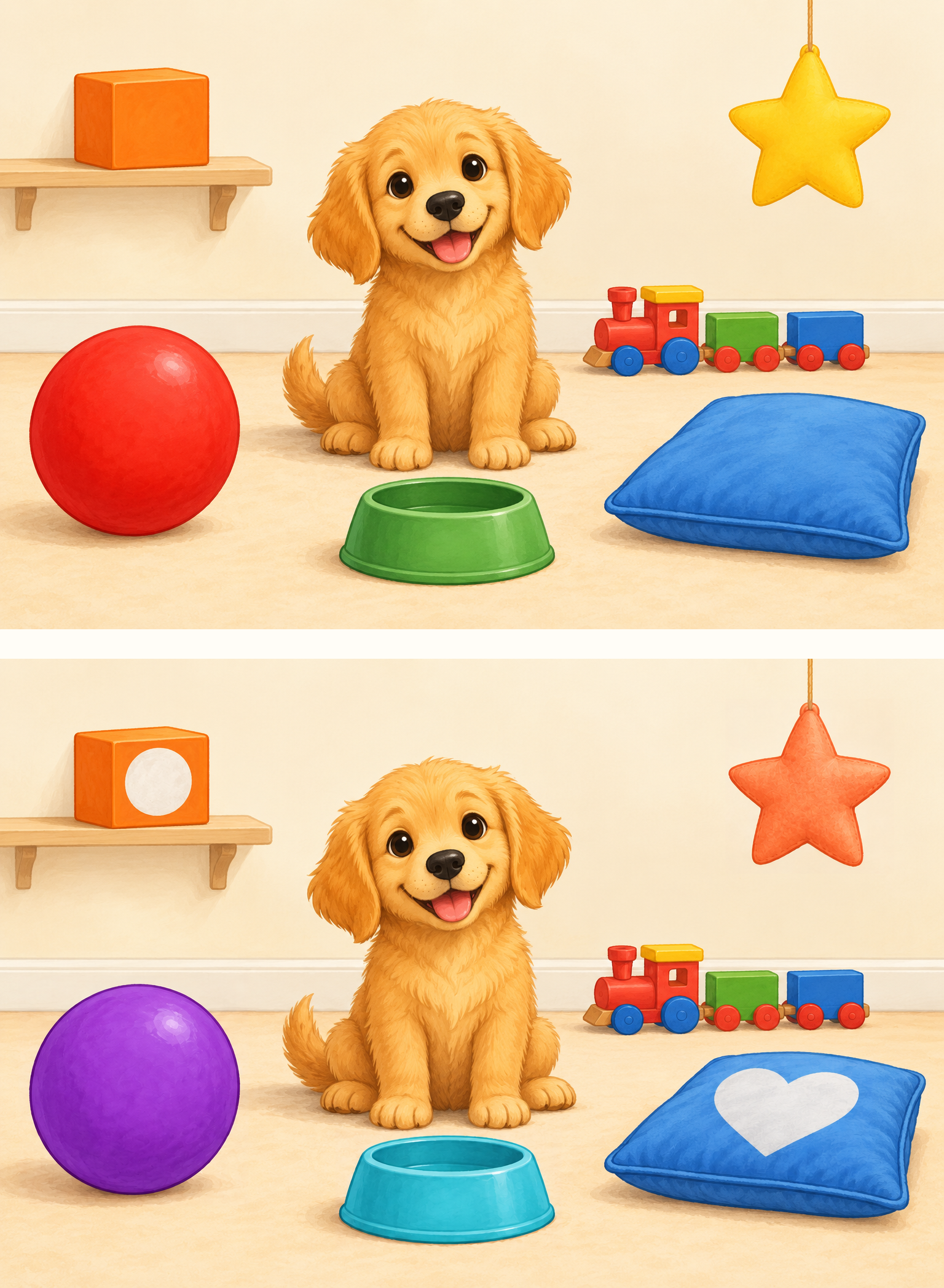
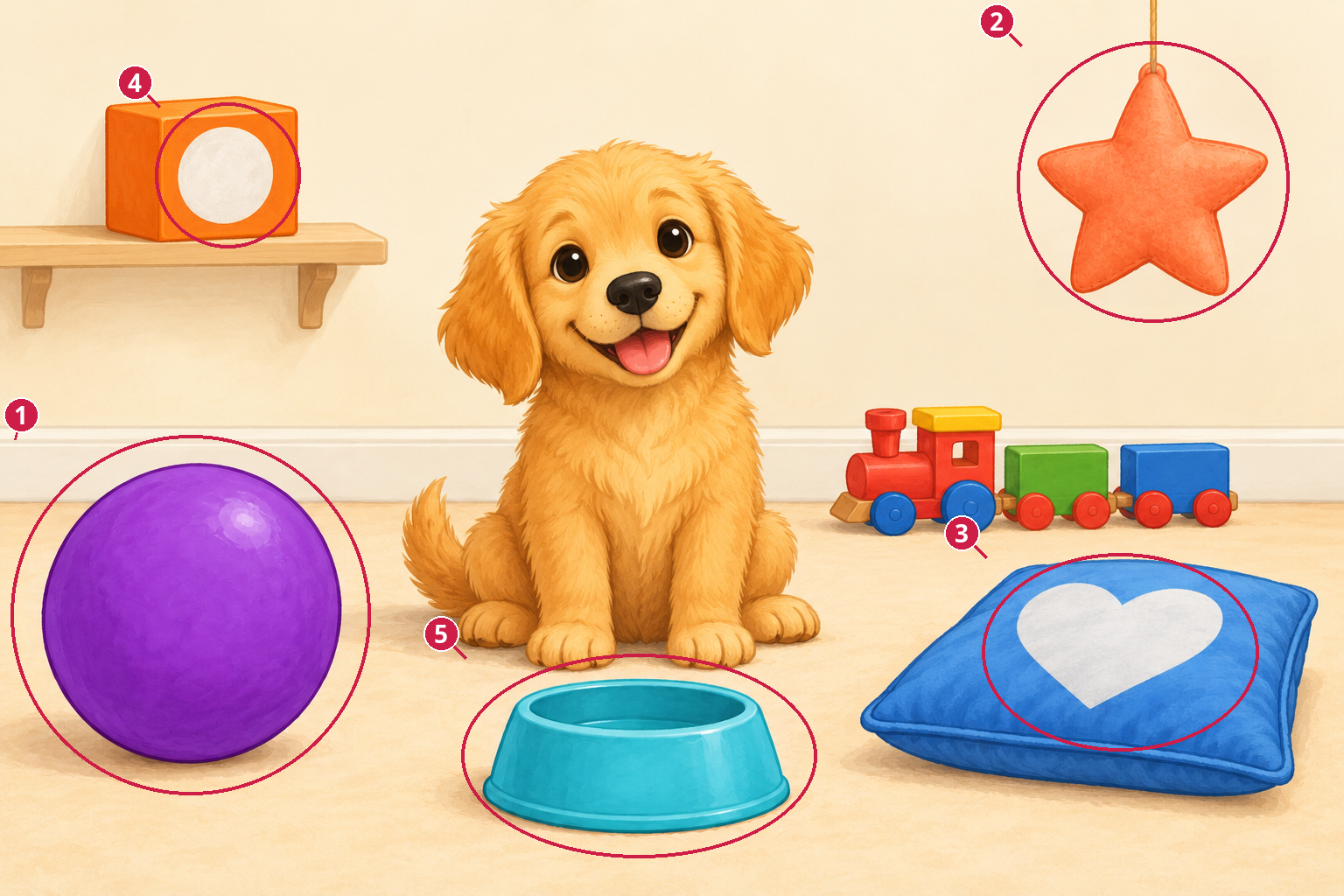
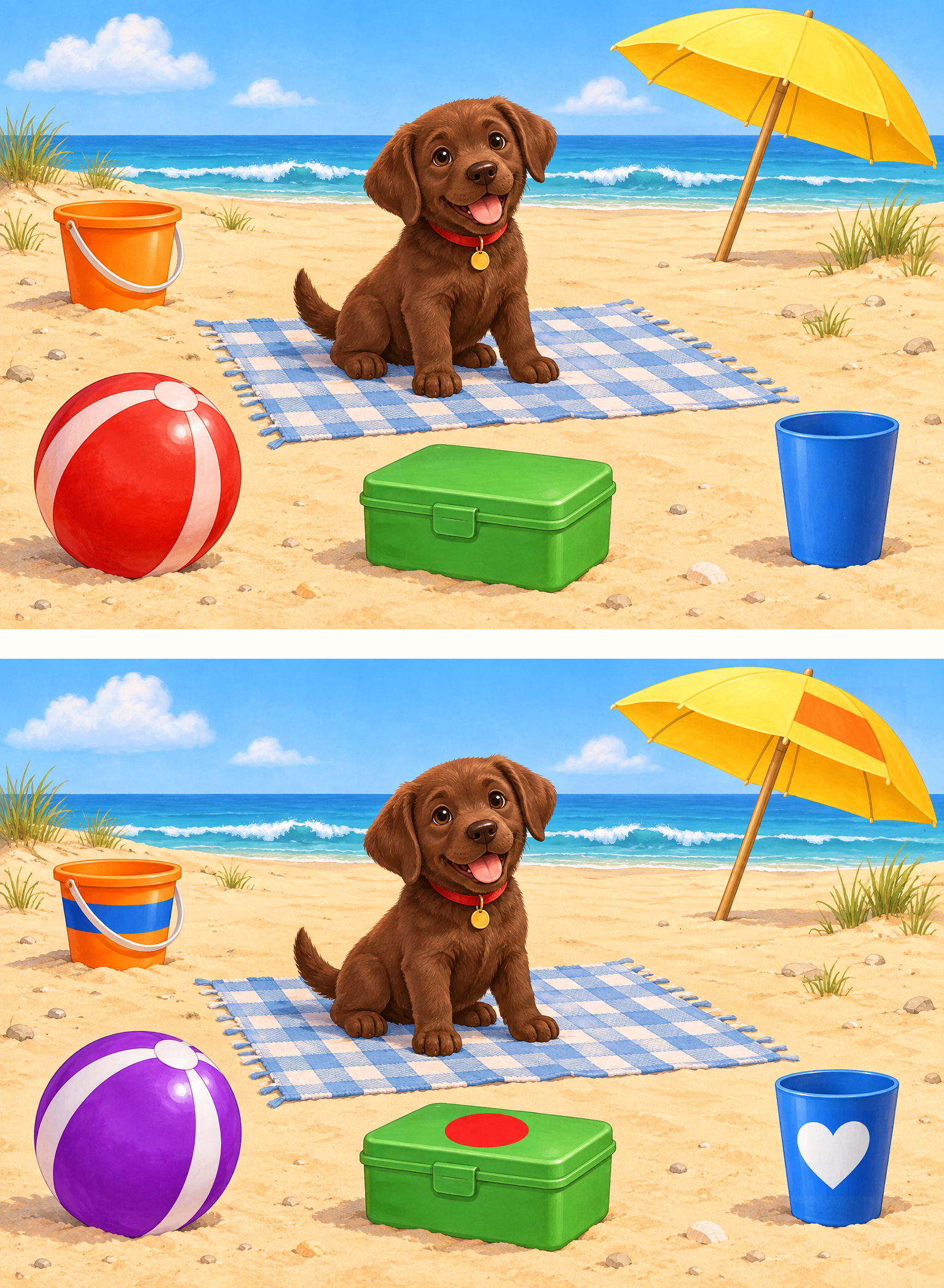
Puppy toy corner
Level 1 / 5
Find 5 differences · color puzzle
Large color changes and obvious shapes in simple scenes. Start here; the changes are visible without searching for tiny marks.
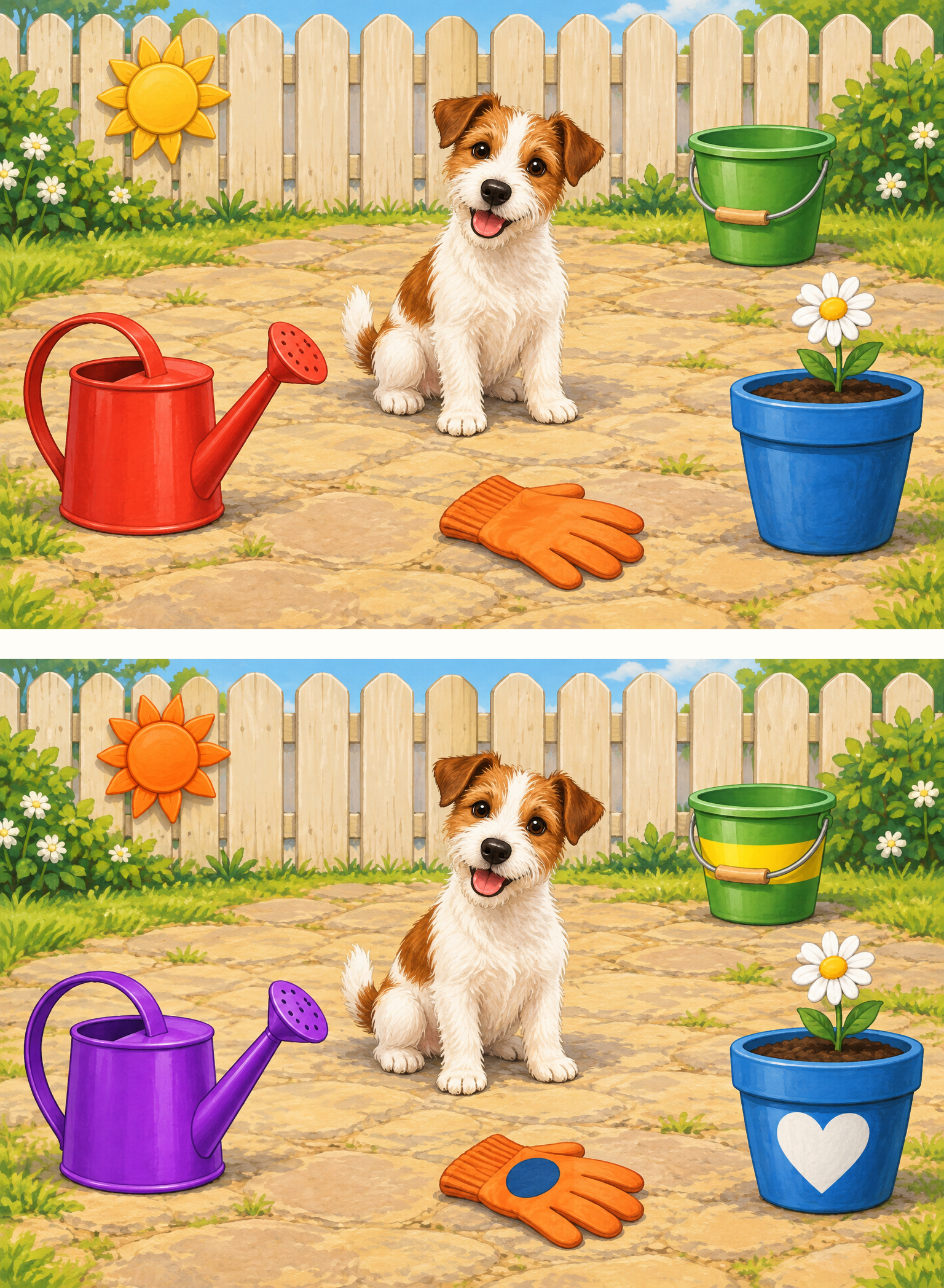
Choose level 1 for your first game. Compare the top and bottom pictures from left to right, beginning with one object rather than the whole scene. Check its color and shape, then move to its neighbor. Once you reach the edge, look at the next part of the picture. The toy corner, garden and beach give you plenty of space to practice this steady search.
Move from objects to their small features
Levels 2 and 3 ask you to look more closely at familiar things. Compare handles, stripes, flowers and other object features. At levels 4 and 5, follow repeating decorations one by one and inspect natural details among similar shapes. The number stays at five in every puzzle: a higher level means a harder search, not more answers. Use the same comfortable viewing size when comparing levels.
Help without naming the changed detail
If a child needs help, suggest an area such as the shelf, the corner or the objects near the dog. Let them decide what changed. Take turns choosing the next area, or have one player describe a discovery while the other finds it. Do not race unless everyone enjoys a timer. On paper, use a pencil to circle each difference in the lower picture; on screen, explain it aloud.
Check your five discoveries and try another scene
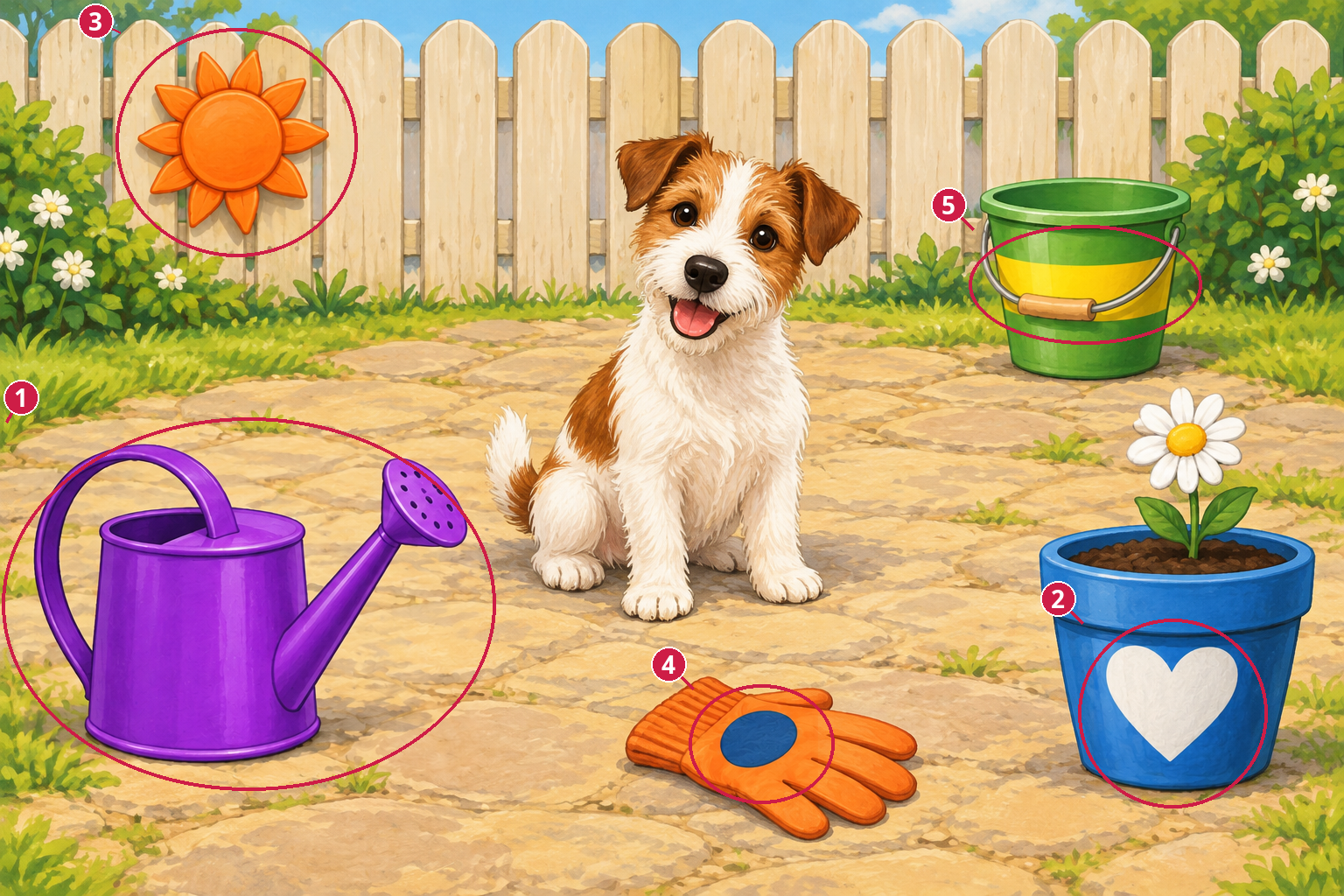
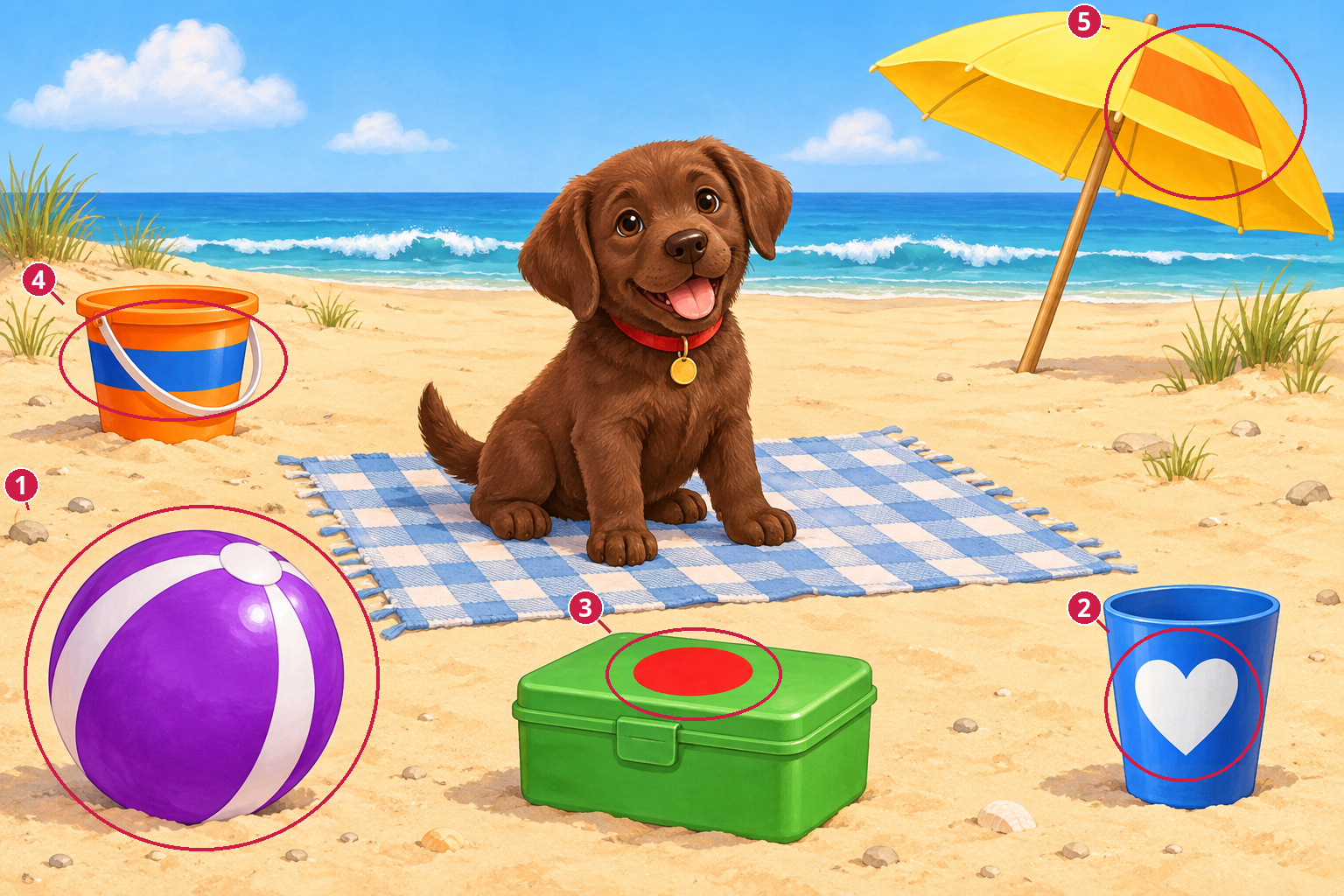
Keep a count as you find changes. When four are found, search the remaining objects methodically instead of glancing around faster. Open the answer only when you are ready to compare your choices with the numbered circles and descriptions. Locate each detail in both pictures. Then close the answer and choose another dog scene at the same level before stepping up. Take a break if searching becomes frustrating.
Print your puzzles on A4 or US Letter
Choose A4 or US Letter to match the paper in your printer, then print in color at high quality. Use 100% scale when the margins fit; choose “Fit” if your printer clips an edge. Each individual PDF contains a puzzle on page one and the matching answer on page two. Give the first page to the player and keep the answer aside. A pencil is enough to mark discoveries.
The complete collection has 30 pages: all 15 puzzles first, followed by their 15 answers in the same order. Print a few selected pages before printing the entire book. Expert details need careful close comparison, so avoid reducing multiple puzzles onto one sheet. On a phone, open the full PNG to enlarge details. These are color activities: grayscale printing can hide deliberate color differences.
Yes. Enlarge a pair, compare both pictures and reveal the answer when ready. Clicking objects does not score discoveries automatically.
Why do all levels have five differences?
The level describes how hard the changes are to find. Large isolated changes are easier; small features among similar objects require closer comparison.
What counts as one difference?
One intentional change to an object or its feature. A changed color, missing petal or altered pattern each has one number in the answer.
Where do the collection answers begin?
On page 16, after all 15 puzzles. Individual PDFs put the answer on page two; website answers remain hidden until you reveal them.
Do I need an account or payment?
No. All 15 pairs, answers, individual PDFs and complete collections are free to open and download without signing up.
 kiduverse