kiduverse
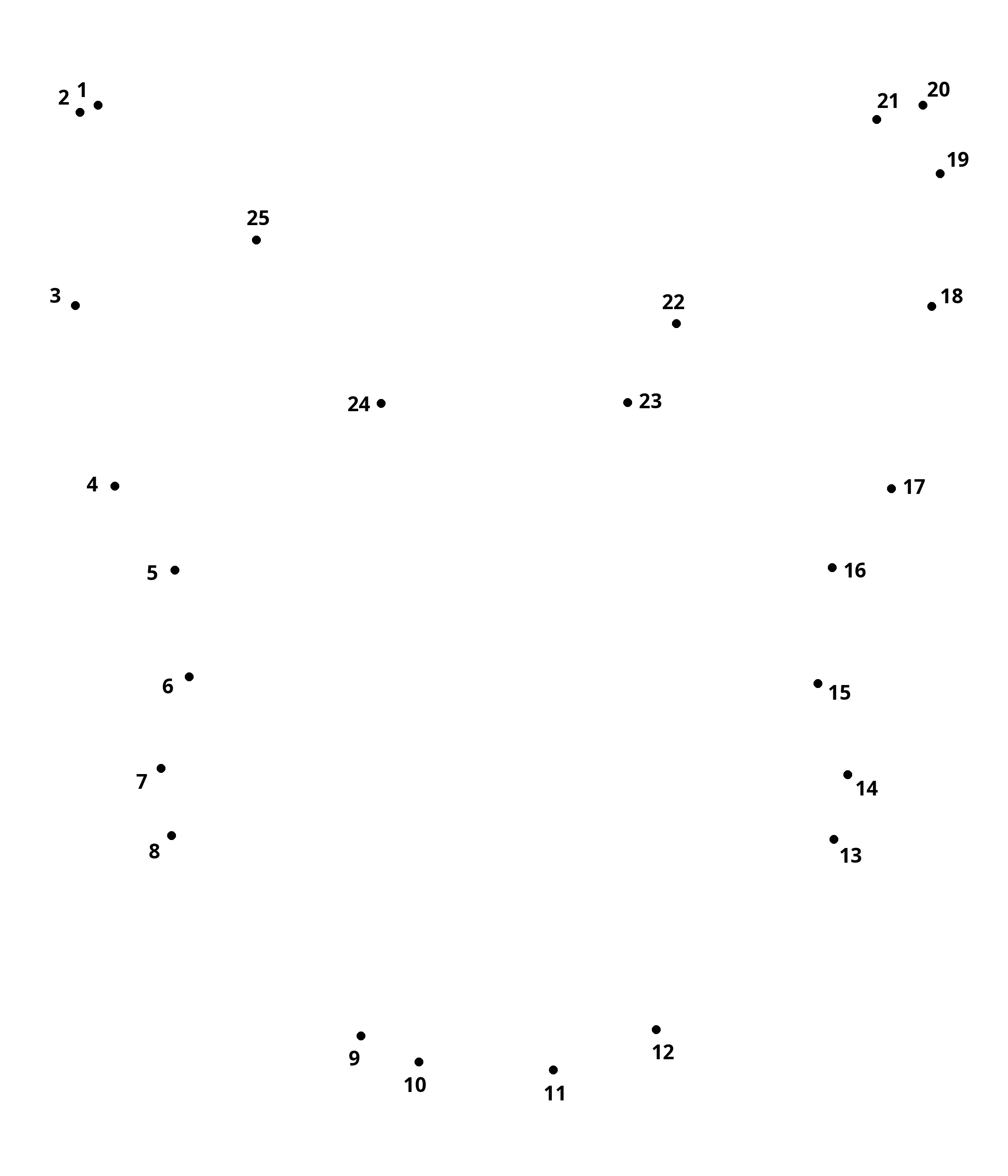
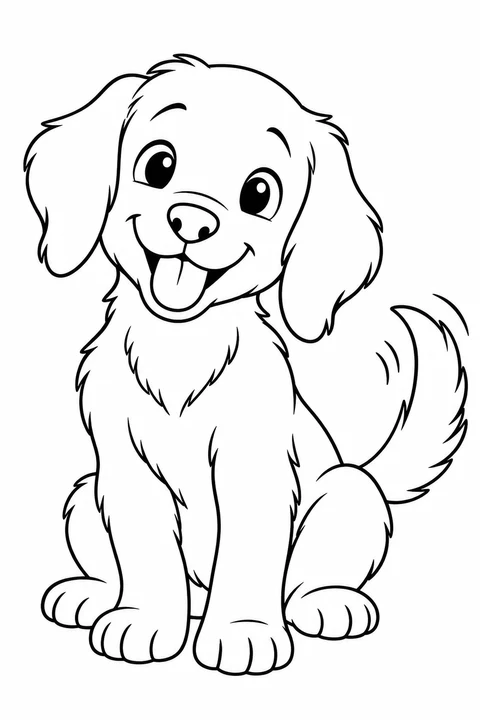
Pointy-eared dog head
25 dots · 25–40
Start at 1. After 25, return to 1; add your own details and colors.
Check the answer →Twelve dog connect-the-dots puzzles progressing from 10 to 200 dots in four levels. Free A4 PDFs, separate answers and printable booklets.
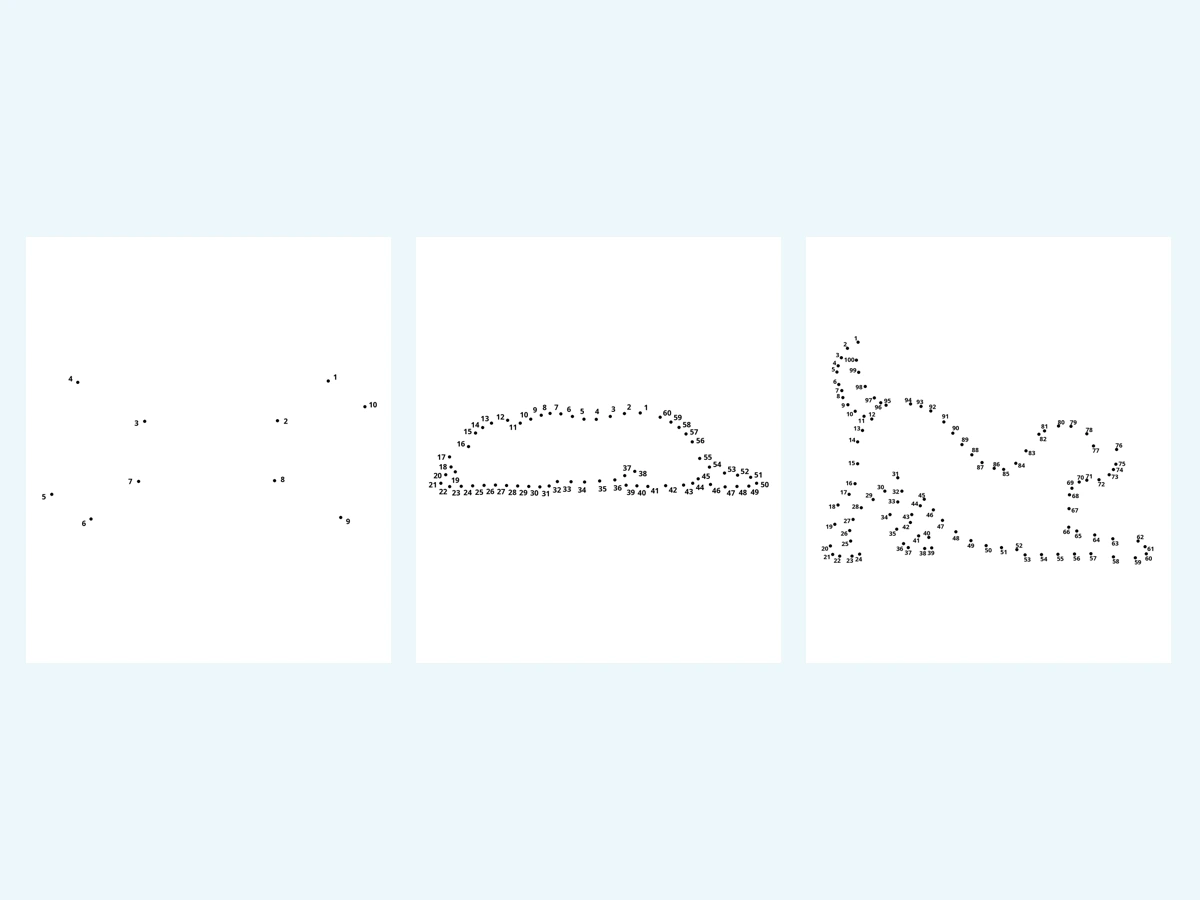
Three different pictures at each of four levels. Dot counts increase from 10 to 200.
25 dots · 25–40
Start at 1. After 25, return to 1; add your own details and colors.
Check the answer →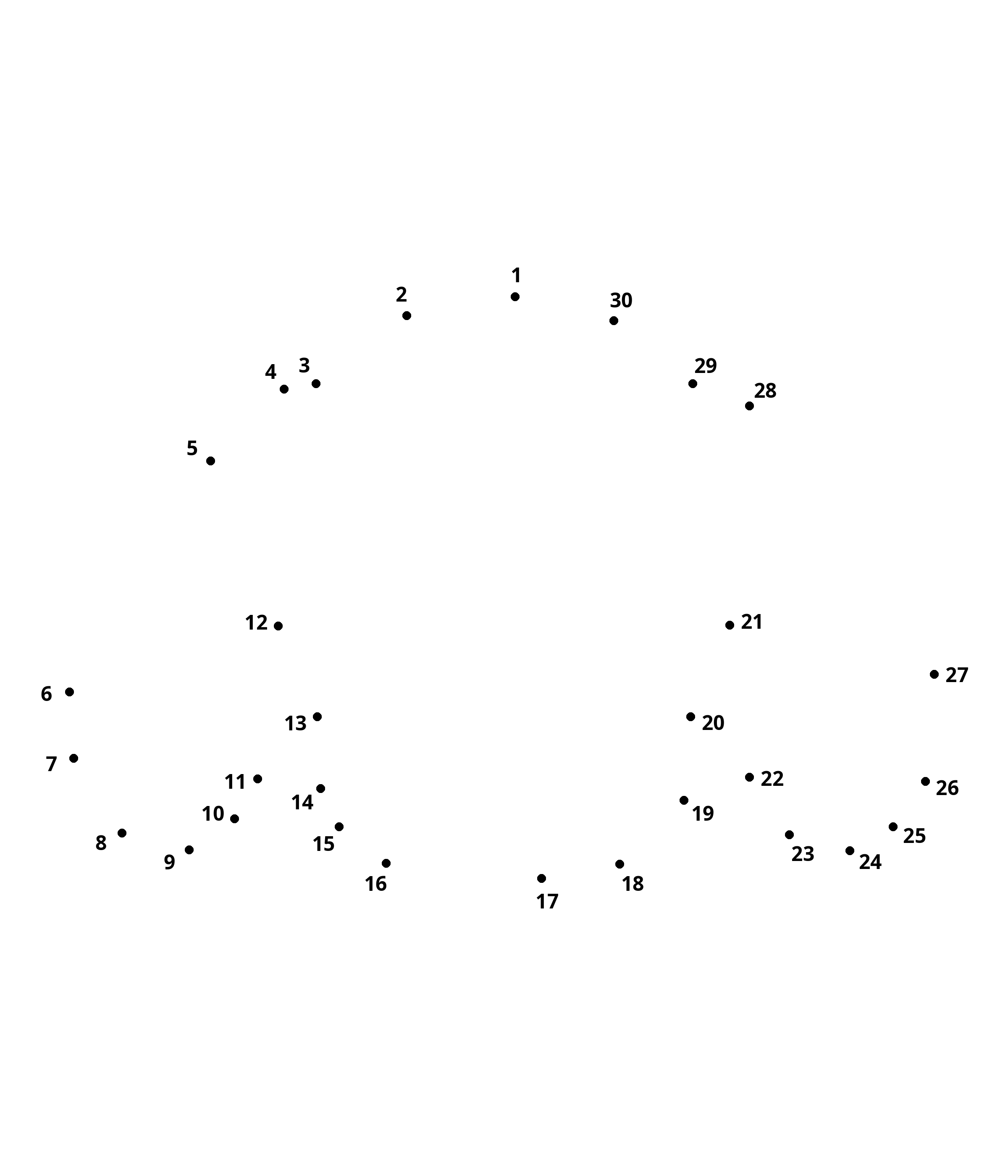
30 dots · 25–40
Start at 1. After 30, return to 1; add your own details and colors.
Check the answer →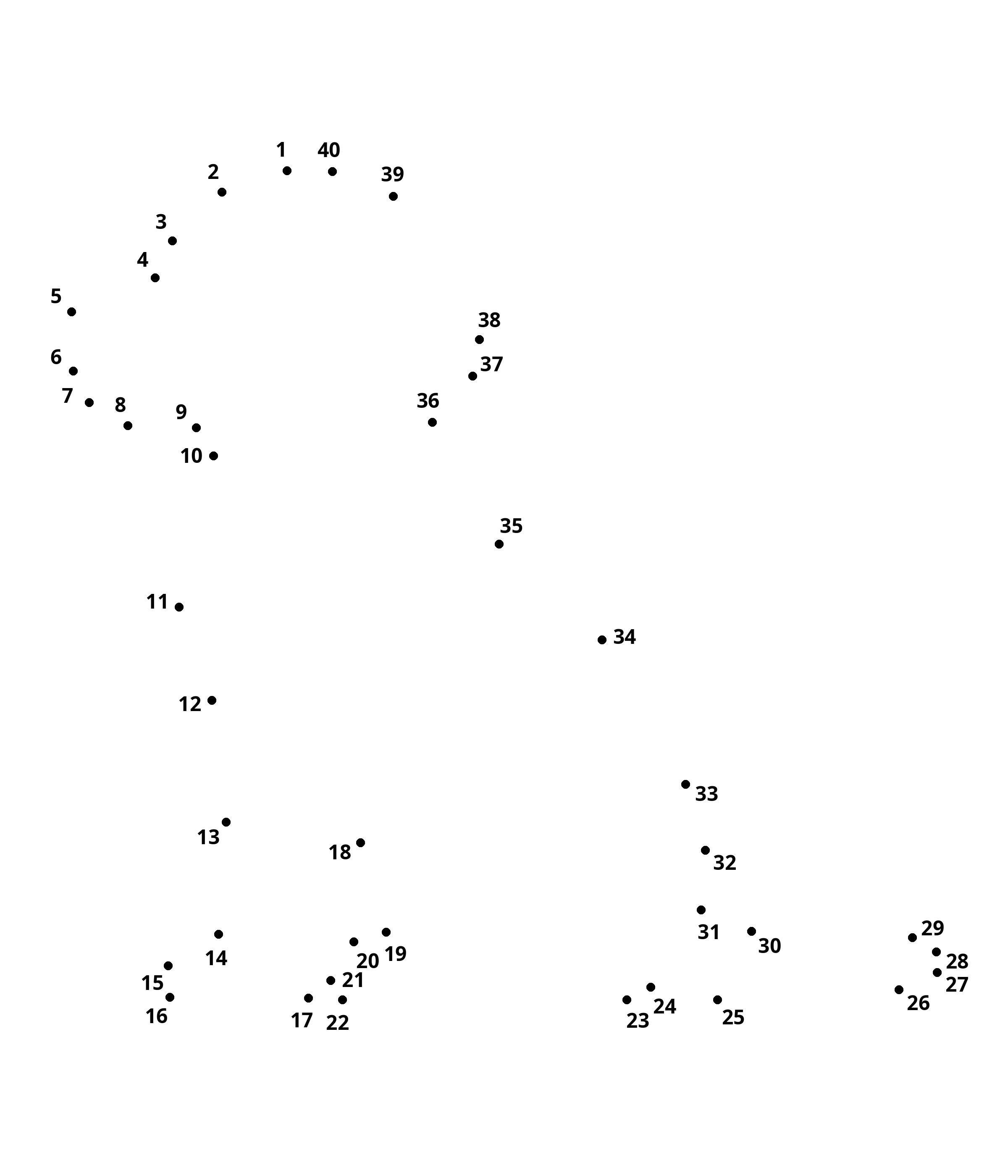
40 dots · 25–40
Start at 1. After 40, return to 1; add your own details and colors.
Check the answer →Dog dot-to-dot worksheets — 12 printable puzzles and answers
12 worksheet pages, with no answers. The answer keys are in a different file so an adult can keep them separately.
The collection has twelve different pictures about dogs and their everyday things. The first three puzzles are a bone with 10 dots, a doghouse with 15 and a bowl with 20. Start with a familiar object and a comfortable number sequence. Follow the sequence with a finger before using a pencil. The title helps you choose a sheet, but the finished outline is absent from the puzzle. Each next picture introduces more numbers; completing the whole collection in one sitting is unnecessary.
The second group shows a pointy-eared dog head with 25 dots, a floppy-eared puppy head with 30 and a sitting puppy with 40. Read the next pair before drawing and check which point each label belongs to. Choose by confidence with finding numbers and controlling the pencil. Age alone does not determine a comfortable level. If a new range feels unfamiliar, return to an earlier sheet or name the numbers together with an adult.
Puzzles 7–9 show a standing dog with 50 dots, a sleeping dog with 60 and a trotting dog with 70. Longer routes and the bends around paws and tails require a careful search for the next number. Pause at a convenient place, remember the last connected number and resume later. Do not choose a point only because it is nearby. Extra numbers create more small segments, while the rule for connecting them remains unchanged.
Puzzles 10–12 show a play-bow dog with 100 dots, a long-eared dog with 150 and a curly-tailed dog with 200. This is the hardest level: recognize three-digit labels and follow a long sequence. Numbers are smaller on these sheets; enlarge the preview for checking and download the A4 PDF for working. Split a route into several sessions. Work calmly and check the transitions between tens and hundreds. There is no speed target.
Find dot 1 and locate 2 before making a mark. Draw a straight line between the centers of the black dots, then continue to 3. A number sits beside its dot; aim your pencil at the dot rather than the printed digit. The nearest point may belong to a later part of the route. Read the destination number before every segment. Each sheet has one continuous path with no separate numbered groups or branches.
After the largest number, return to dot 1. This final line closes the outer contour, and the instruction is repeated in every PDF. Keep every number in the sequence even if skipping one seems to make a smoother back or tail. The angular outline belongs to the activity. Eyes, a nose and colors can be added afterward. Each answer retains the same coordinates and labels, making a doubtful connection easy to compare.
If an unexpected diagonal appears, stop and return to the last connection you trust. Read the next three numbers. For example, a line from 17 directly to 19 misses 18: erase only that segment and replace it with 17–18 and 18–19. Check that you have read the two digits in the correct order. A single wrong connection does not require erasing the entire picture. A light pencil mark makes this small repair easier.
Open the separate answer page after trying the puzzle yourself. Compare a short part of an ear, paw or tail and return to your worksheet. An answer helps check the sequence; you do not need to copy the entire finished drawing. A slightly uneven pencil line is acceptable. The useful checks are whether every number was visited in order and the final point was connected to the first. If the mistake is hard to locate, inspect one segment at a time from a familiar number.
Download a PDF for A4 paper, 210 × 297 mm. Print at actual size, or 100 percent. Check one sheet first: the outer numbers and footer should remain visible. A regular pencil and soft eraser are useful for corrections. Each individual worksheet or answer PDF contains one page. The worksheet booklet contains twelve pages; solutions are provided separately in their own twelve-page answer booklet. Printing the downloaded file keeps website menus and buttons off the activity.
Once the contour is closed, add your own eyes, nose, coat markings and a path beneath the paws. Give the dog a name and imagine somewhere to walk. A doghouse can gain a door, and the bowl can gain a pattern. Notice how those details change the picture. The number route supplies the outer outline while decoration remains your choice. These activities practice finding numbers and following a sequence; they do not promise to teach independent dog drawing without a guide.
Twelve, in order: 10, 15, 20, 25, 30, 40, 50, 60, 70, 100, 150 and 200 dots. Four levels with three pictures each.
Nine show a dog head or pose; three show a bone, doghouse and bowl.
Yes. All twelve routes are closed.
Use the separate answer page linked beside each worksheet.
Single-page A4 PDFs and separate twelve-page worksheet and answer booklets, without registration.