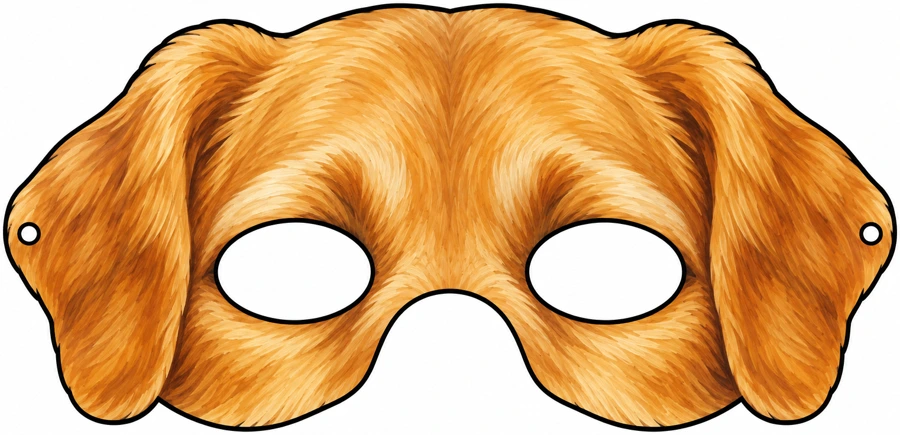
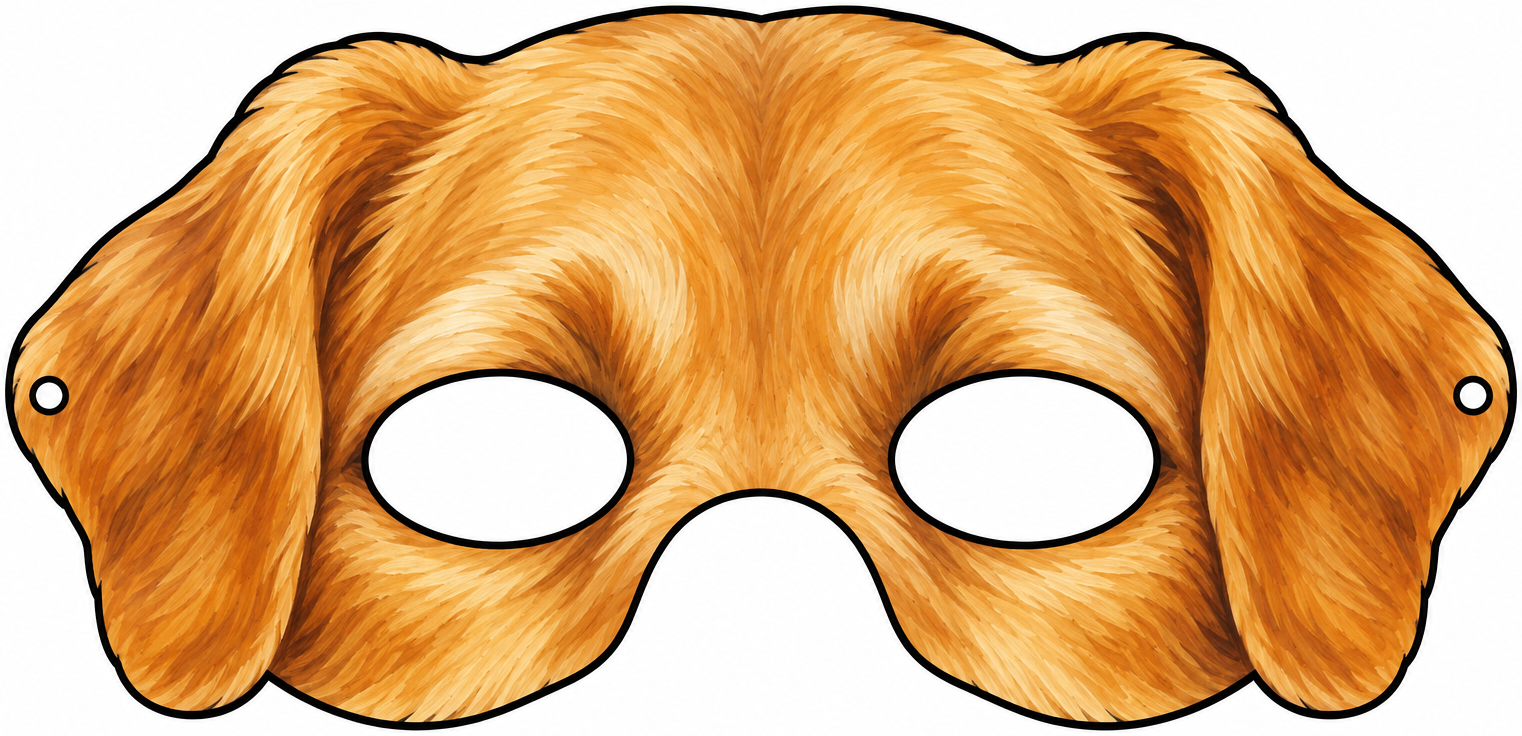
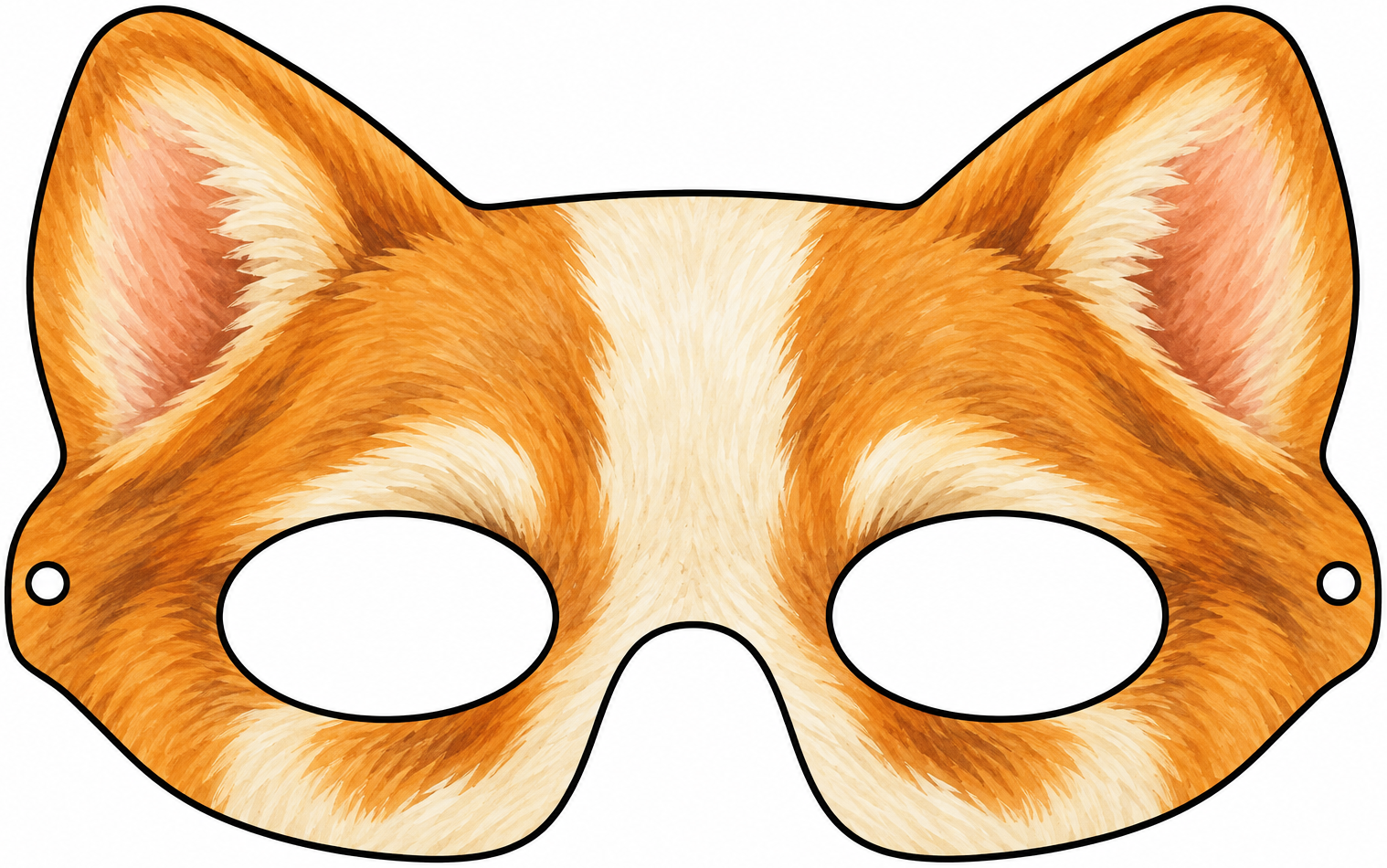
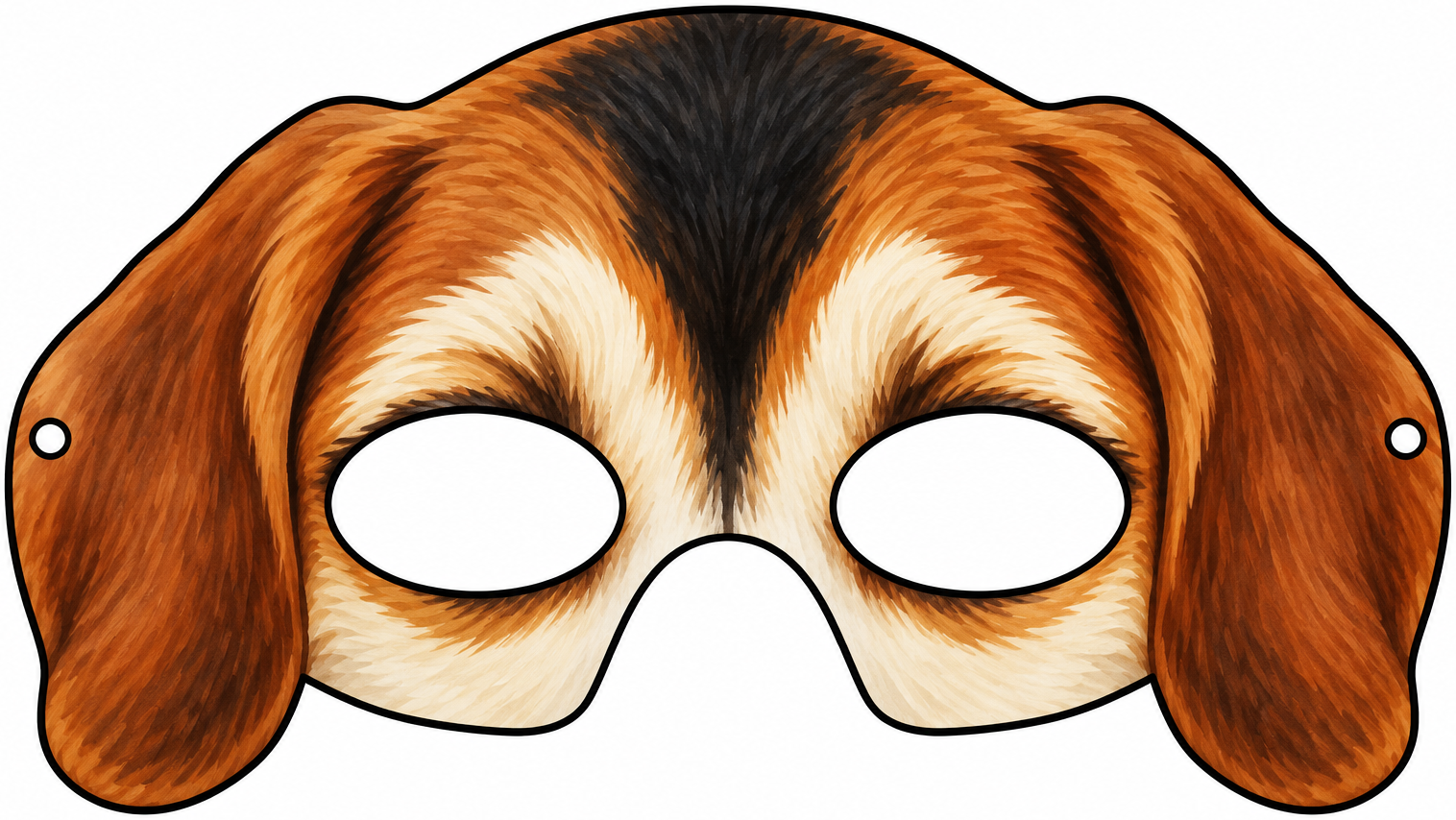
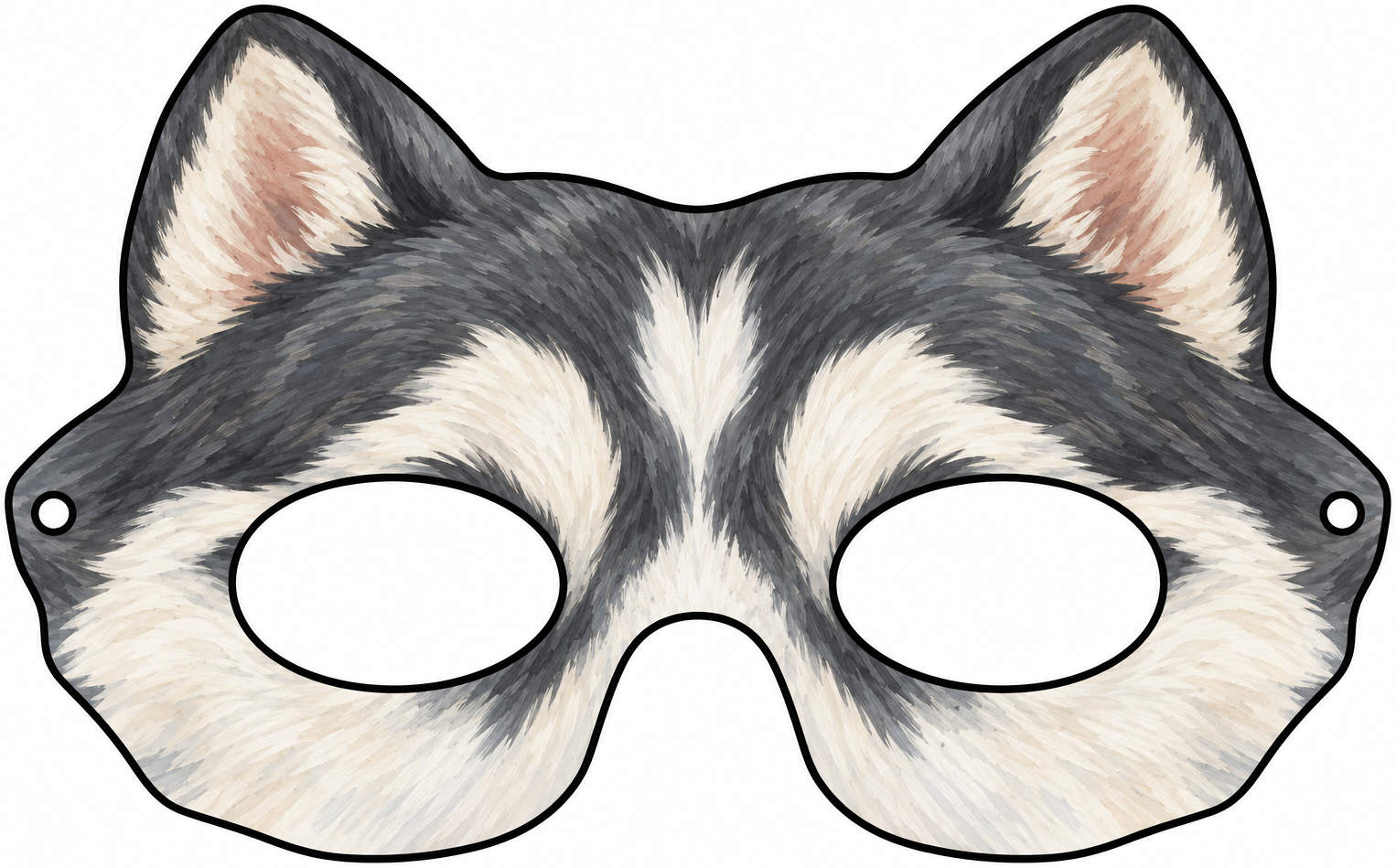
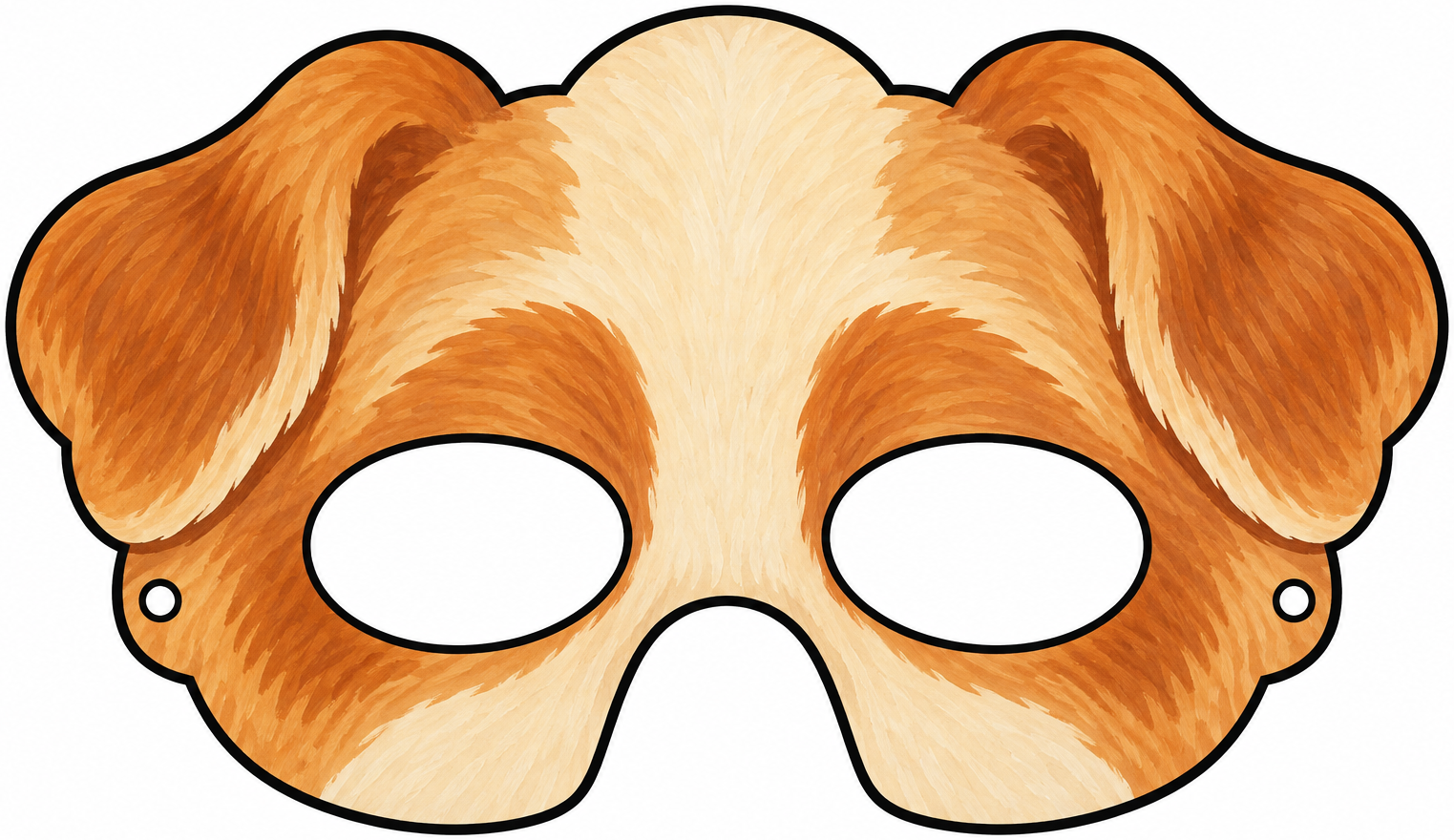
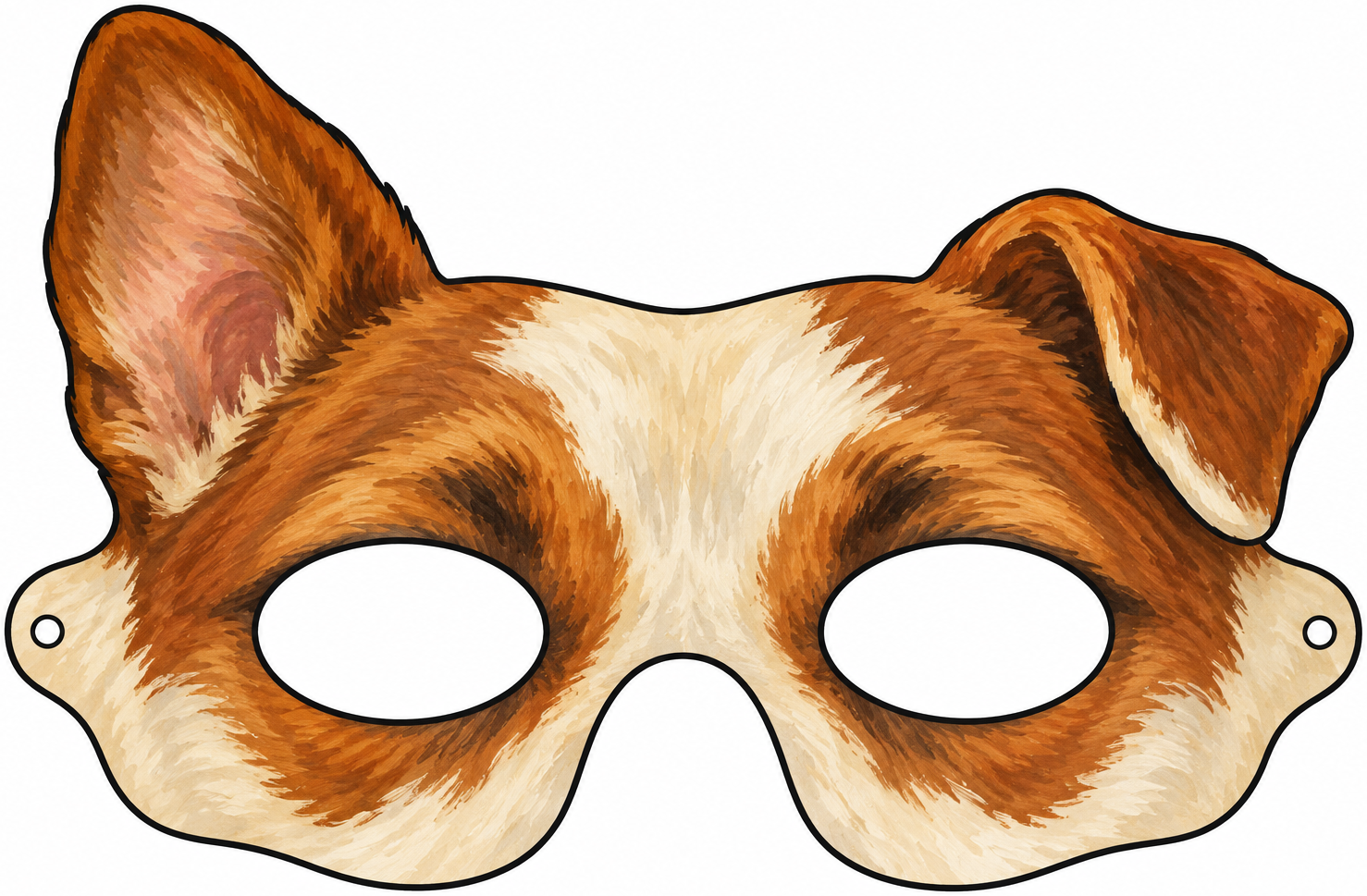
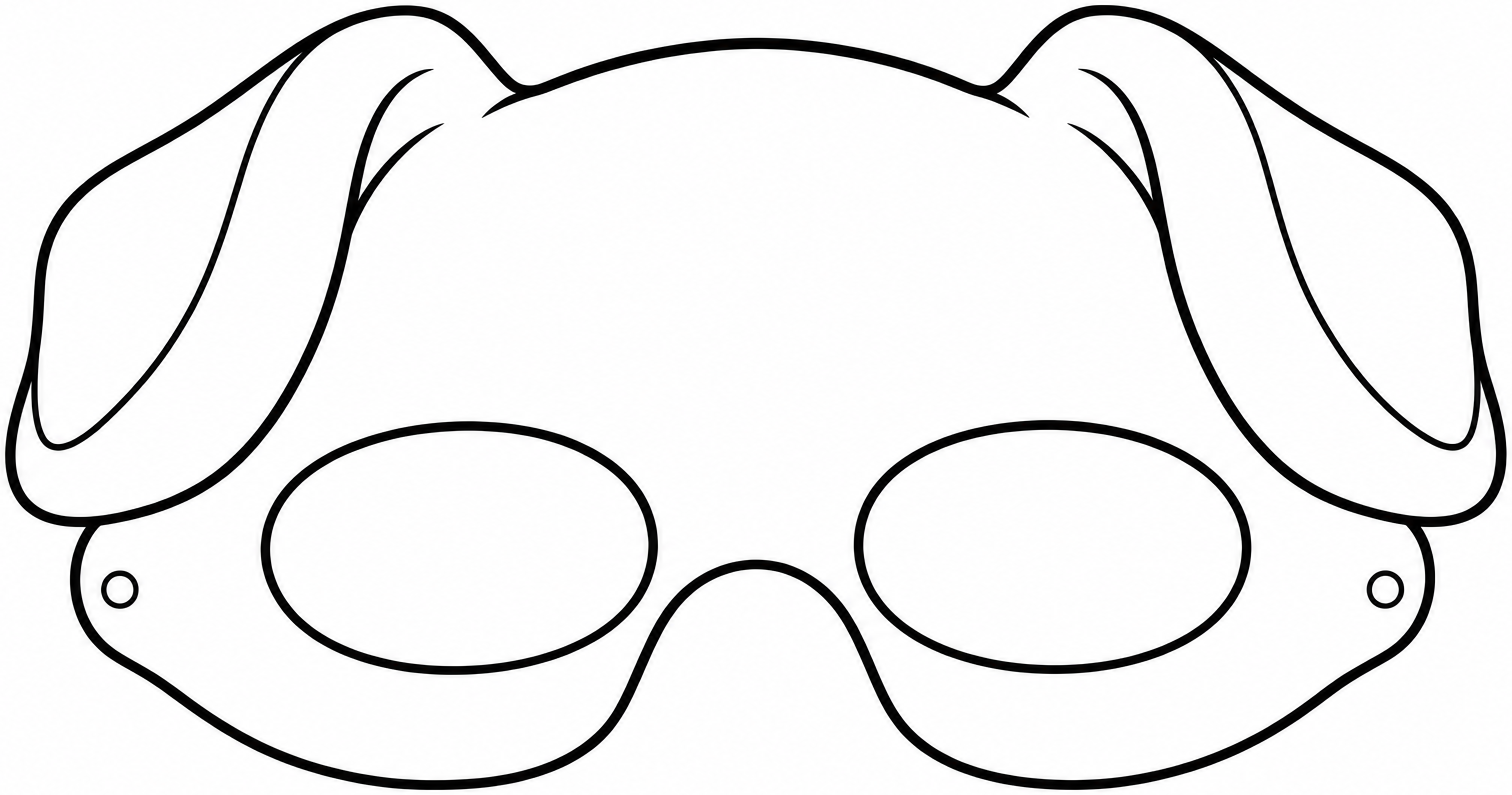
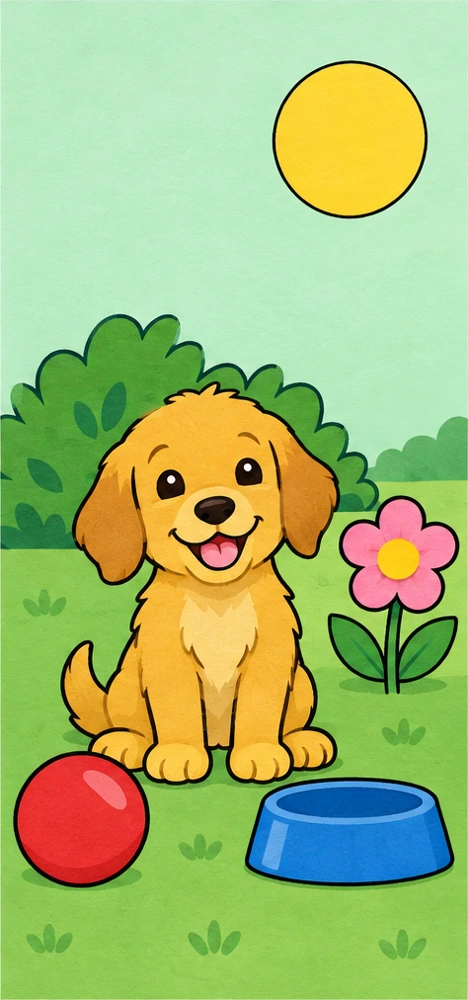
Choose a retriever, corgi, beagle, husky, poodle or terrier. Six additional dog designs leave room for your own colors. Each template has A4 and Letter PDFs in two trial-fitting sizes.
Files are available for trial printing. Physical printing and fitting have not yet been confirmed: check the ruler, eye-opening position and clear vision first. Child and adult labels do not guarantee a fit by age.
Choose a dog mask
Masks shown: 12 · Child size
Golden retriever
Color · width 160 mm
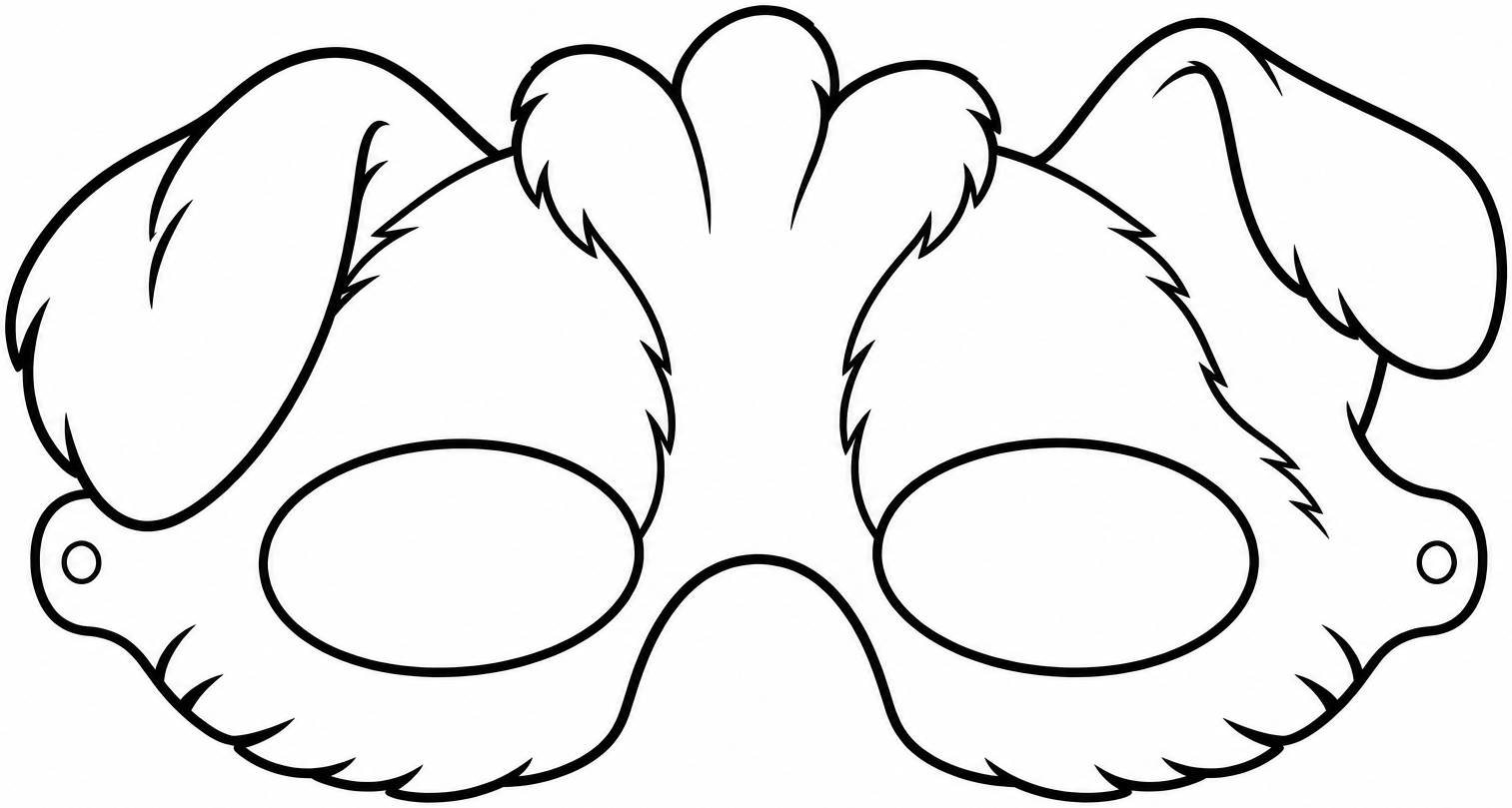
The color panels are ready. Cut the smooth outside contour, turning the sheet around the broad ears; leave internal lines intact.
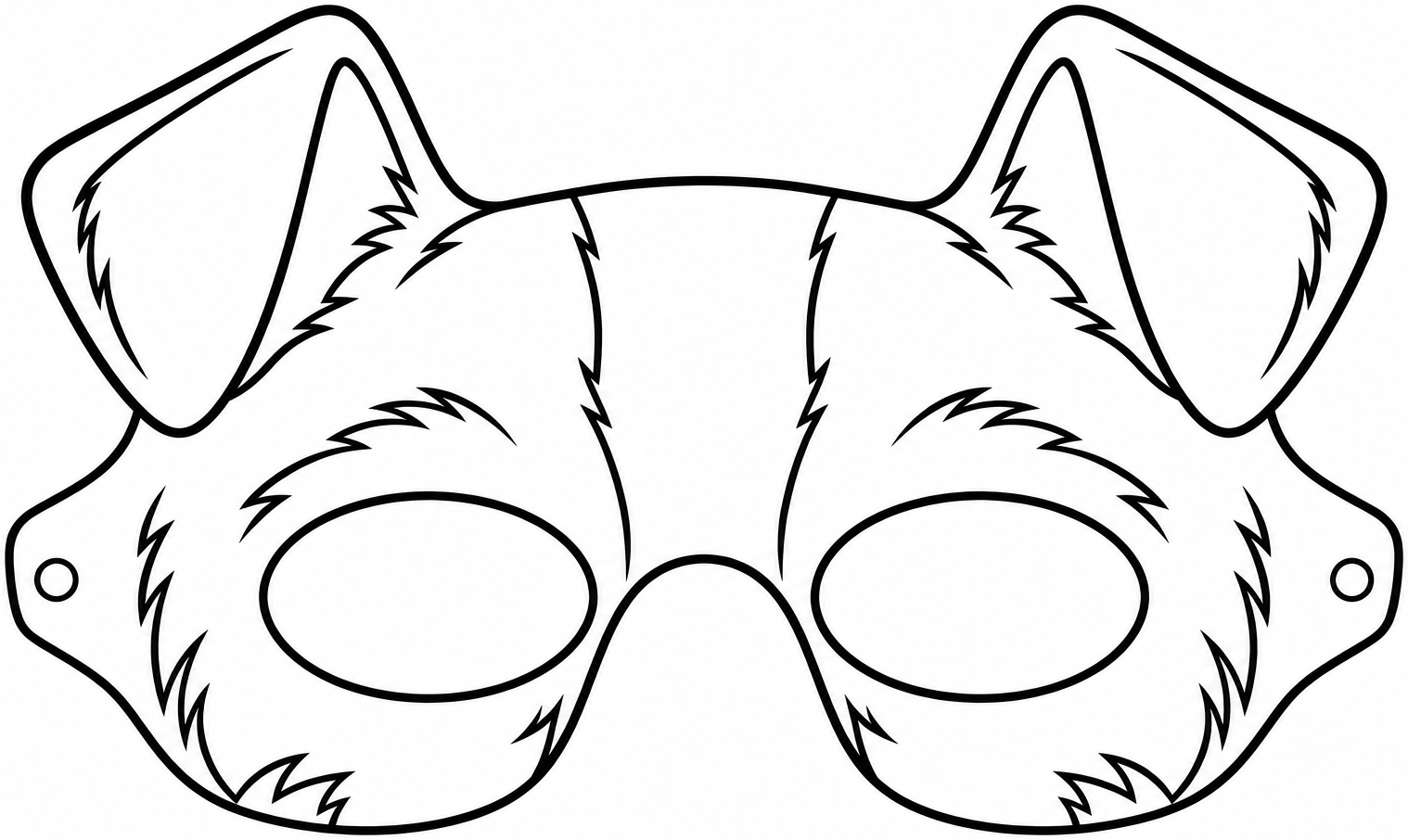
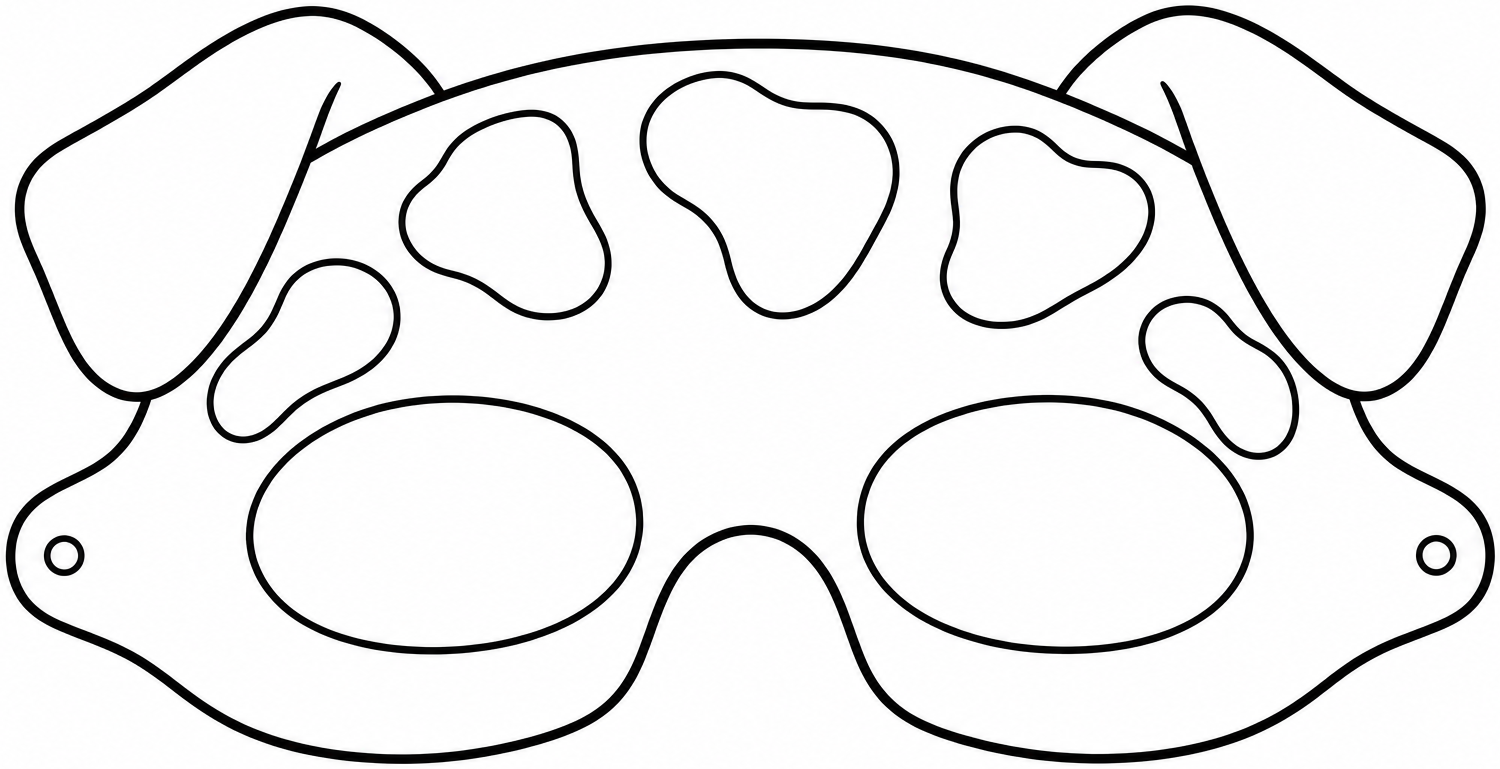
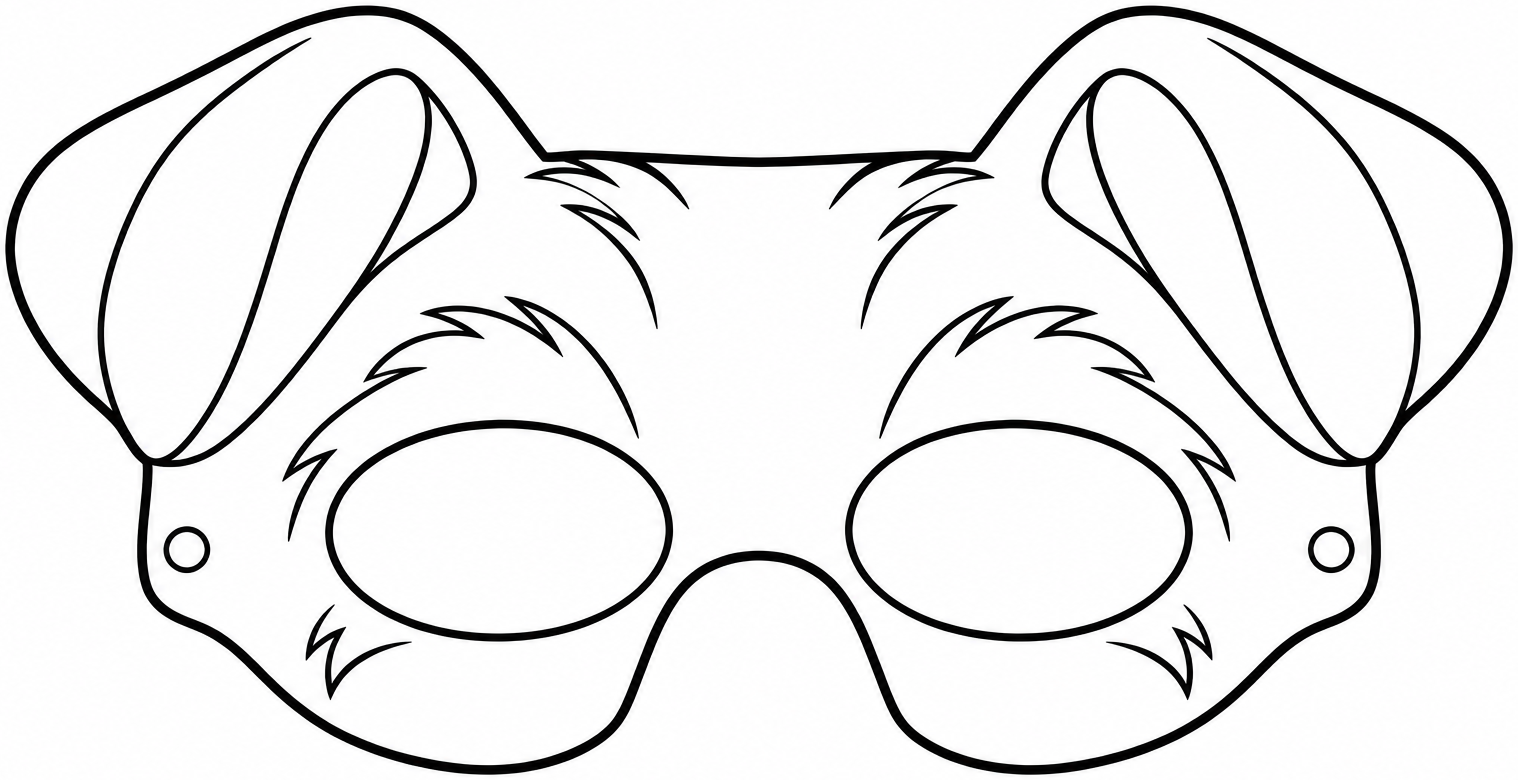
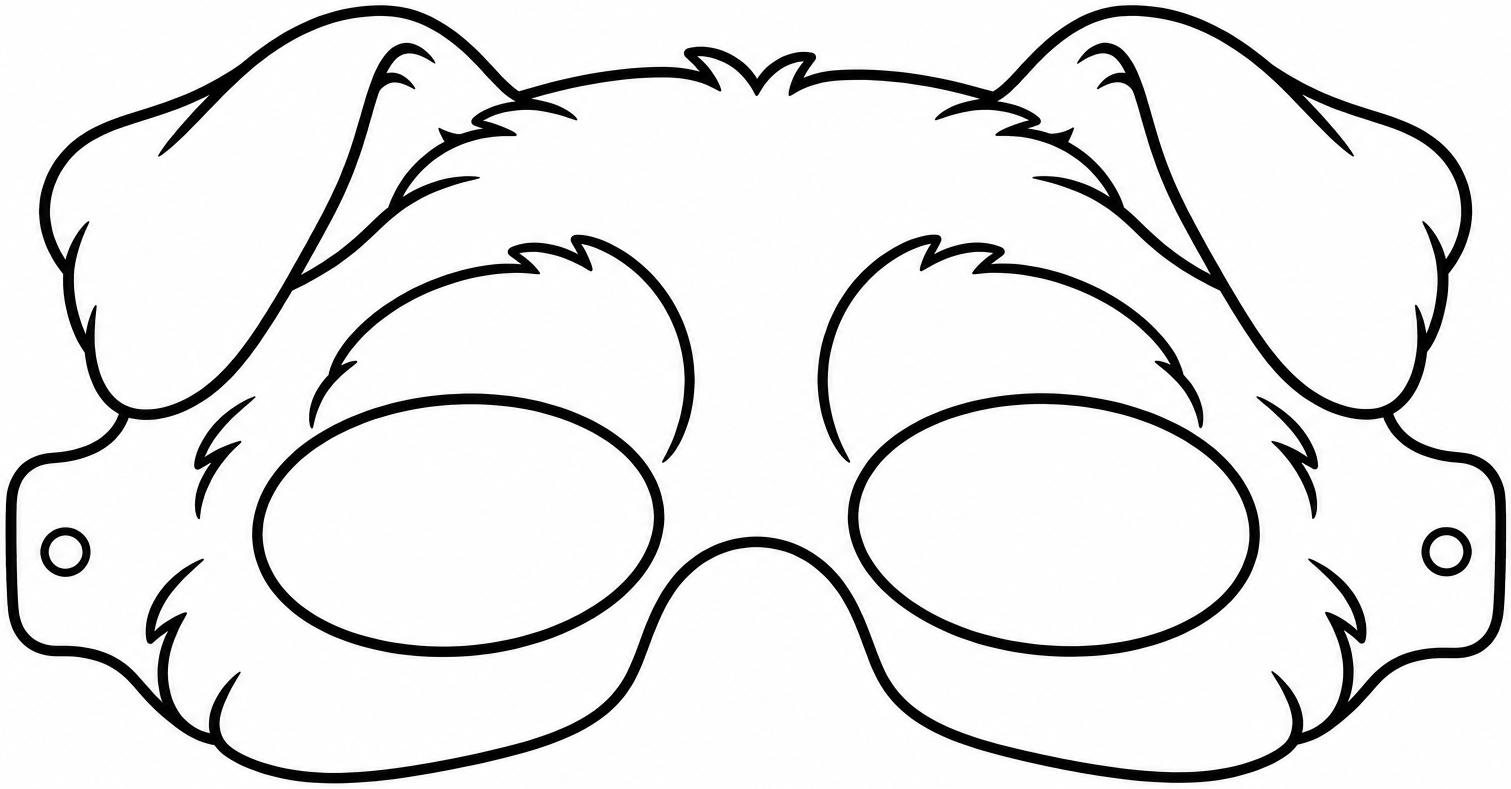
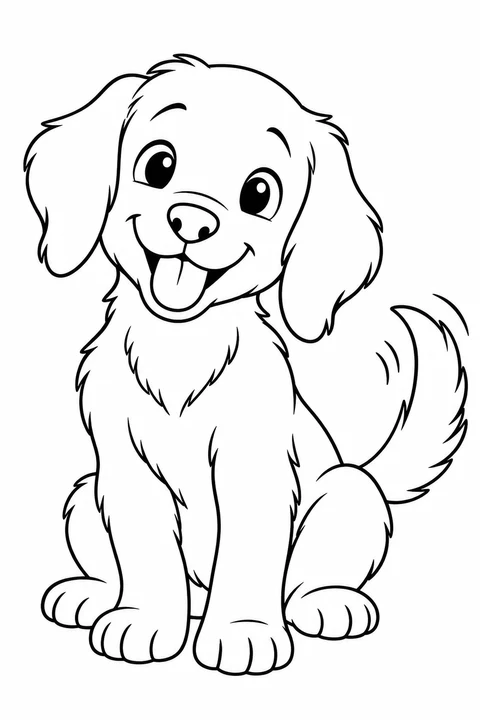
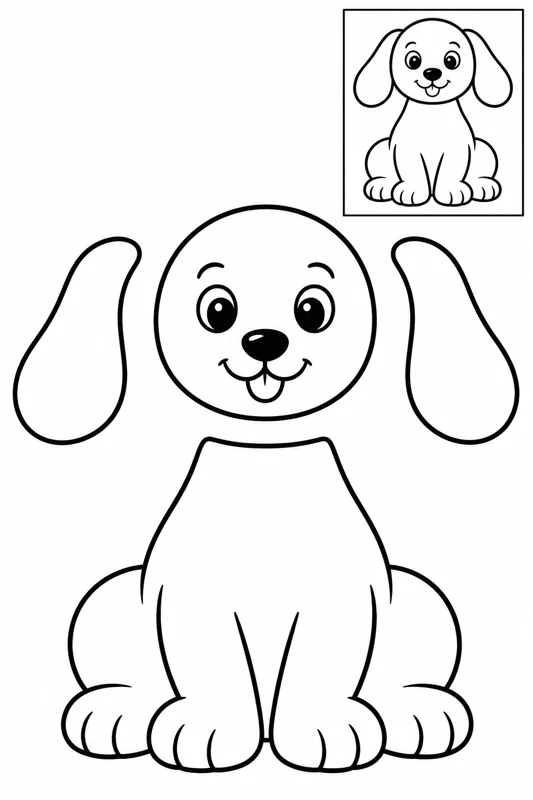
The six color masks show a golden retriever with rounded ears, a broad-eared corgi, a long-eared beagle, a dark-crowned husky, a wavy-fur poodle and a terrier with one folded ear. The coloring designs introduce a spaniel, shepherd, dalmatian, wide-eared puppy, broad-brow schnauzer and shaggy puppy. Choose by the contour: smooth edges and short wide projections are useful for a first cutting attempt. Ear and forehead constructions differ, so changing a color is not counted as another mask.
Color while the sheet is whole: it is easy to hold and the edges do not curl yet. Pick two or three colors, fill the larger fur panels first, then add stripes or spots inside printed zones. Leave the white eye openings empty. The thick outer line defines the cutting contour; internal fur lines stay intact. Small circles at the sides show where an adult can make fastening holes. They differ from the larger openings used for vision. Keep dangling decorations away from the openings.
Size, PDF and a trial print
The selector above the cards changes every dog download together. The child version measures 160 mm across the visible outer contour; the adult version measures 185 mm. The eye-opening centre distance appears in the card and on the sheet. These are two trial-fitting options, not universal face sizes. An adult may prefer the smaller one, while neither may fit a particular child. Judge the actual fit rather than the label.
Choose A4 or Letter to match your printer paper. Print the PDF at 100%, with “Fit to page” disabled. Measure the control line: it should be exactly 50 mm. If it is shorter, check paper format and scaling before repeating one sheet. PNG is useful for viewing, but browser printing can change its dimensions, so use the PDF for a measured fitting.
Make your dog mask
Prepare paper, thin card, glue, scissors, paper tape and soft elastic or a broad paper handle. Check the printer instructions before using heavy paper. Color a black-and-white mask before cutting. If the shape feels floppy, glue it to thin card and let it dry completely. A damp sheet bends and tears more easily.
Cut the outer contour, turning the paper to keep the scissors comfortable. Leave internal fur lines intact. If a ear tears, reinforce the back with paper tape. An adult cuts the eye openings and side fastening holes; children do not need to pierce the sheet with scissors. Hold the mask to the face without fastening it first and check that the eyes look through the middle of the openings.
The lower notch leaves room for the nose. Keep the nose and mouth open; edges must not touch the eyes or press on the bridge of the nose. Check forward and sideways vision. If the openings do not line up, remove the mask and try the other size. Tightening elastic does not correct eye spacing: it only presses the paper closer to the face.
Elastic, a handle and the final check
Reinforce the side fastening marks on the back, then ask an adult to fit elastic without tension. The mask should come away in one movement. Alternatively, glue a broad paper handle to one side so you can hold it in front of the face and move it away quickly. Check while seated before starting a scene. If it slips, take it off and adjust the fastening, rather than holding it near the eyes.
A little puppy theatre
Give your dog a name and a personality: one puppy is curious, another is calm, and a third enjoys finding toys. Let two characters meet and work together to find a missing ball. Switch roles and tell the same story from the other character’s view. Then invent a pattern for a coloring mask: repeat a color on the ears and add one large forehead patch. Explain how the pattern helps you recognize the character. Hold the mask as a puppet during movement scenes. Do not run while wearing it; remove it immediately if it feels uncomfortable.
Dog mask questions
How many different masks are there?
Exactly 12: 6 color and 6 color-in designs. Child and adult PDFs are size options for the same project, not extra drawings.
How do I download an adult mask?
Choose “Adult · 185 mm” above the cards and press “Show”. The A4 and Letter buttons then download adult files. The child width is 160 mm.
How many pages does a PDF have?
One page with a dimensioned mask, short instructions, a 50 mm control line and a Kiduverse link. The 96 files differ by design, language, physical width or paper format.
Which internal lines should I cut?
Only the two eye openings and small side fastening holes, with an adult doing the cutting. Leave internal fur and pattern lines intact.
Why do the eye openings not line up?
Check scaling with the 50 mm control line and try the other size. Enlarging changes the eye spacing too. Do not use a mask if edges touch the eyes or obstruct vision.
Can I make it without elastic?
Yes. Attach a broad paper handle to one side and hold the mask in front of the face. Check that the handle is secure and the mask moves away easily.
 kiduverse