Scissors with a grown-up. Use child scissors with rounded tips and cut while seated at a table. If a child is not ready yet, an adult cuts while the child colors and assembles.
Print
Choose A4 or US Letter. Print at 100%, with scaling off. Ordinary printer paper works.
Cut
Color black-and-white sheets first. Cut outer borders; follow dashed lines on the practice paths.
Make it yours
Arrange pieces before gluing. Try a new arrangement or tell a story about your creation.
An adult can separate the page into strips. Start at a dot and follow the dashed path with short cuts. Stop before a turn, rotate the paper and continue.
Check: Can you guide the scissors comfortably? If it is difficult, an adult can shorten a strip, cut a tricky curve or offer straight paths. Pieces should be fully separated and arranged as intended before gluing.
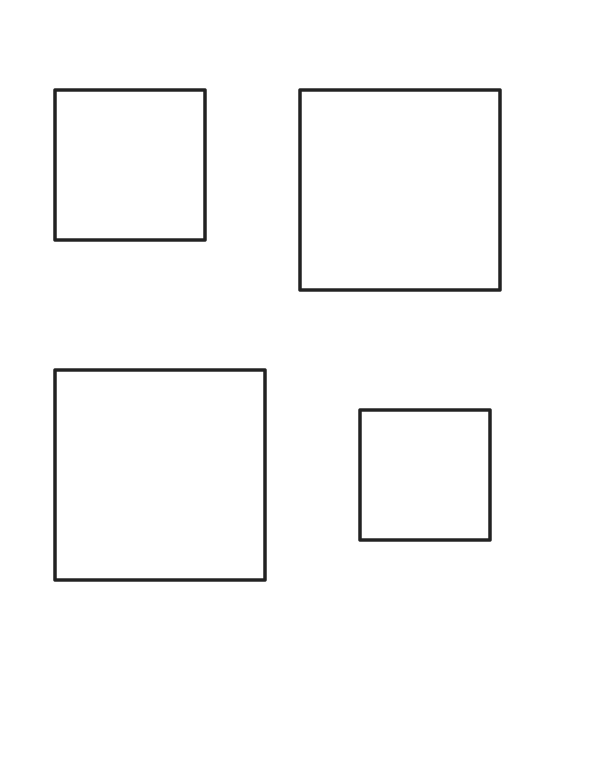
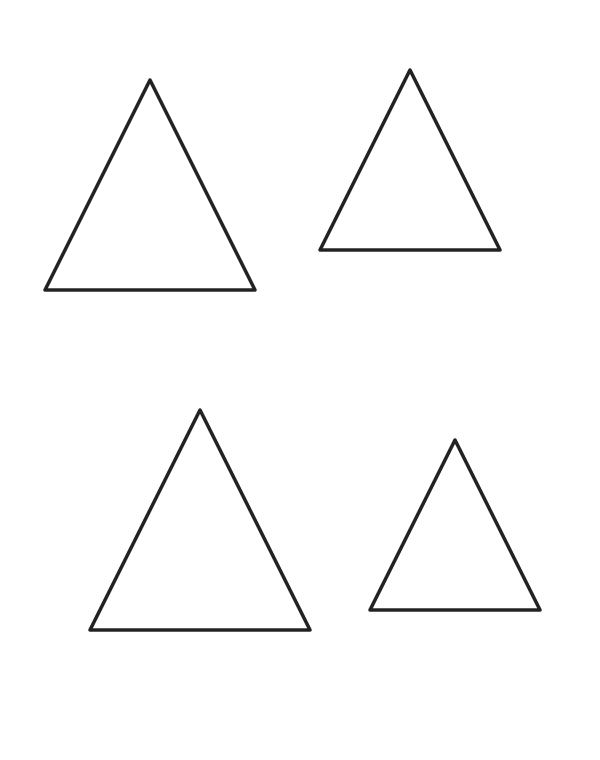
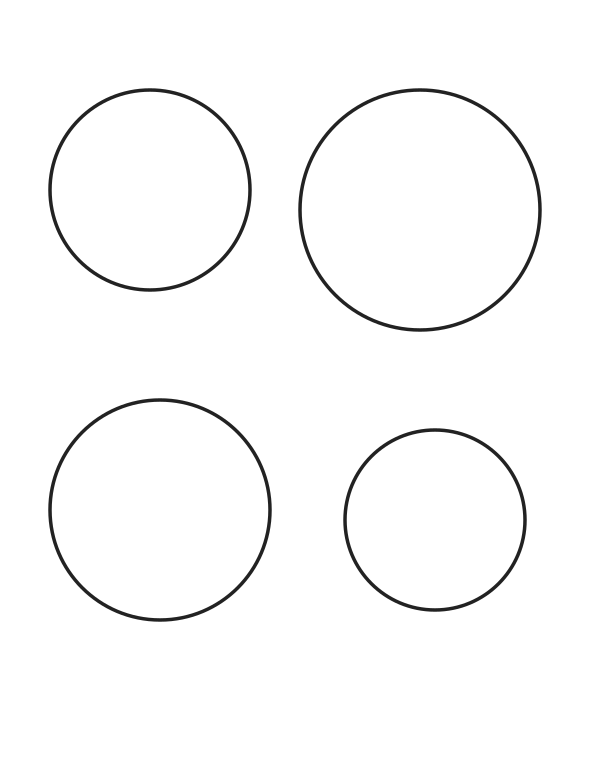
Cut the shapes and arrange them on another sheet. Make a city with squares, a forest with triangles or a collage with circles. Invent another picture using the same pieces.
Check: Can you guide the scissors comfortably? If it is difficult, an adult can shorten a strip, cut a tricky curve or offer straight paths. Pieces should be fully separated and arranged as intended before gluing.
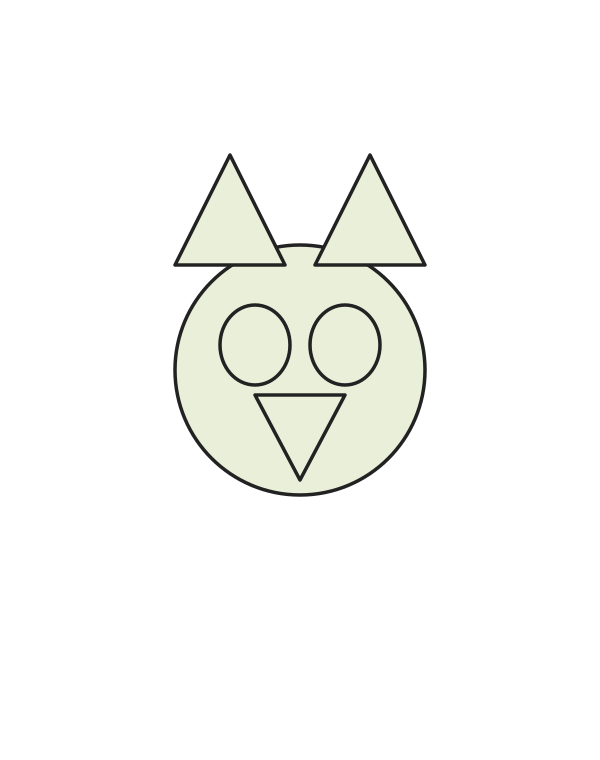
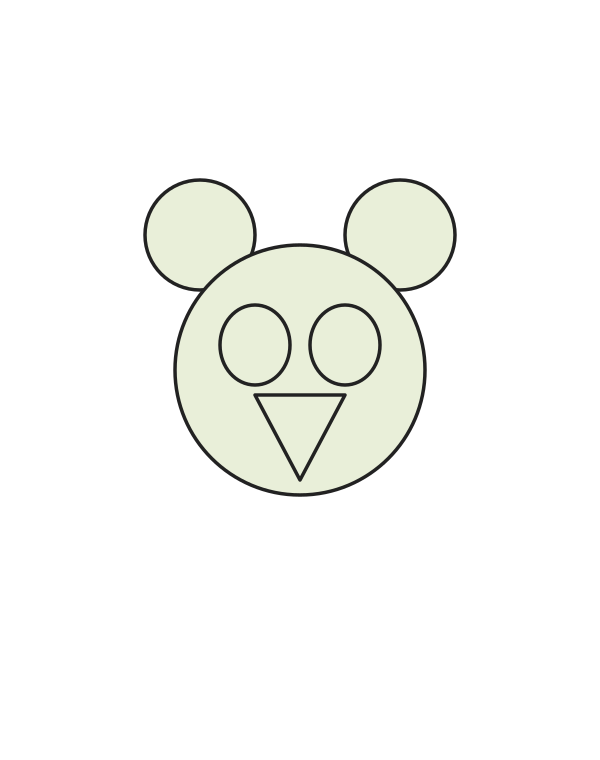
This is an assembly example, not a cutting template. You can arrange the pieces differently.
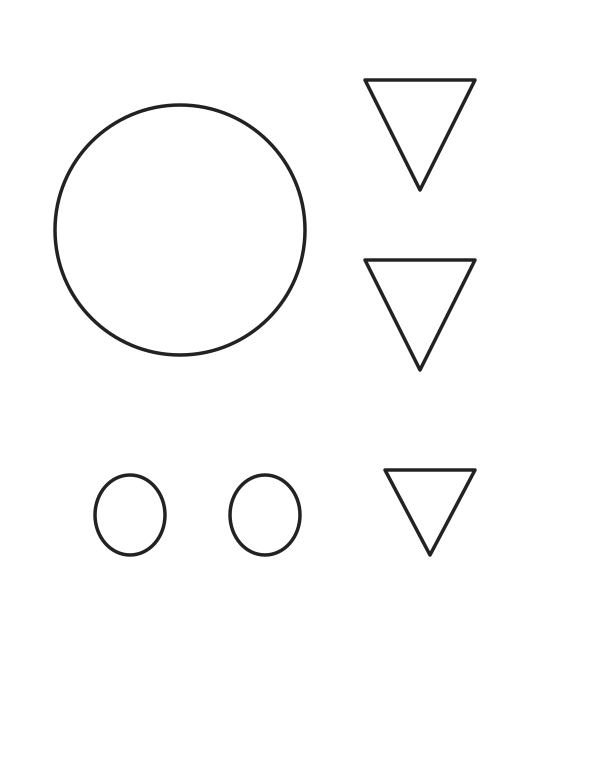
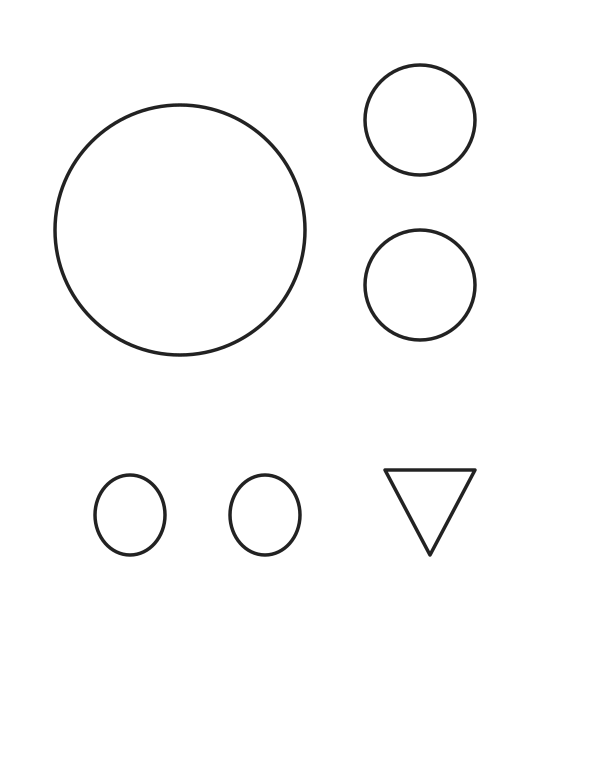
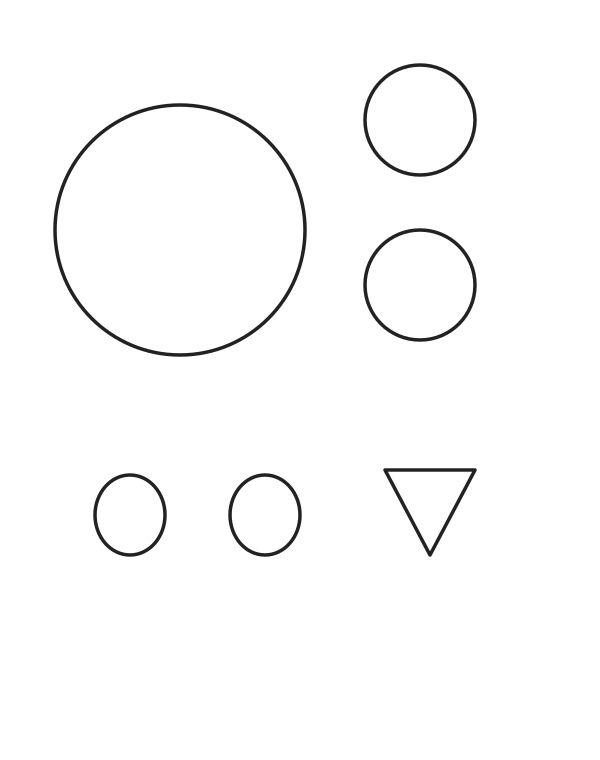
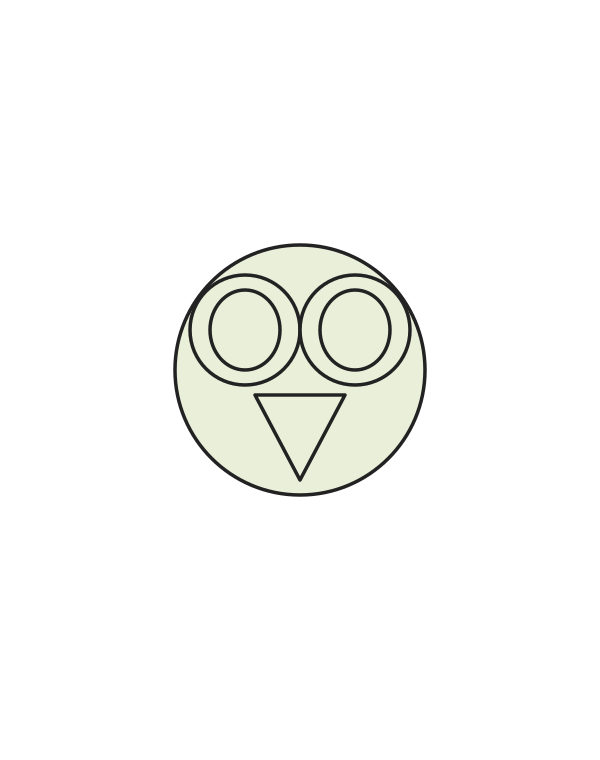
The large circle is the head. Add two ears (large eyes for the owl), then the small eyes and triangle nose or beak. Glue onto a separate sheet.
Check: Can you guide the scissors comfortably? If it is difficult, an adult can shorten a strip, cut a tricky curve or offer straight paths. Pieces should be fully separated and arranged as intended before gluing.
This is an assembly example, not a cutting template. You can arrange the pieces differently.
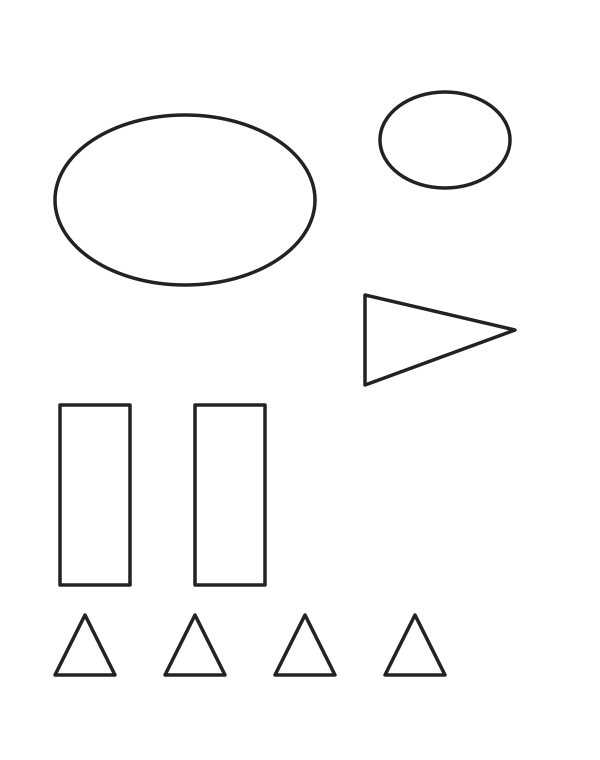
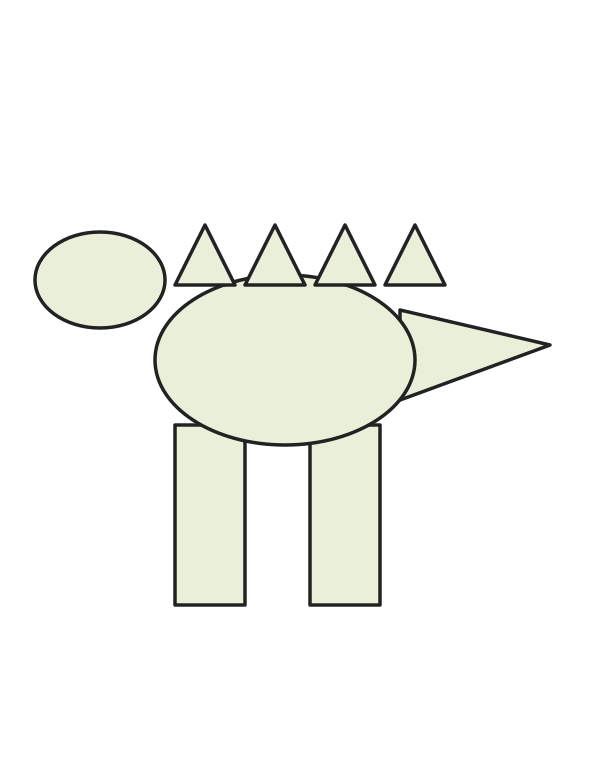
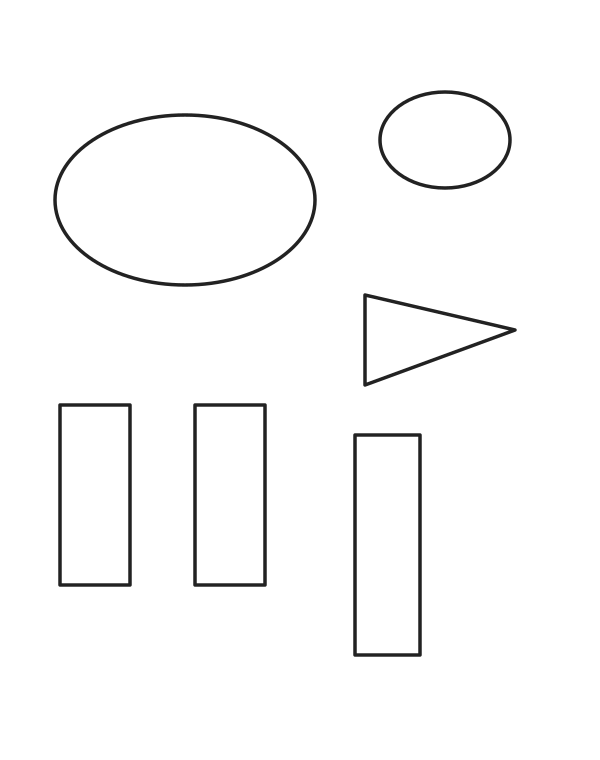
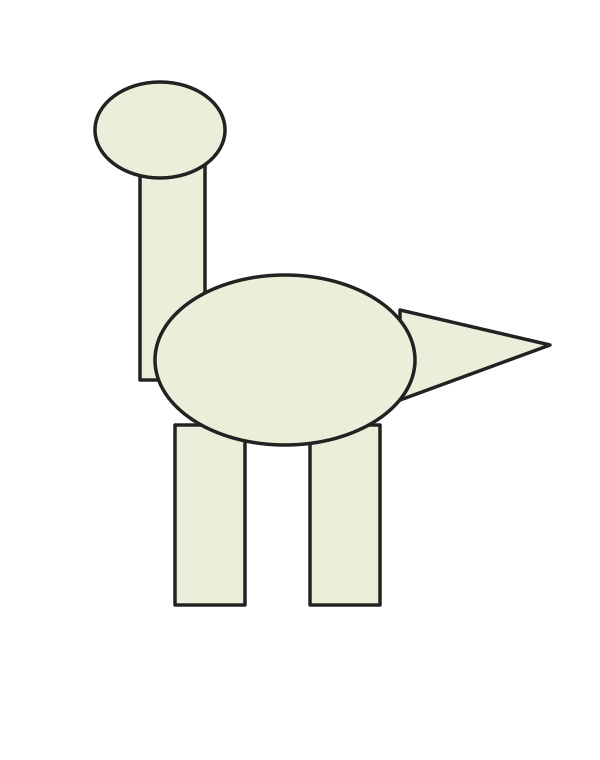
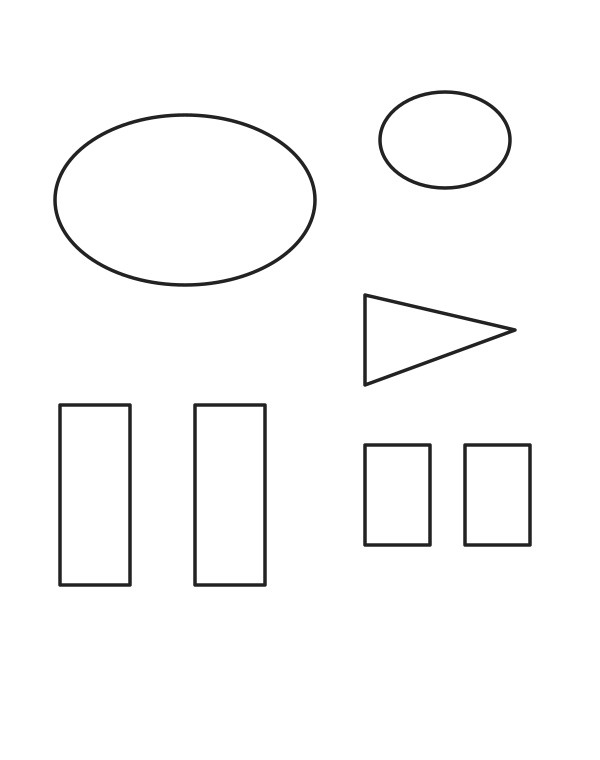
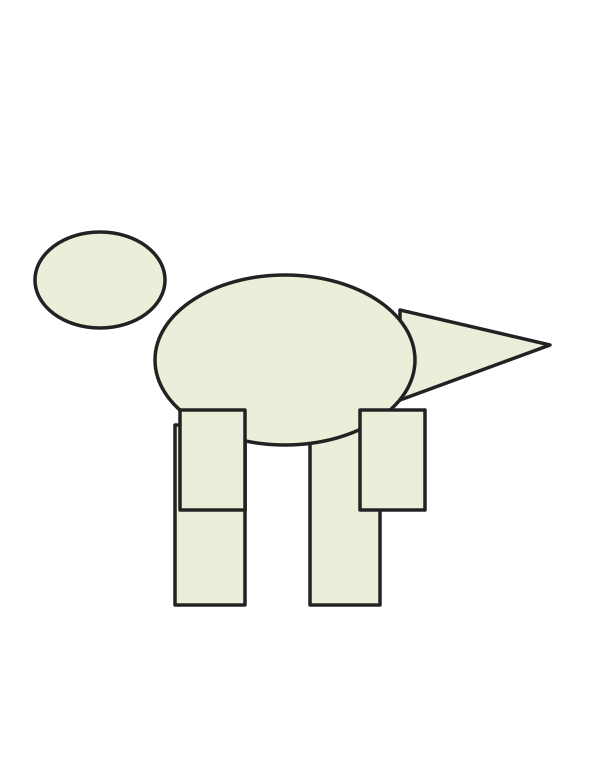
The big oval is the body and the small oval is the head. Rectangles make legs; the triangle is a tail. Add the long neck or the back plates on the matching project. Try the pieces in place first.
Check: Can you guide the scissors comfortably? If it is difficult, an adult can shorten a strip, cut a tricky curve or offer straight paths. Pieces should be fully separated and arranged as intended before gluing.
This is an assembly example, not a cutting template. You can arrange the pieces differently.
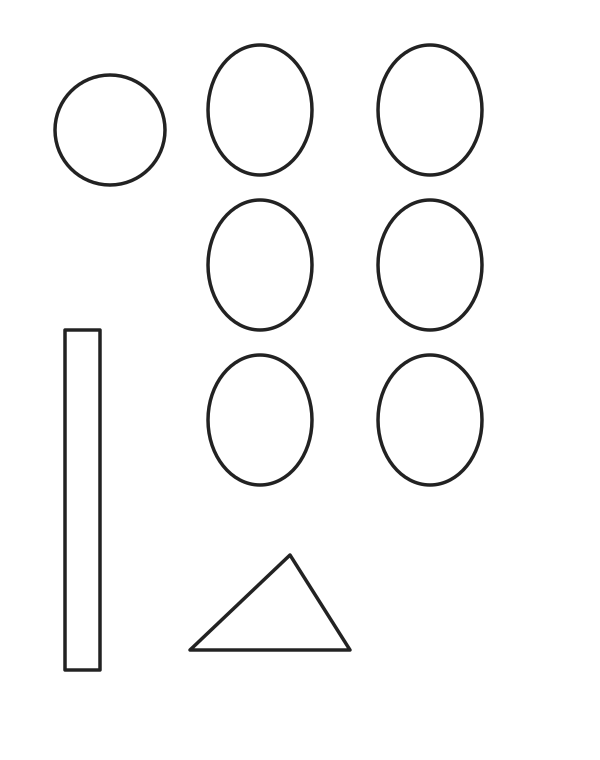
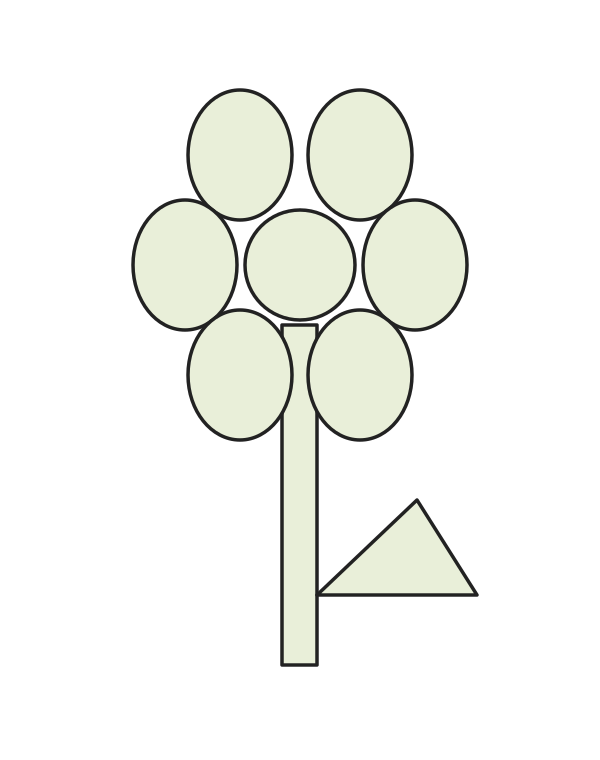
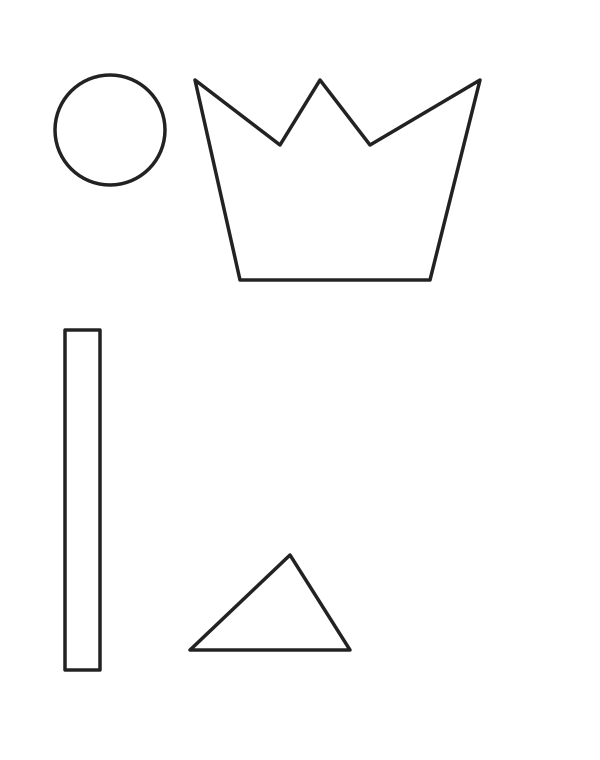
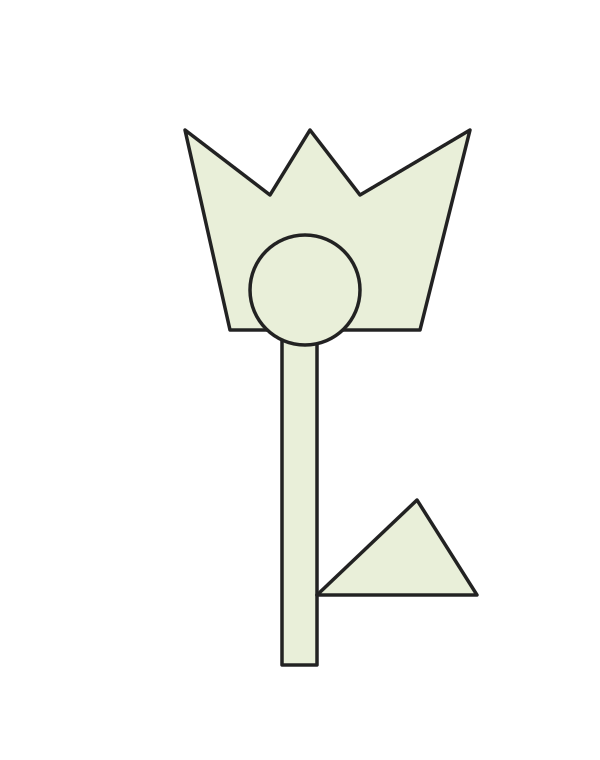
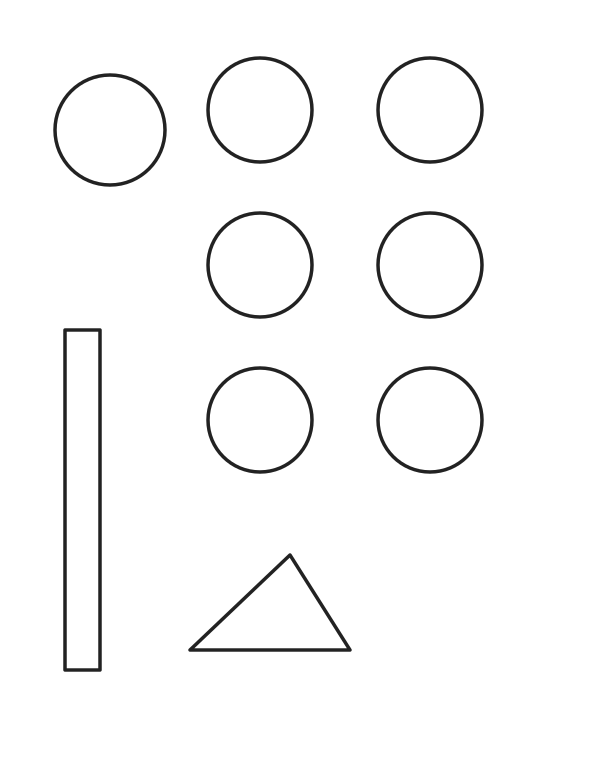
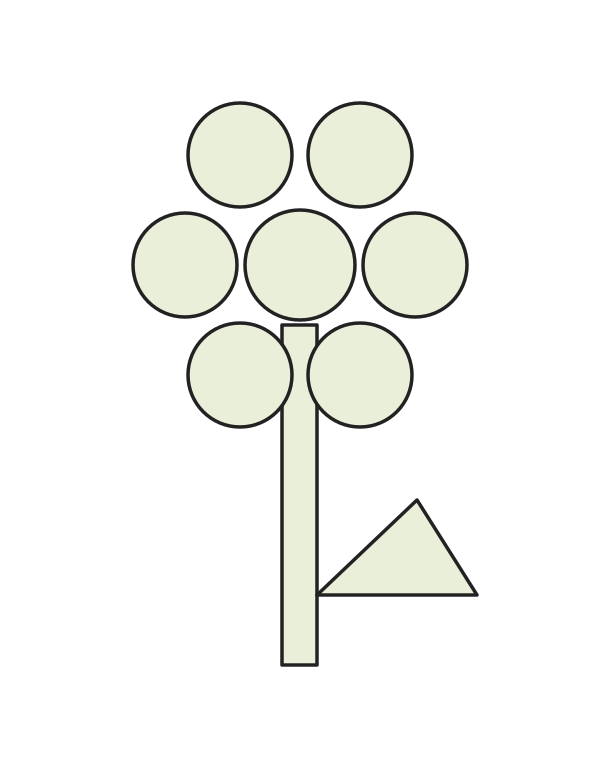
Place the circle in the flower center and petals around it. For the tulip, use the large pointed piece. The long strip is the stem and the triangular piece is a leaf. Glue onto another sheet.
Check: Can you guide the scissors comfortably? If it is difficult, an adult can shorten a strip, cut a tricky curve or offer straight paths. Pieces should be fully separated and arranged as intended before gluing.
This is an assembly example, not a cutting template. You can arrange the pieces differently.
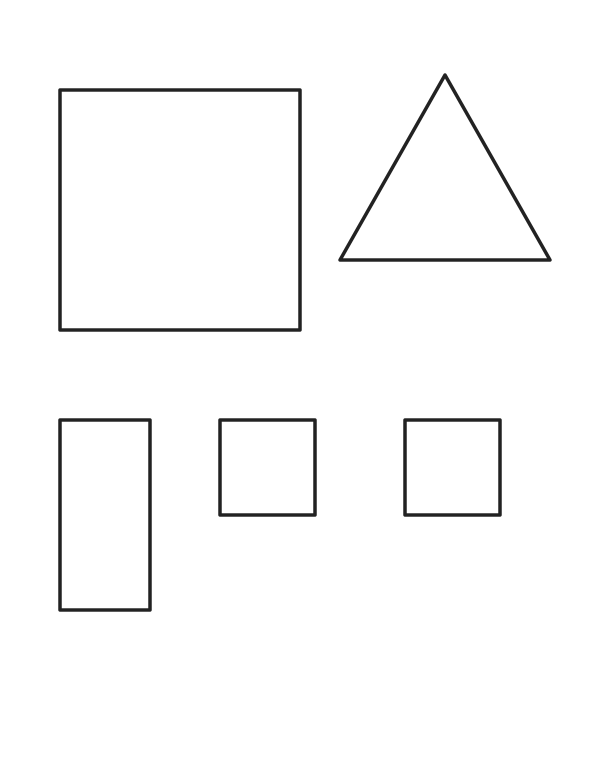
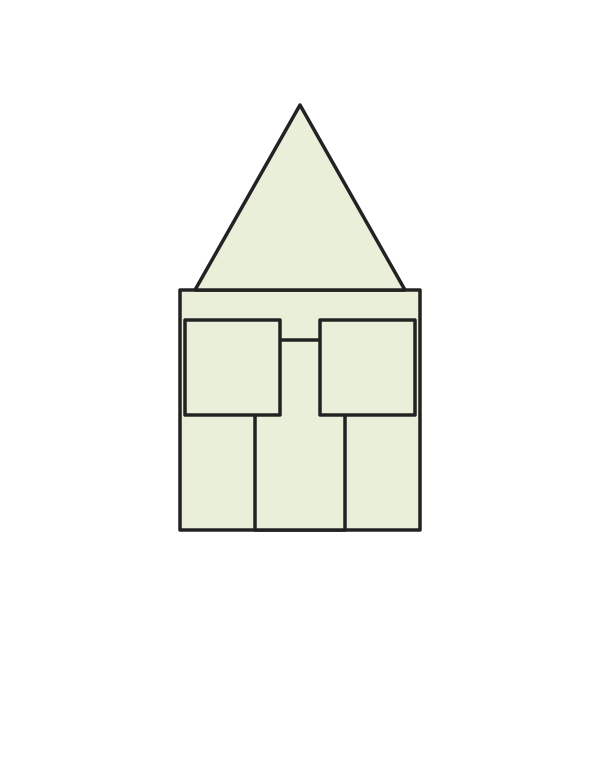
Use the large square as the house and the triangle as the roof. Add the rectangular door and two square windows.
Check: Can you guide the scissors comfortably? If it is difficult, an adult can shorten a strip, cut a tricky curve or offer straight paths. Pieces should be fully separated and arranged as intended before gluing.
This is an assembly example, not a cutting template. You can arrange the pieces differently.
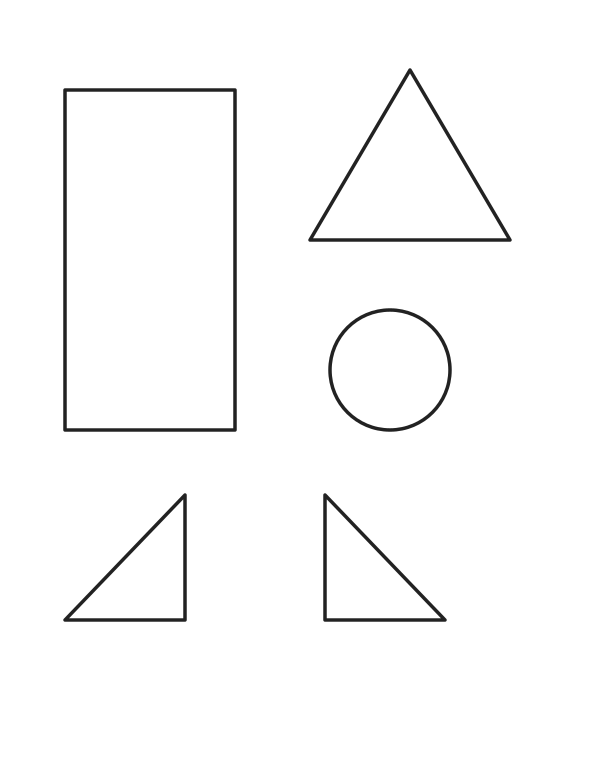
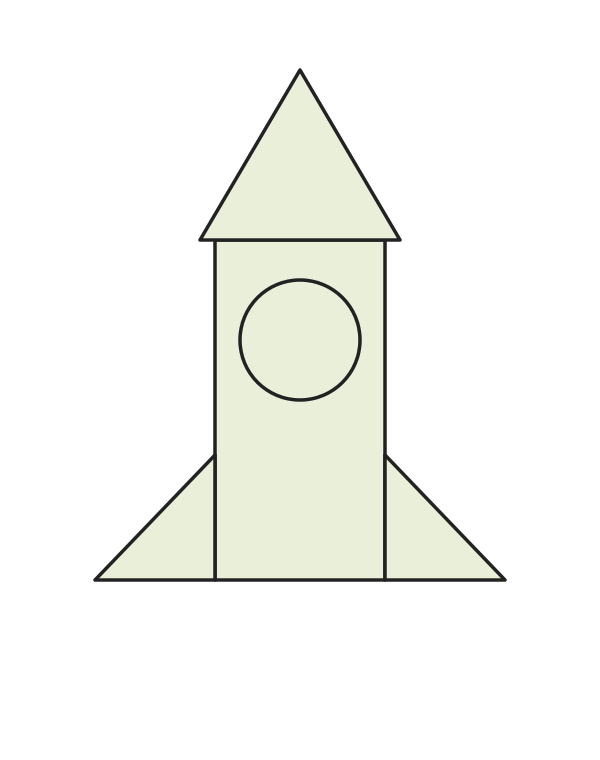
The rectangle is the rocket body and the large triangle is the nose. Add the round window and two triangle fins at the bottom.
Check: Can you guide the scissors comfortably? If it is difficult, an adult can shorten a strip, cut a tricky curve or offer straight paths. Pieces should be fully separated and arranged as intended before gluing.
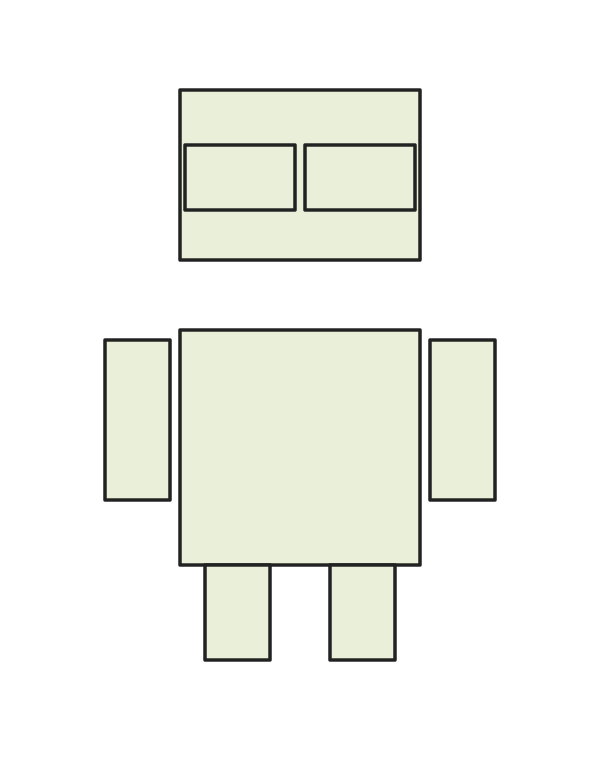
This is an assembly example, not a cutting template. You can arrange the pieces differently.
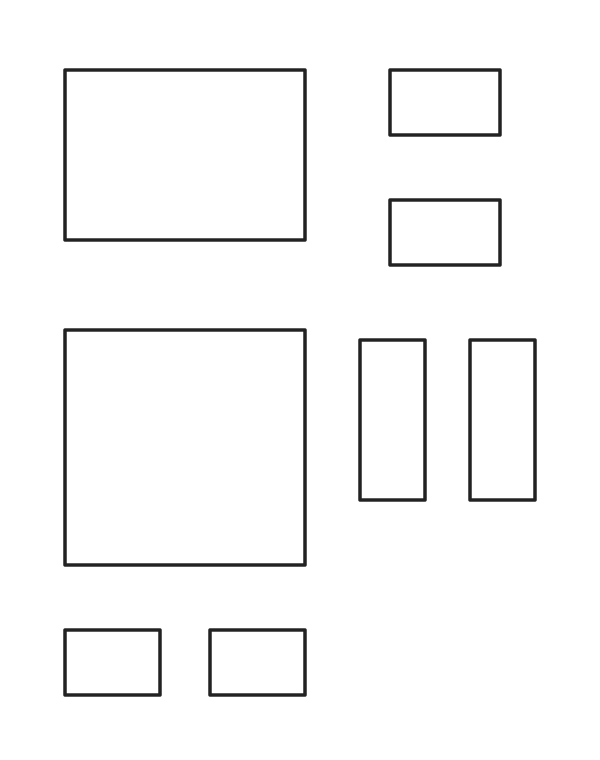
Place the head above the body. Long rectangles are arms; short rectangles are eyes and feet. Join the pieces on a separate sheet.
Check: Can you guide the scissors comfortably? If it is difficult, an adult can shorten a strip, cut a tricky curve or offer straight paths. Pieces should be fully separated and arranged as intended before gluing.
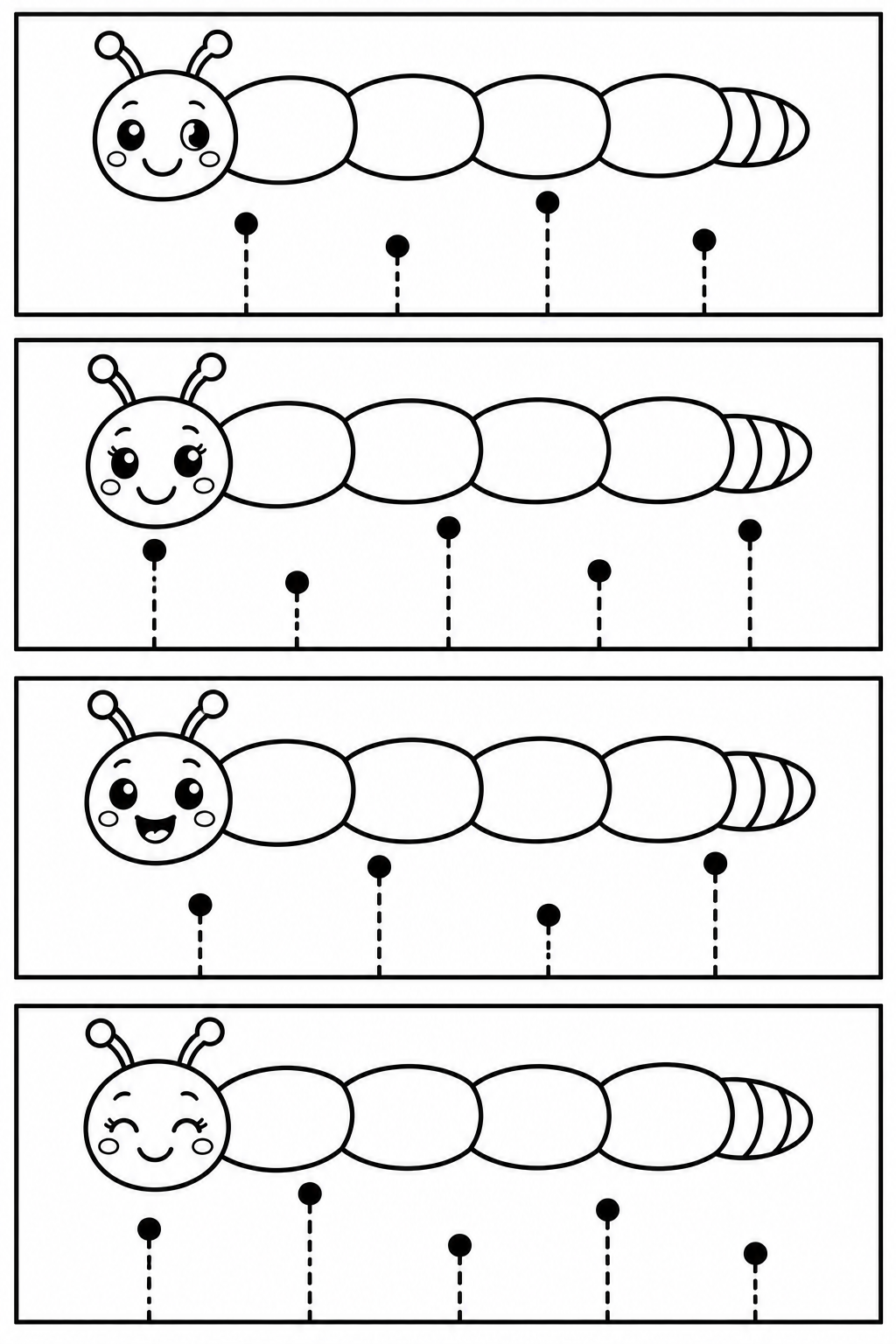
An adult separates the caterpillar strips. Start each short snip at its lower edge and stop at the black dot. The top stays connected; do not cut around the face.
Check: Can you guide the scissors comfortably? If it is difficult, an adult can shorten a strip, cut a tricky curve or offer straight paths. Pieces should be fully separated and arranged as intended before gluing.
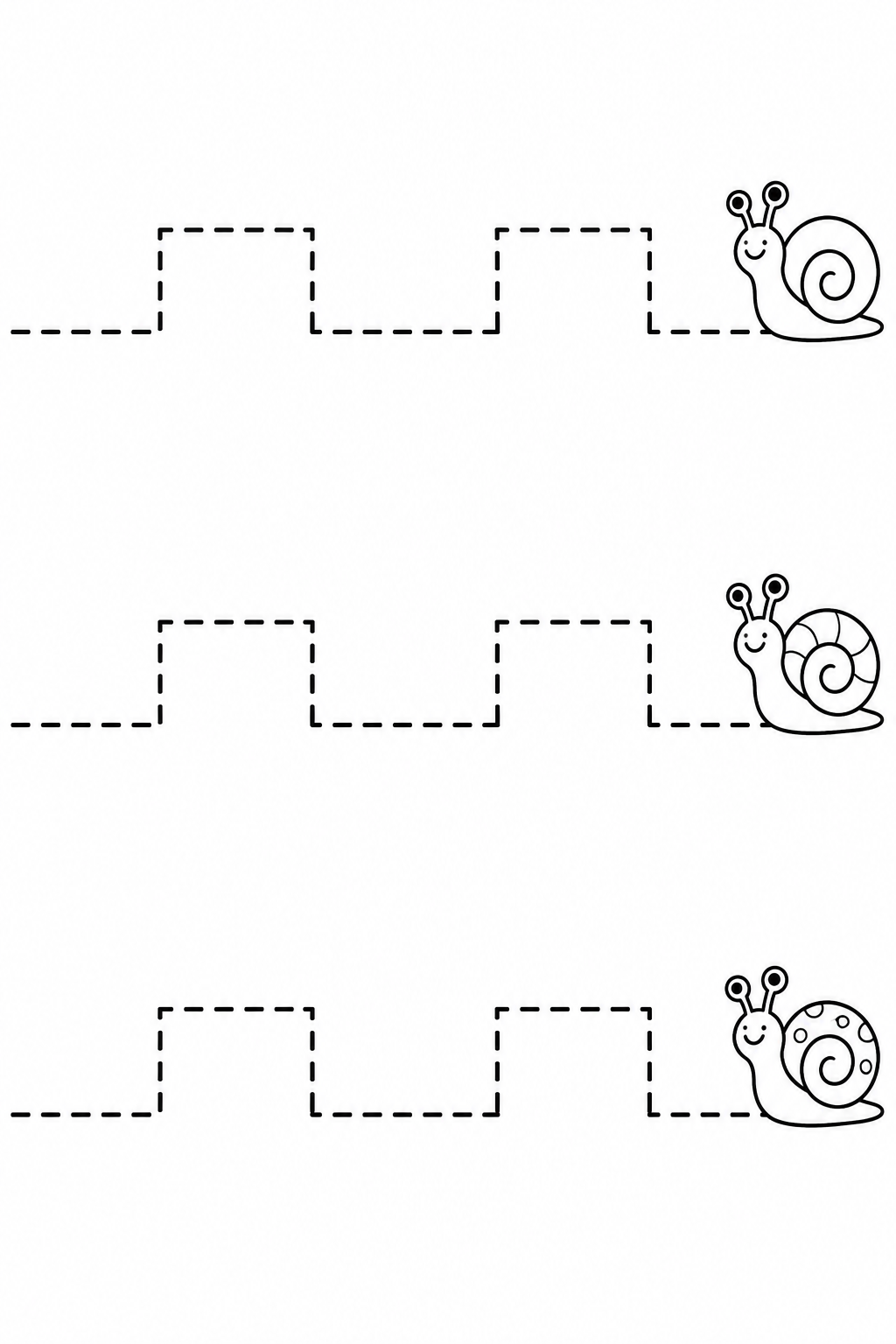
Separate the wide strips first. Start at the left edge, follow the dashed staircase, stop at each corner and rotate the paper before continuing.
Check: Can you guide the scissors comfortably? If it is difficult, an adult can shorten a strip, cut a tricky curve or offer straight paths. Pieces should be fully separated and arranged as intended before gluing.
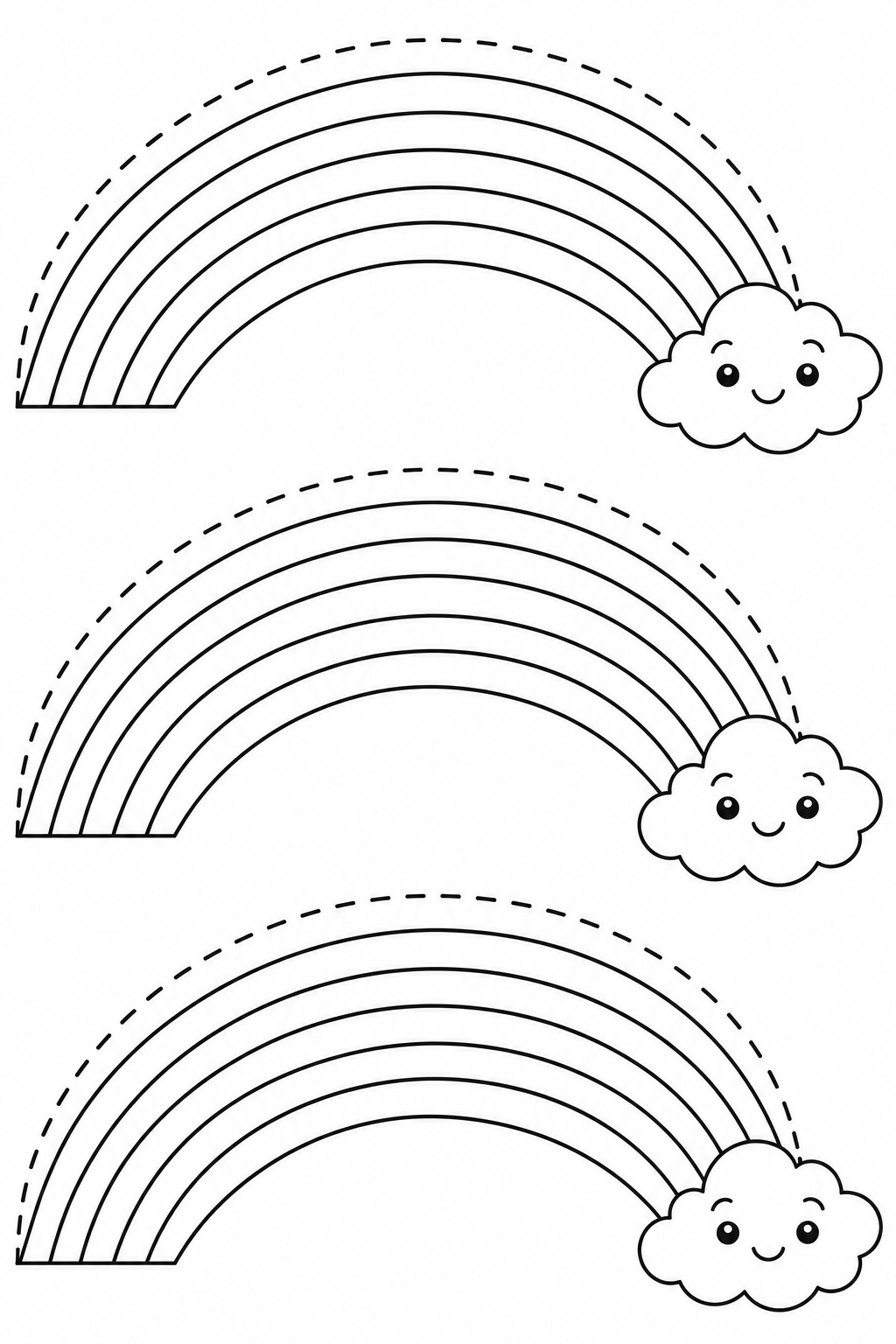
An adult gives you one arch at a time. Cut the dashed outer curve with short movements while turning the paper. Leave the internal coloring lines intact.
Check: Can you guide the scissors comfortably? If it is difficult, an adult can shorten a strip, cut a tricky curve or offer straight paths. Pieces should be fully separated and arranged as intended before gluing.
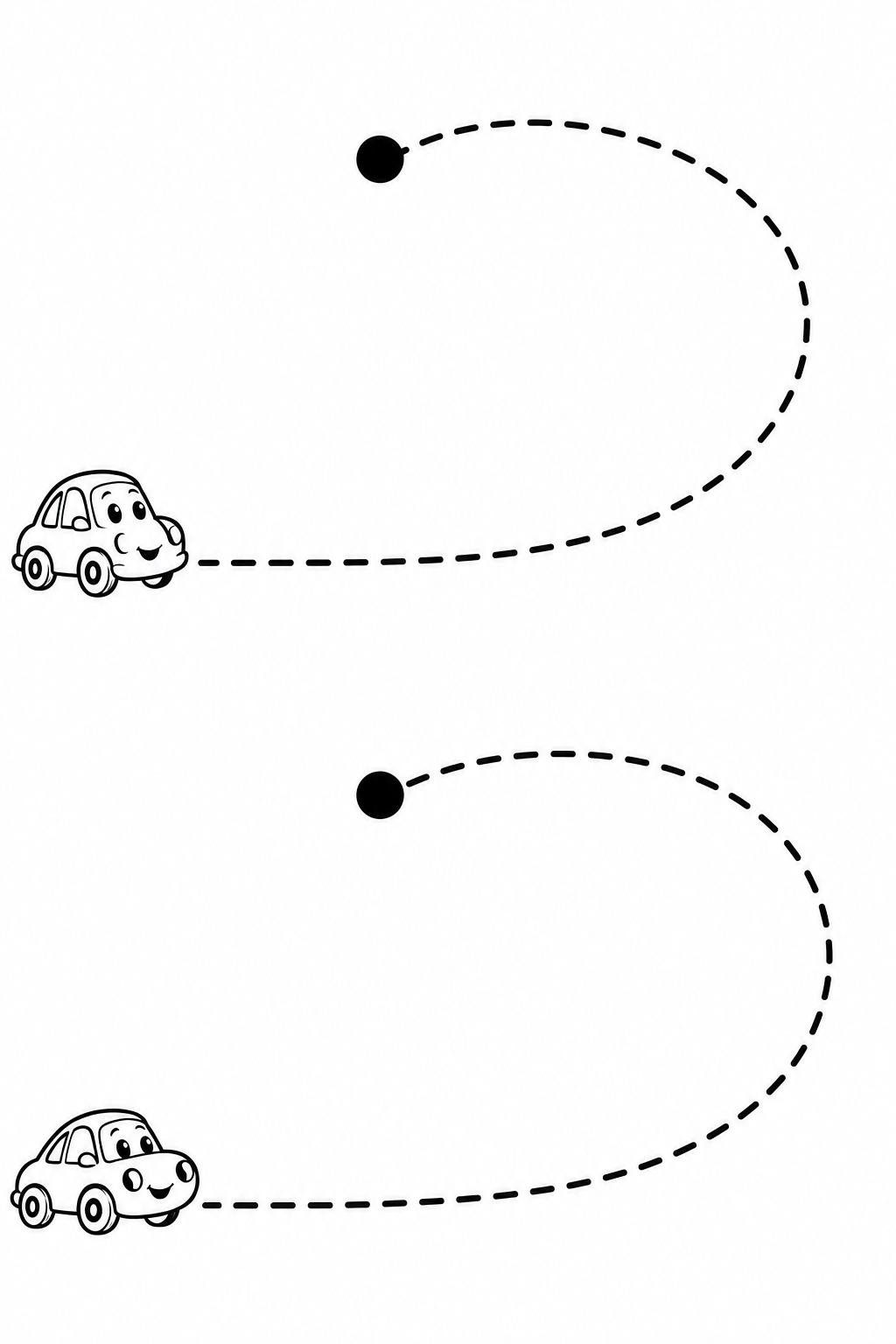
Start at the open edge of one road strip. Follow the broad dashed U-turn and stop at its end dot. Turn the supporting hand rather than twisting the scissors.
Check: Can you guide the scissors comfortably? If it is difficult, an adult can shorten a strip, cut a tricky curve or offer straight paths. Pieces should be fully separated and arranged as intended before gluing.
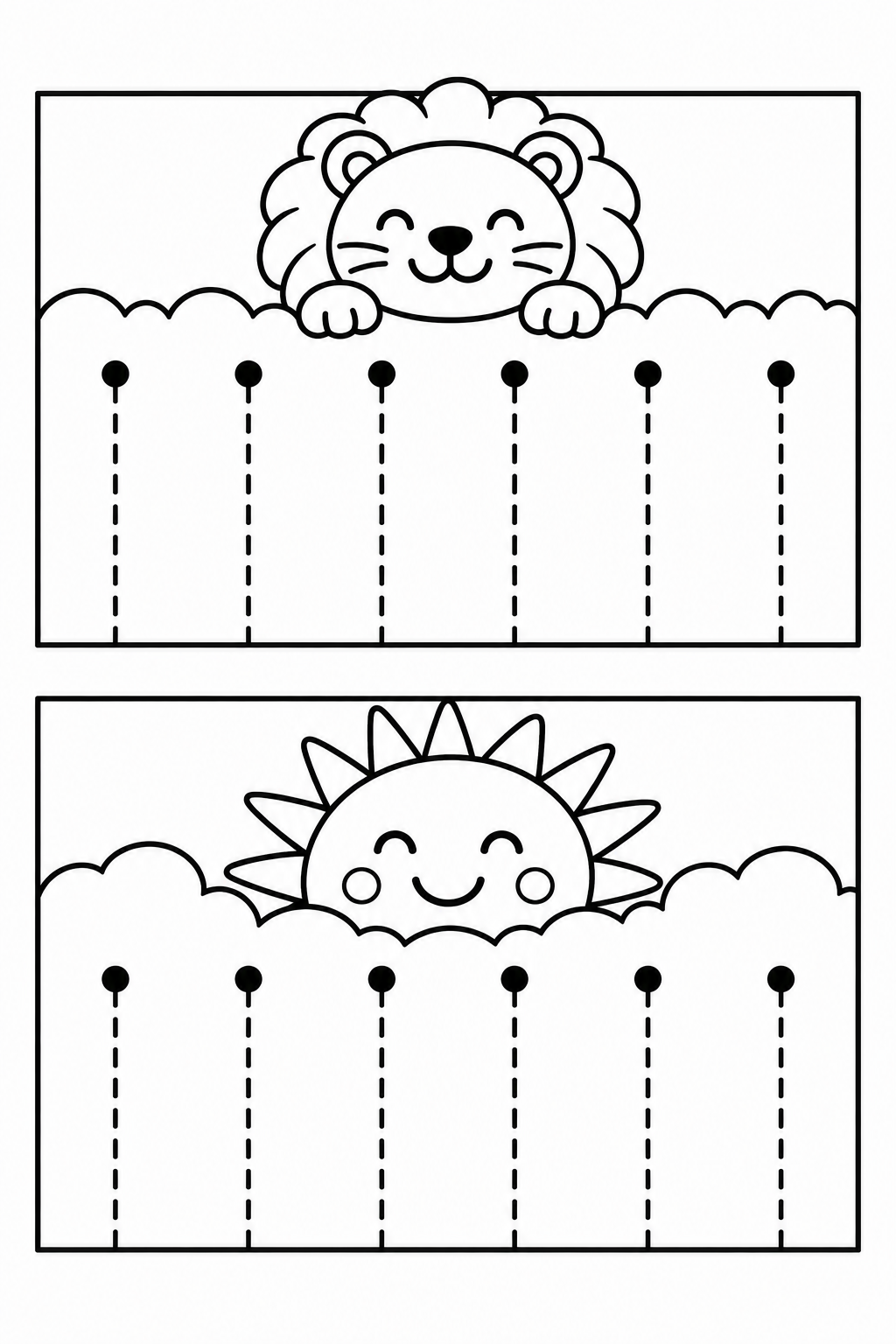
Cut the dashed paths upward from the bottom edge and stop at every dot. Keep the top band connected to make a fringe. Do not cut the face.
Check: Can you guide the scissors comfortably? If it is difficult, an adult can shorten a strip, cut a tricky curve or offer straight paths. Pieces should be fully separated and arranged as intended before gluing.
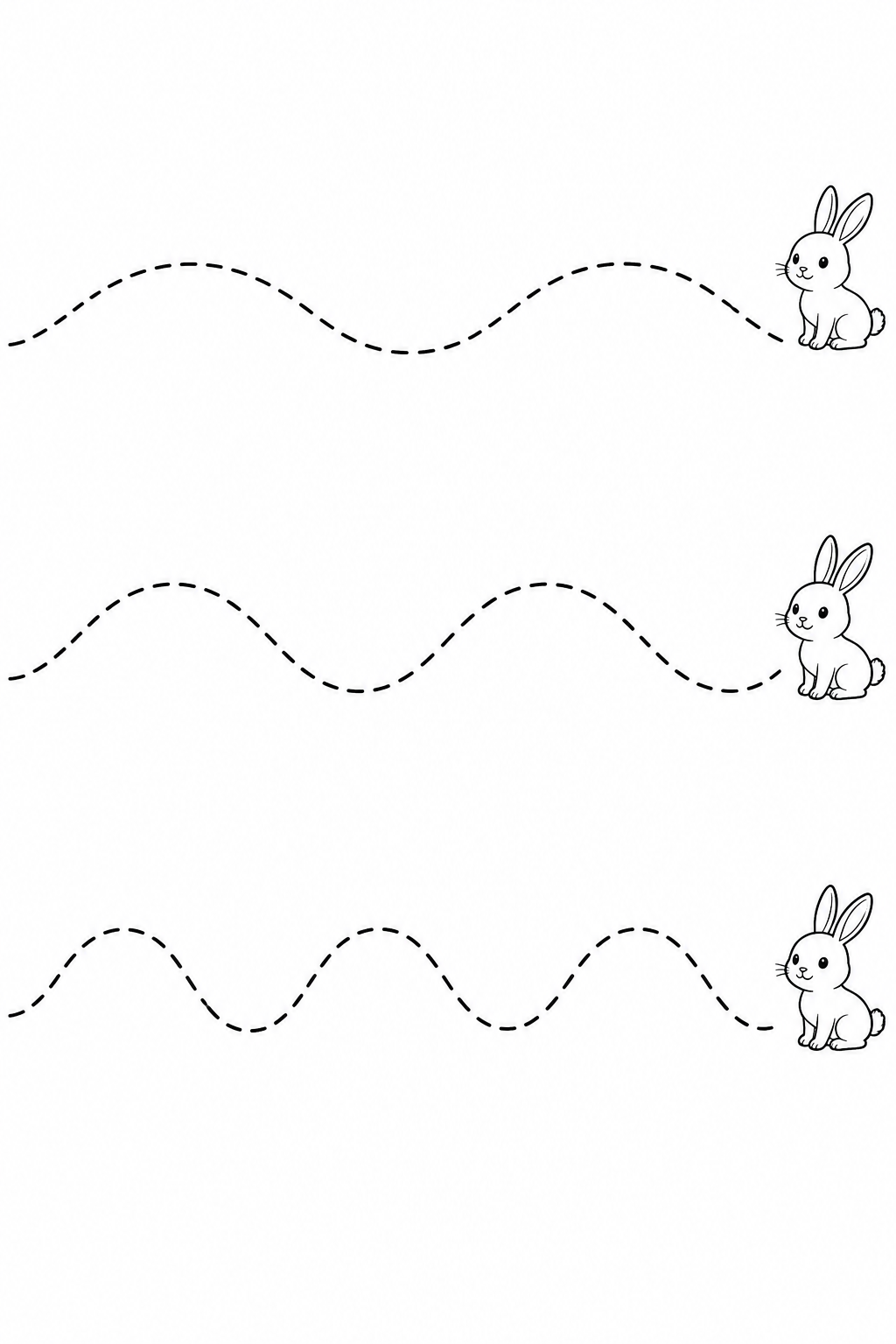
Begin with the strip that has one hill. Cut from left to right along the dashed route, rotating the paper at each wide curve. Then try two or three hills.
Check: Can you guide the scissors comfortably? If it is difficult, an adult can shorten a strip, cut a tricky curve or offer straight paths. Pieces should be fully separated and arranged as intended before gluing.
Choose by skill, not just age
These projects are intended roughly for ages 4–8 with adult help. Start with straight paths and squares. Once a straight cut feels comfortable, try corners, then circles and gentle curves. Age is a guide: choose a manageable task and take breaks.
You need paper, child scissors, coloring pencils and a glue stick for assembly crafts. Keep fingers away from the blades and cut while seated at a table. If a child is not ready for scissors, an adult can cut while the child colors and arranges.
Printing and activity questions
Are the templates really free?
Yes. All templates are downloadable without an account or email address. Use them at home or in class; do not resell the files.
Should I choose A4 or Letter?
Match your printer paper: A4 is 210 × 297 mm; US Letter is 8.5 × 11 inches. Print at 100%. Each PDF contains one page.
Which lines should we cut?
On practice paths, cut dashed lines from the edge or starting dot. On crafts, cut the solid outer border of each piece. Do not cut out the small boxed assembly example.
What if the paper keeps tearing?
Ask an adult to check that the scissors cut the paper. Try a shorter strip and smaller motions. Stop before a corner and turn the paper with the supporting hand.
 kiduverse